Short answer
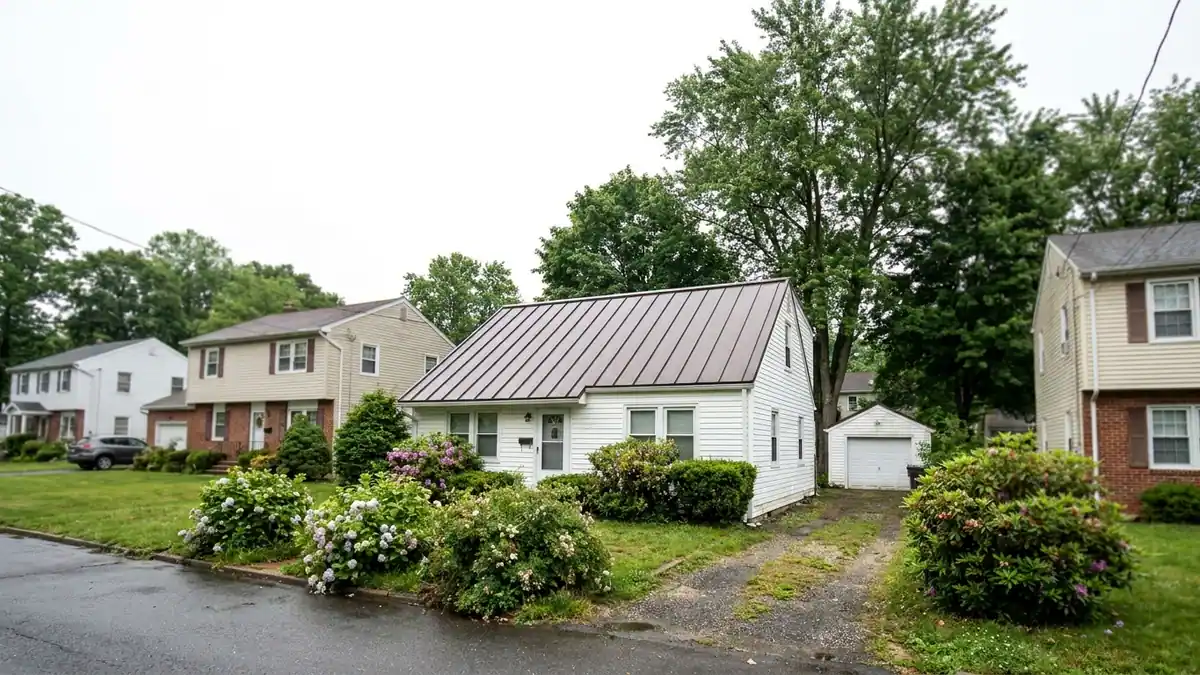
Yes, hail can dent a metal roof, but on a residential roof installed over solid decking the dents are almost always cosmetic and the roof keeps shedding water. Metal type, panel thickness and the shape of the profile decide how visible the damage is, and a wide flat pan shows dimples that a striated or ribbed panel hides. The real storm damage on a metal roof is usually at the soft accessories, meaning gutters, vent hoods, trim and flashing, not the panels themselves.
On this page
- What decides how much a metal roof dents
- Hail size and what it typically does
- Where hail actually causes damage on a metal roof
- What to do after a hailstorm
- Insurance and the cosmetic damage question
- Repairing dented panels, and when it is not worth it
- Choosing a metal roof with hail in mind
- What to do next
Yes, hail dents metal. It dents car hoods, aluminum gutters and vent hoods, and it will dent a roof panel too. What matters for your house is that a dent in a roof panel is a surface deformation, not a hole. The panel still sheds water, the seams are still closed, and the fasteners on a standing seam roof are still hidden under the seam where hail never touches them. A dented metal roof is usually a roof you keep.
That is the short version. Below is what actually controls how much a New Jersey metal roof dents, where hail does cause real damage, and how to handle the insurance side without talking yourself into a replacement you do not need.
What decides how much a metal roof dents
Four things, in roughly this order.
Metal type and thickness
Aluminum is softer than steel and dents more readily at the same thickness. Steel panels resist impact better. Thickness is measured in gauge, and the lower the gauge number, the thicker the metal, so a 24 gauge panel is stiffer and more dent resistant than a 26 gauge panel of the same steel. Copper and zinc are softer still and are expected to show their history.
Panel profile
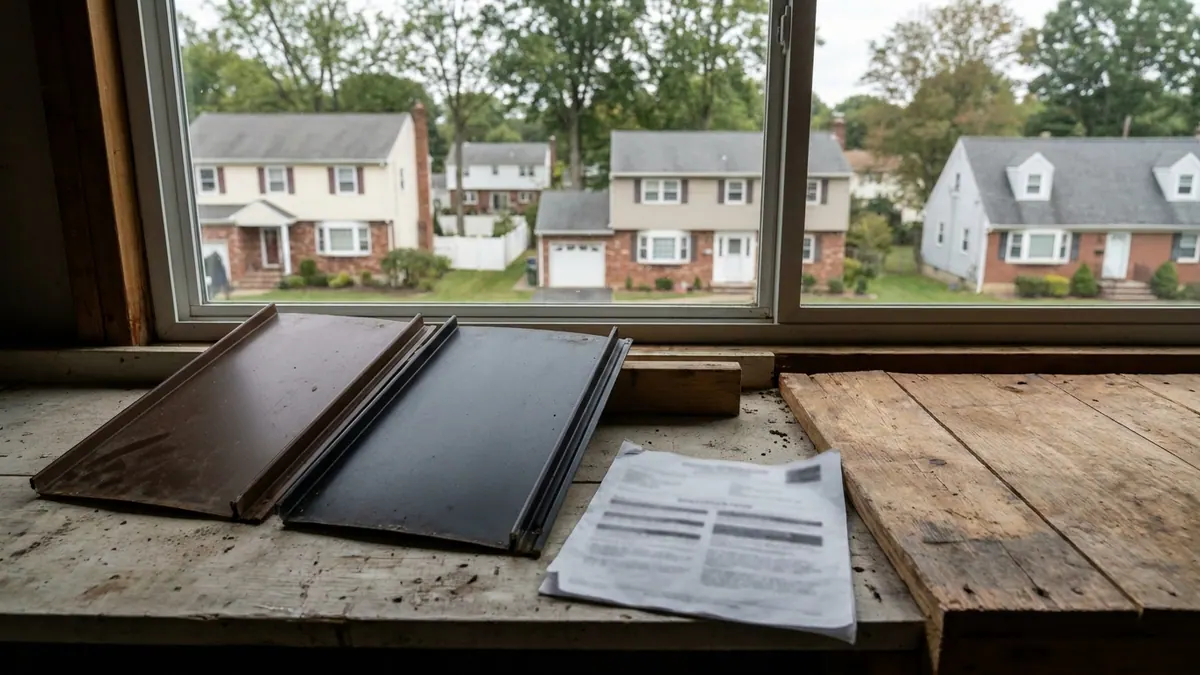
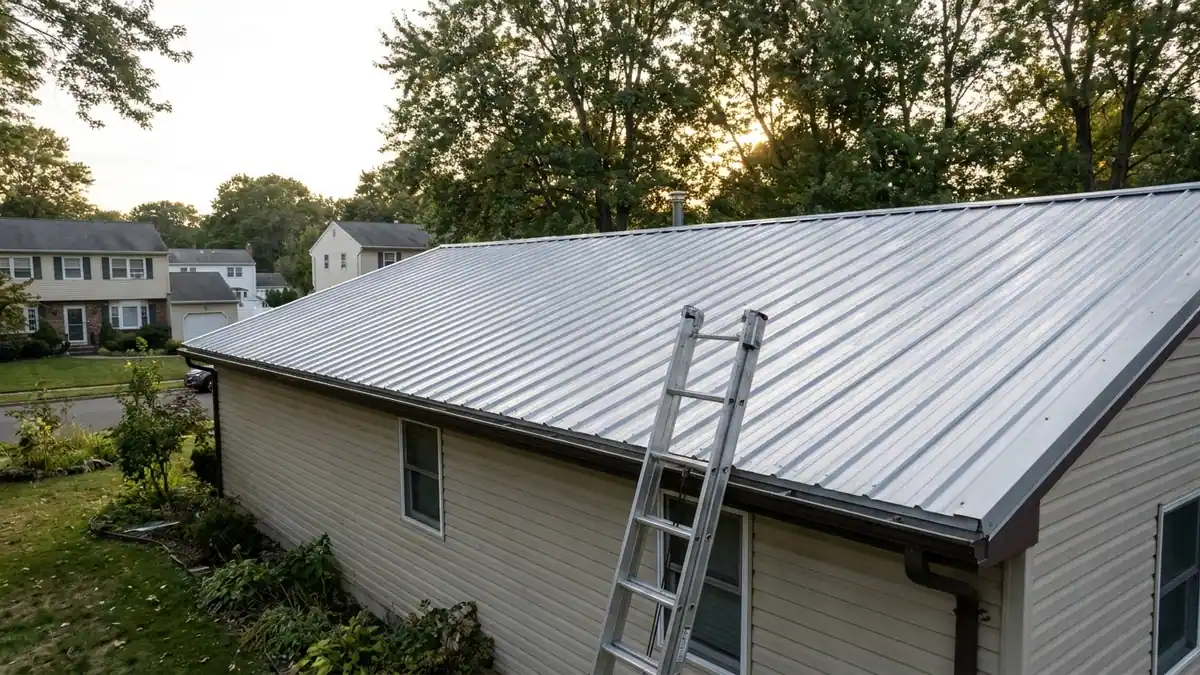
This is the part most homeowners never consider and it matters as much as thickness. A wide, perfectly flat pan is the worst case for appearance, because any dimple in it catches low sun and reads as a shadow from the driveway. Panels with striations, pencil ribs or a textured finish stiffen the flat area and scatter reflections, so the same hail event leaves a roof that looks fine from the ground. Metal shingles pressed into a slate or shake texture hide impact marks better than any flat panel because the surface is already irregular.
What sits under the panel
Metal installed over solid plywood decking with a full underlayment layer has continuous backing behind every square inch. Metal screwed to open purlins on a barn or a pole building has air behind the pan, and air does nothing to stop a hailstone. That is a large part of why the dented metal roofs people picture are agricultural buildings, not houses. Every residential metal roof we install goes over solid decking with underlayment, which is covered in the standing-seam metal roofing guide.
Hail size, speed and angle
Pea sized hail does nothing to a roof. Larger stones falling with wind behind them hit harder and at an angle, which is why the damage after a real storm is often concentrated on one or two slopes facing the storm track. South and west slopes frequently take it while the opposite side of the same roof is untouched.
Hail size and what it typically does
| Hail size | Asphalt shingles | Metal panels |
|---|---|---|
| Hail sizePea to marble | Asphalt shinglesGranule scuffing at most | Metal panelsNothing visible |
| Hail sizeQuarter to half dollar | Asphalt shinglesGranule loss, bruised mat on older roofs | Metal panelsLight dimpling on flat pans, usually invisible on ribbed panels |
| Hail sizeGolf ball | Asphalt shinglesFractured mat, exposed asphalt, functional damage | Metal panelsVisible dents, panels still watertight |
| Hail sizeLarger than golf ball | Asphalt shinglesPunctures and torn shingles | Metal panelsClear denting, possible damage to vents, trim and gutters |
The pattern holds across New Jersey. The hail that ends the life of a worn 18 year old asphalt roof usually leaves a metal roof cosmetically marked and functionally intact.
Where hail actually causes damage on a metal roof
The panels are the strongest part of the assembly. The weak points are everything attached to them.
- Vent hoods and turbines, which are thin and unsupported and crush easily.
- Plumbing pipe boots, where the rubber or silicone collar can split.
- Gutters and downspouts, which are thin aluminum and dent at a much smaller hail size than a roof panel.
- Ridge caps, drip edge and gable trim, which are formed from lighter stock than the panels.
- Skylight glass and the flashing kit around it.
If you have a leak after a hailstorm, start at those points. A dented pan in the middle of a slope is almost never the source.
What to do after a hailstorm
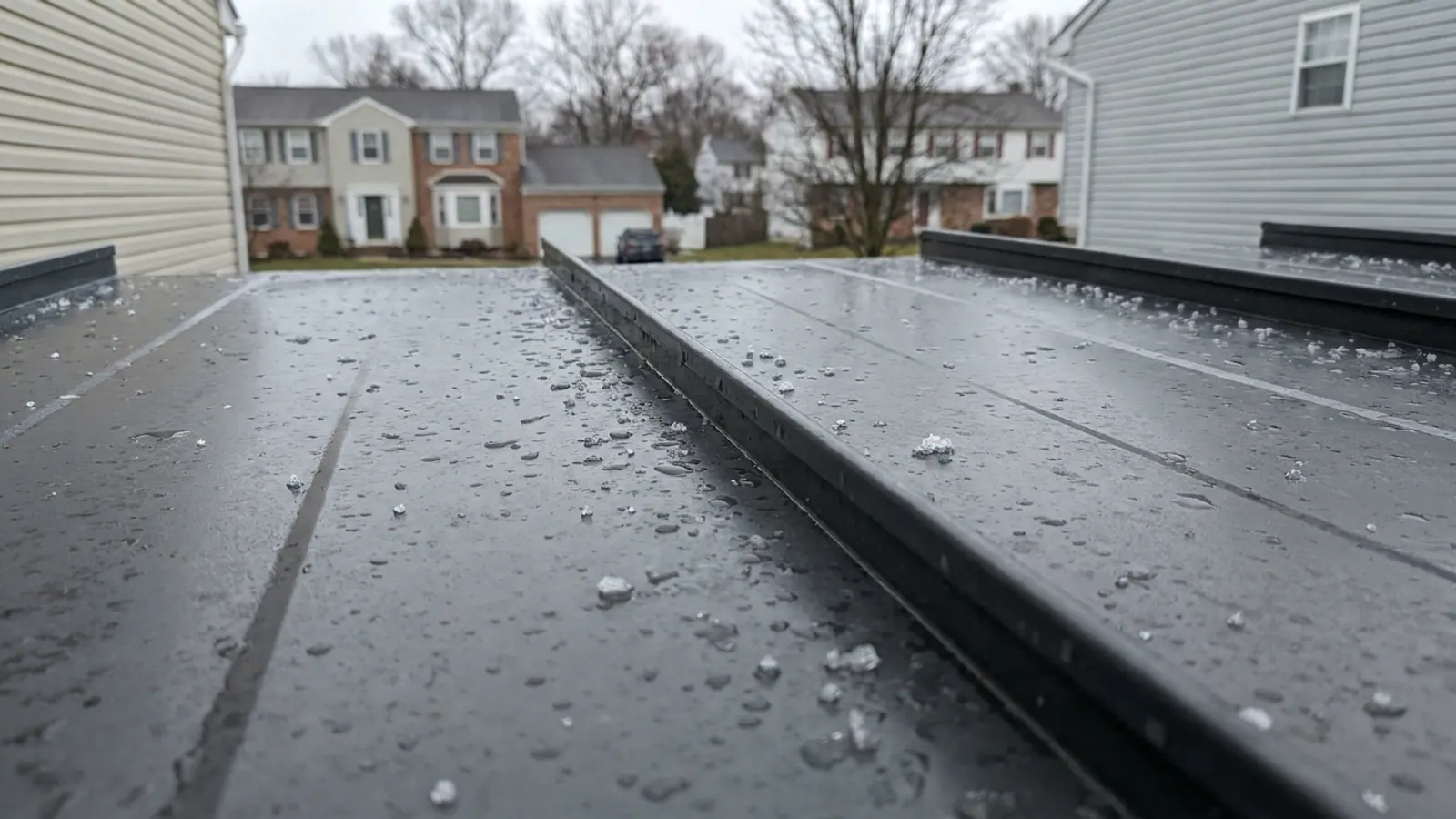
- Stay on the ground. Walking a metal roof wet or frosted is genuinely dangerous, and the wrong footfall on a flat pan can add dents.
- Photograph the gutters, downspouts and any metal on the ground side. Gutter dents are the easiest proof that hail of a given size actually fell on your property.
- Check the attic with a flashlight for daylight, wet sheathing or fresh staining at penetrations.
- Write down the date and time of the storm. Carriers ask for a date of loss, and guessing causes problems later.
- Get a documented inspection with photographs before you call the carrier, so you know what you are actually reporting.
The broader sequence after any storm, including what to do about tarping and timing, is in the storm damage guide.
Insurance and the cosmetic damage question
This is where metal roofs differ from asphalt. Hail that strips granules from asphalt shingles shortens the roof's life, so carriers treat it as functional damage. Hail that dents a metal panel usually does not shorten the roof's life at all, and many policies written on metal roofs include a cosmetic damage exclusion or an endorsement that pays for function and not appearance.
Read your declarations page and your endorsements before you file anything. Ask the carrier in writing whether cosmetic damage to metal roofing is covered and what your deductible is, because wind and hail deductibles are often a percentage of the dwelling amount rather than a flat figure. If the dents are light and the roof is sound, filing a claim you will lose is worse than doing nothing. The process, the paperwork and the common sticking points are covered in the New Jersey roof insurance claim guide.
Repairing dented panels, and when it is not worth it
Individual standing seam panels interlock, and many systems clip or fasten under the adjacent panel. Replacing one panel in the field often means unseaming the run back toward the ridge, which is real labor. A new panel also will not match a roof that has weathered for ten years, so a single replacement can look worse than the dent did.
For most dented metal roofs, the honest answer is to repair what is actually compromised, meaning vent hoods, pipe boots, bent trim and damaged gutters, and leave the panels alone. If a slope took heavy impact and the panels have creased rather than dimpled, replacing that slope becomes the real conversation.
Choosing a metal roof with hail in mind
If hail is on your mind before you buy, make three decisions early. Pick steel over aluminum if dent resistance matters more to you than coastal corrosion performance. Pick a thicker gauge. Pick a striated or ribbed profile, or metal shingles, rather than a wide smooth pan. Ask whether the specific product carries a UL 2218 impact rating and at what class, and get the answer on the estimate rather than in conversation.
Metal roofing in New Jersey runs $18,000 to $35,000 in standard-value towns, $28,000 to $55,000 in higher-value towns, and $45,000 to $120,000 for large or luxury homes, with the band set by the municipality's median home value from ACS 2024 five-year estimates. Standing seam takes two to four days to install, not the single day a typical asphalt replacement takes. See the metal roofing page for the systems we install.
What to do next
If hail came through and you want to know whether your roof has a problem or just a surface mark, have it inspected and photographed before you call anyone else. Lightning Construction's inspection and written estimate are free with no obligation, and a salesperson does come to the house. There is no deposit on any job, the written estimate is the final price with no change orders, and we pull the permit and attend the municipal inspection under the New Jersey Uniform Construction Code. Request a free estimate and get the photos in hand before you make a decision about your metal roof.