Short answer
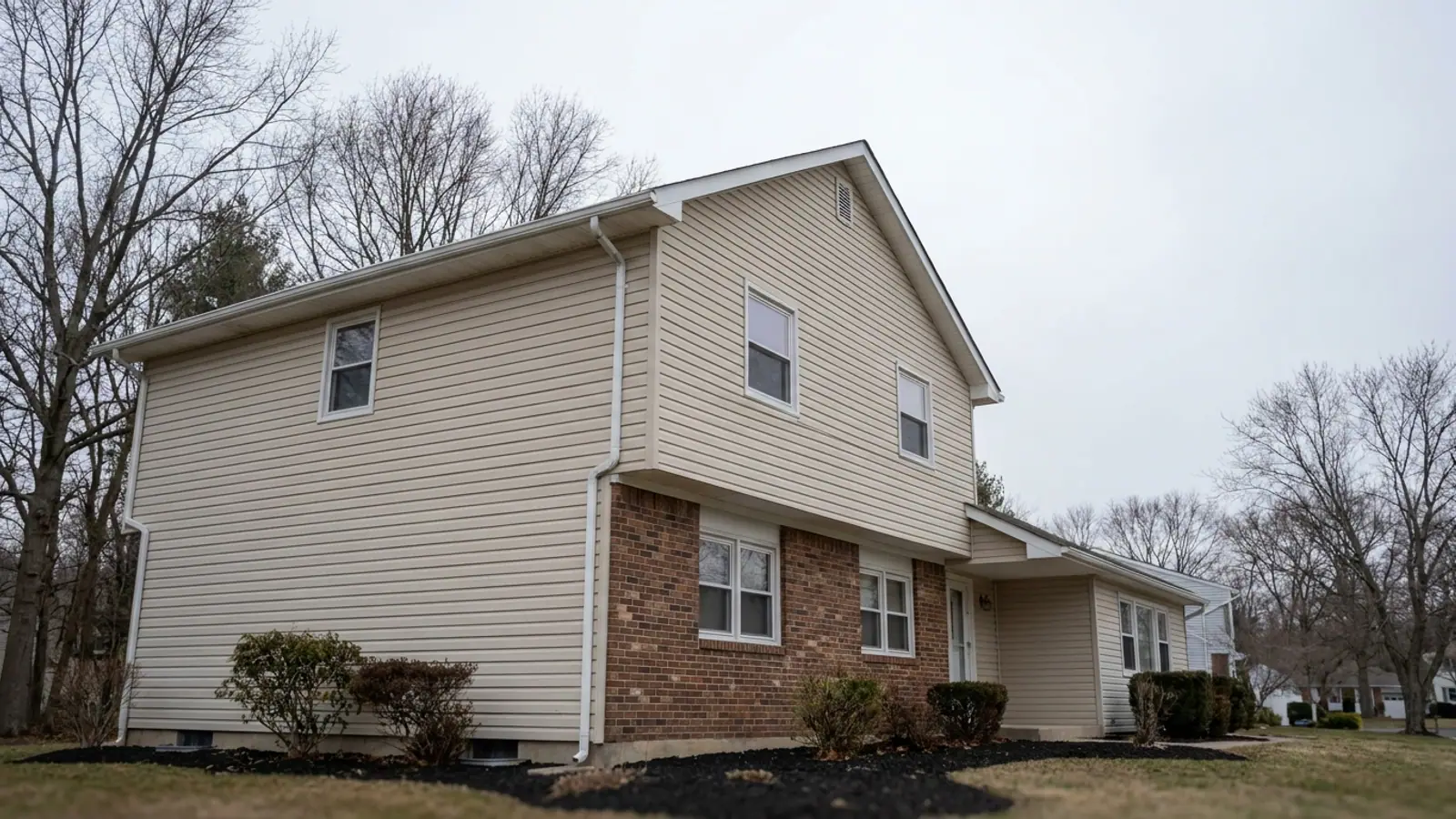
No. Gutters belong on eaves, the low edges where the roof slope actually sheds water, and not on gable ends, where nothing runs off. A simple gable-roofed house is correctly served by two gutter runs, while a hip roof has eaves on all four sides and needs gutters all the way around.
On this page
- Eaves versus rakes, and why the difference decides everything
- How many sides get gutters, by roof shape
- The edges people skip, and what it costs
- Where skipping a gutter is honestly fine
- Downspouts decide more than total footage
- What partial or whole-house gutters cost in New Jersey
- What to ask for in writing
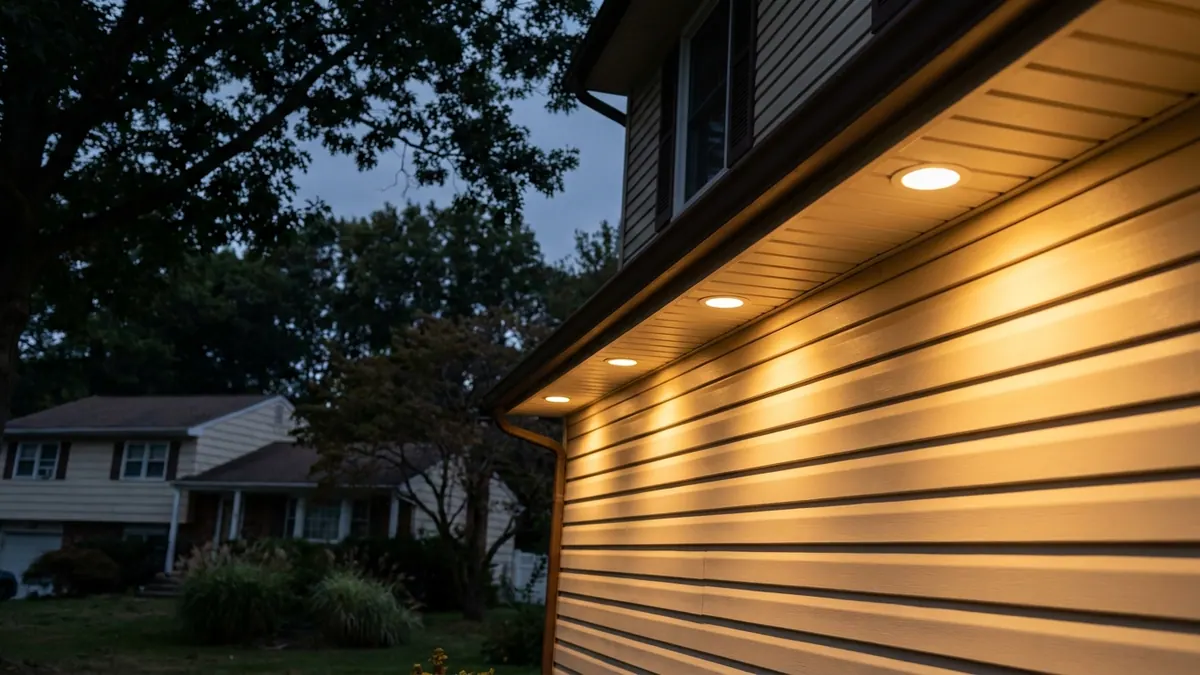
No, and any contractor who tells you otherwise is selling footage you do not need. Gutters belong on eaves — the low horizontal edges where the roof slope actually dumps water. They do not belong on gable ends, also called rake edges, because water does not run off those edges in ordinary rain. On a straightforward gable-roofed New Jersey colonial or ranch, two gutter runs is the correct answer, not a corner cut.
What matters is not how many sides have gutters. What matters is whether every edge that sheds water has one, and whether the water leaving those gutters gets far enough away from the foundation.
Eaves versus rakes, and why the difference decides everything
Stand at the corner of your house and look up. The edge that runs horizontally, parallel to the ground, at the bottom of a slope is the eave. Rain on that slope travels down and leaves the roof there. That edge needs a gutter.
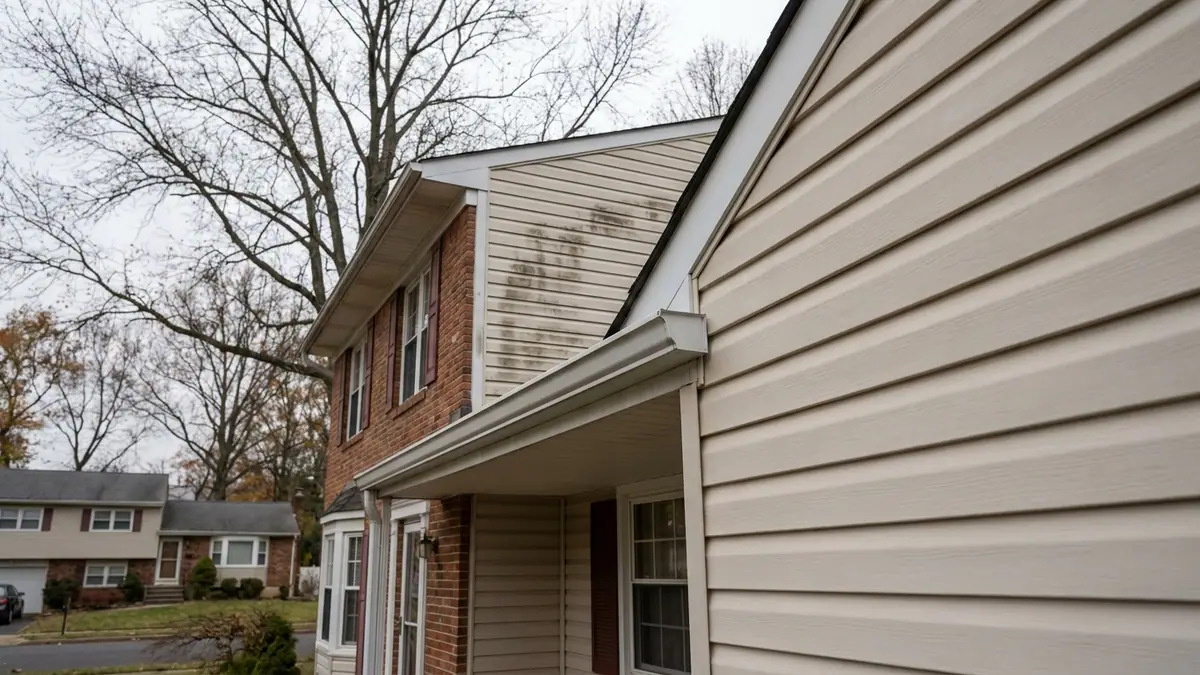
The edge that runs up the slope, at the triangular end of the house, is the rake. Water crosses that edge only when wind drives it sideways or when the roof plane is badly out of shape. A gutter mounted on a rake would sit at the pitch of the roof, which means it holds nothing and drains wherever the low end happens to be. That edge needs drip edge, sound fascia and trim that is not rotted — not a gutter.
That single distinction explains most of what homeowners notice from the street.
How many sides get gutters, by roof shape
| Roof shape | Edges that shed water | Gutter runs you should see |
|---|---|---|
| Roof shapeSimple gable | Edges that shed waterTwo eaves, front and back | Gutter runs you should seeTwo |
| Roof shapeHip roof | Edges that shed waterAll four edges are eaves | Gutter runs you should seeFour, continuous around the house |
| Roof shapeDutch colonial or gambrel | Edges that shed waterTwo eaves at the bottom of the lower slope | Gutter runs you should seeTwo |
| Roof shapeSplit level | Edges that shed waterEaves at each roof level, often at different heights | Gutter runs you should seeThree or more, including the lower level |
| Roof shapeCape with shed dormers | Edges that shed waterMain eaves plus each dormer eave | Gutter runs you should seeTwo main runs, plus dormer gutters where the dormer sheds onto a roof below |
| Roof shapeFront porch or portico | Edges that shed waterThe porch roof eave | Gutter runs you should seeOne short run, plus a downspout |
A lot of New Jersey housing stock was built between the 1950s and the 1970s, and those houses are mostly simple gables, hips and split levels. On a split level in particular, it is normal to have gutters at two or three different heights, and the upper run frequently drops onto the lower roof instead of running all the way to grade. That is workable if the lower gutter is sized for the extra water and there is a splash guard where the upper downspout lands. It is a problem when the upper downspout dumps straight onto shingles and wears a bare spot in the granules.
The edges people skip, and what it costs
Some eaves get left bare, usually because the original builder saved money or because a run came down during a storm and nobody put it back. These are the ones that cause damage.
Over an entry door or walkway
An eave above a front door, side door or basement bulkhead with no gutter drops the entire slope's worth of water on the step. In summer that is annoying. In January it freezes into a sheet on the landing.
Above a garage door
Water sheeting off a bare eave above a garage opening runs back under the door and across the slab. It also soaks the trim on both sides of the opening, which is where garage rot almost always starts.
On the low side of a split level or an addition
An addition roof with no gutter concentrates water along one narrow strip of soil directly against a foundation wall that is often shallower than the original one. A wet basement corner on an addition is very often a missing twelve feet of gutter.
Any eave above a finished basement
If the ground on that side of the house does not fall away from the wall, water with no gutter and no downspout extension has one place to go, and it goes down.
Where skipping a gutter is honestly fine
There are cases where adding gutter is not worth the money.
- A rake edge. Always. Add drip edge instead.
- A detached shed or a small outbuilding set well away from any foundation, on ground that drains.
- A short roof section above a deep, well-graded gravel bed where nothing below it can be damaged and no door is underneath.
- A roof edge that already drains onto a lower roof with a correctly sized gutter and a splash guard, where a second gutter adds a maintenance item and solves nothing.
A contractor who will not name any case where you can skip a run is selling rather than advising.
Downspouts decide more than total footage
You can put gutters on every eave and still get water in the basement if the downspouts are wrong. Two things matter more than the number of gutter runs: how many downspouts each run has, and where the water goes once it leaves them.
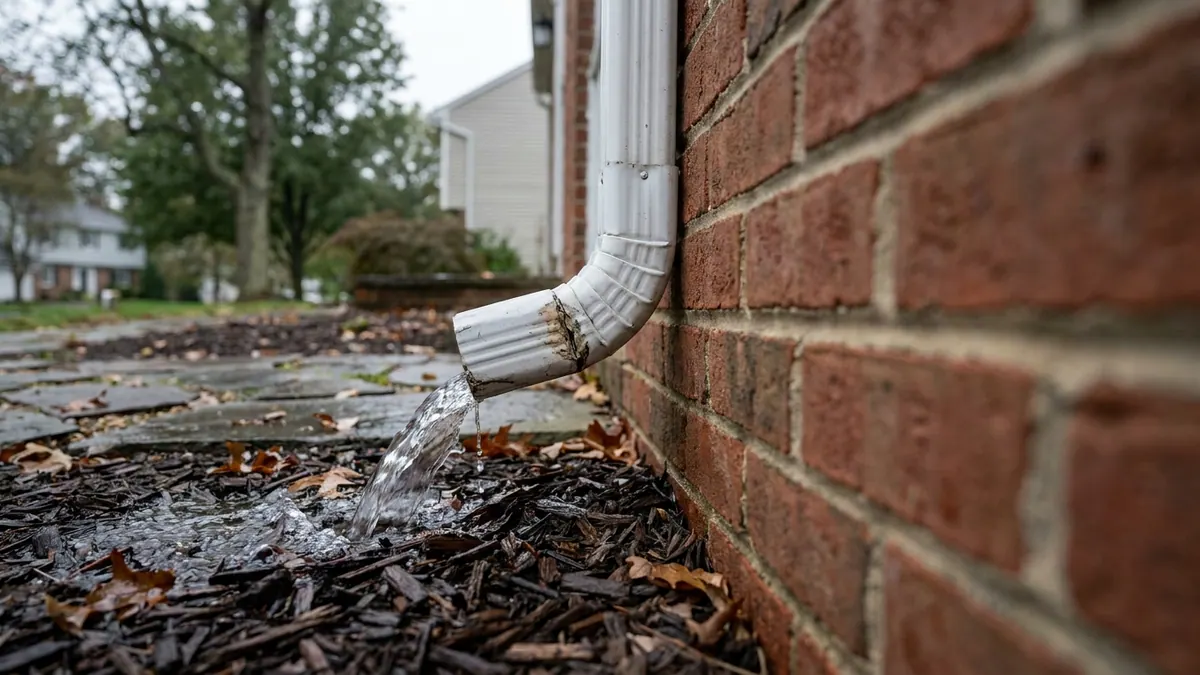
A long run with one downspout at one end moves water the whole length of the gutter before it can leave, which is why the far end overflows first in heavy rain. Splitting that run with a second downspout usually fixes it without changing gutter size at all. And every downspout needs an extension or an underground line that carries the water clear of the foundation, not a stub that lets it pool at the corner.
The seamless gutters guide walks through profile, material and guard options. The gutter maintenance guide covers the seasonal work that keeps what you already have functioning — including the winter checks that keep a clogged run from feeding an ice dam along the eave.
What partial or whole-house gutters cost in New Jersey
Seamless aluminum gutters, guards, downspouts and re-pitching run $1,200 to $3,500 in standard-value towns, $2,500 to $6,500 in higher-value towns, and $4,000 to $12,000 on large or luxury homes. The band comes from the municipality's median home value in the ACS 2024 five-year estimates, not from your roof. Within a band, total footage, the number of downspouts, working height and whether guards are included move the number.
A single missing run on one eave lands at the low end of that. A full wrap on a hip-roofed house with four downspouts and guards lands at the high end.
What to ask for in writing
Before anyone hangs metal on your house, get these on the estimate:
- Which eaves are being gutterred and which edges are deliberately being left alone, listed by elevation — front, rear, left, right.
- Gutter size, downspout size, and how many downspouts per run.
- Where each downspout discharges, and whether extensions or underground tie-ins are included.
- Whether gutter apron or drip edge is being installed or reused at the roof edge.
- Color, and whether it matches existing runs that are staying.
Lightning Construction takes no deposit — nothing is due until the work is finished and you have inspected it — and writes no change orders, because the written estimate is the final price. The inspection and the written estimate are free with no obligation, and a salesperson does come to the house. If gutters are going on with a roof, Lightning pulls the permit and attends the municipal inspection under the New Jersey Uniform Construction Code; you file nothing.
If one side of your house has been running water down the siding for years, see the gutters page for what is included, or book a free estimate and have someone measure the eaves that actually need covering.