Short answer
Most New Jersey houses are correctly served by 5-inch seamless aluminum gutters with 2x3-inch downspouts. A 6-inch gutter with 3x4-inch downspouts is the right call when the roof is steep, when one gutter run drains an unusually large area of roof, or when the existing 5-inch gutters overflow in heavy rain despite being clean.
On this page
Gutter size is one of the few parts of a house where the right answer is a calculation rather than a preference, and it is also one of the most common things to find wrong. A gutter is sized to carry the water that lands on the roof above it during a hard rain. Get that wrong and the gutter overflows no matter how clean it is.
Here is how the size actually gets decided, and what to look at on your own house.
The two sizes almost every New Jersey home uses
Residential gutters in New Jersey come in two practical sizes.
5-inch K-style is the default, and it is the correct choice for most houses in the state. Paired with 2x3-inch downspouts it handles a typical roof comfortably.
6-inch K-style holds noticeably more water and pairs with 3x4-inch downspouts, which have roughly twice the cross-section of a 2x3. It is the right answer on a minority of houses, but on those houses it is not optional.
The difference is not just the extra inch of width. A 6-inch trough is deeper as well, so the increase in the water it carries is larger than the size names suggest. The bigger downspout matters just as much, and that is the part people skip.
What decides which one your house needs
Three things drive the number, and they compound.
Roof area draining to that run
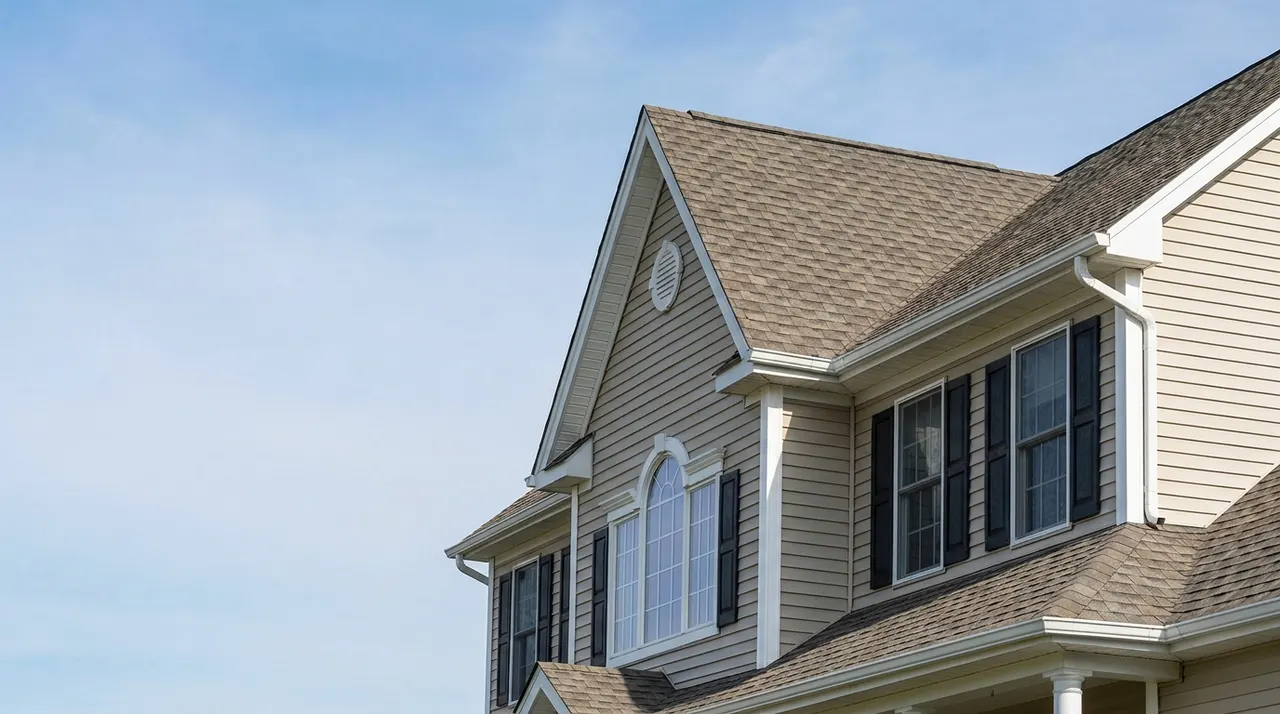
This is the main one. Gutter capacity is about the square footage of roof feeding a particular length of gutter, not the size of the house. A long ranch might drain a modest area to each run. A center-hall colonial with two large roof planes funneling into one valley can put a surprising amount of roof onto a single short section of gutter, and that section is where it overflows.
Valleys are the usual culprit. Where two roof planes meet, everything that lands on both of them arrives at one point on the gutter, often as a concentrated stream rather than an even sheet.
Roof pitch
A steep roof delivers water to the gutter faster and with more forward momentum than a shallow one. Same rainfall, same square footage, but it arrives quicker and it tends to shoot past the front lip rather than dropping into the trough. Steeper roofs push toward the larger size.
How much rain, how fast
Sizing is based on peak intensity, not annual rainfall. New Jersey summer thunderstorms and the tail ends of coastal systems drop a lot of water in a short window, which is the condition a gutter has to survive. A gutter sized for average rain fails several times a year.
Downspouts matter more than most people think
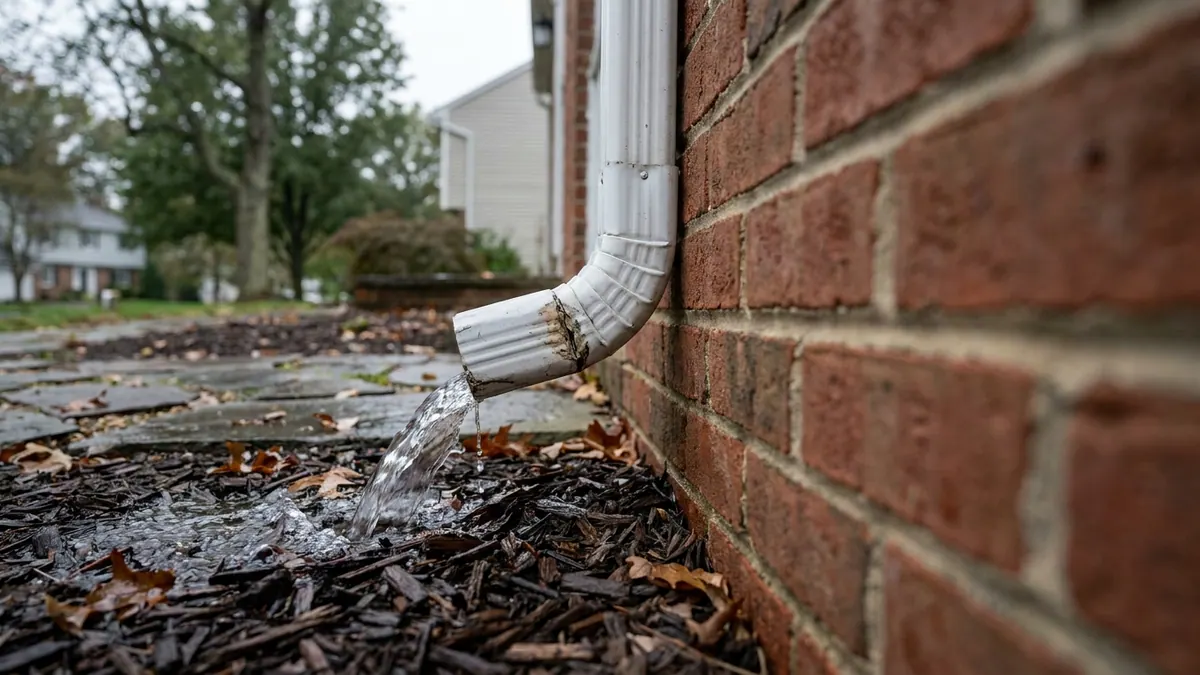
You can install the largest gutter made and still have it overflow if the water cannot get out of it. The trough only stores water on its way to the downspout, so the outlet is the actual constraint.
Two things go wrong here regularly:
- Too few downspouts. A long run with a single downspout at one end forces water to travel the whole length before it can leave. The far end fills first and spills.
- Downspouts that are too small for the gutter. A 6-inch gutter draining through 2x3-inch downspouts is a wide road onto a narrow bridge. Upgrading the trough without upgrading the outlets buys much less than it should.
Adding a downspout is often a cheaper and more effective fix than going up a gutter size, particularly on a long straight run.
Comparing the two sizes
| 5-inch | 6-inch | |
|---|---|---|
| Typical downspout | 5-inch2x3-inch | 6-inch3x4-inch |
| Best for | 5-inchMost NJ homes, moderate pitch and roof area | 6-inchSteep roofs, large roof planes, valleys concentrating flow |
| Look against fascia | 5-inchStandard, visually lighter | 6-inchNoticeably chunkier |
| Cost | 5-inchLower | 6-inchHigher per foot and per downspout |
| Common failure | 5-inchOverflows when undersized for the roof | 6-inchBacks up if downspouts were not upsized too |
The signs your gutters are the wrong size
You do not need a calculation to spot most of these. In a heavy rain, look at the house.
- Water sheets over the front edge in a curtain while the gutter is visibly clean.
- One specific section overflows every time and the rest are fine, usually under a valley.
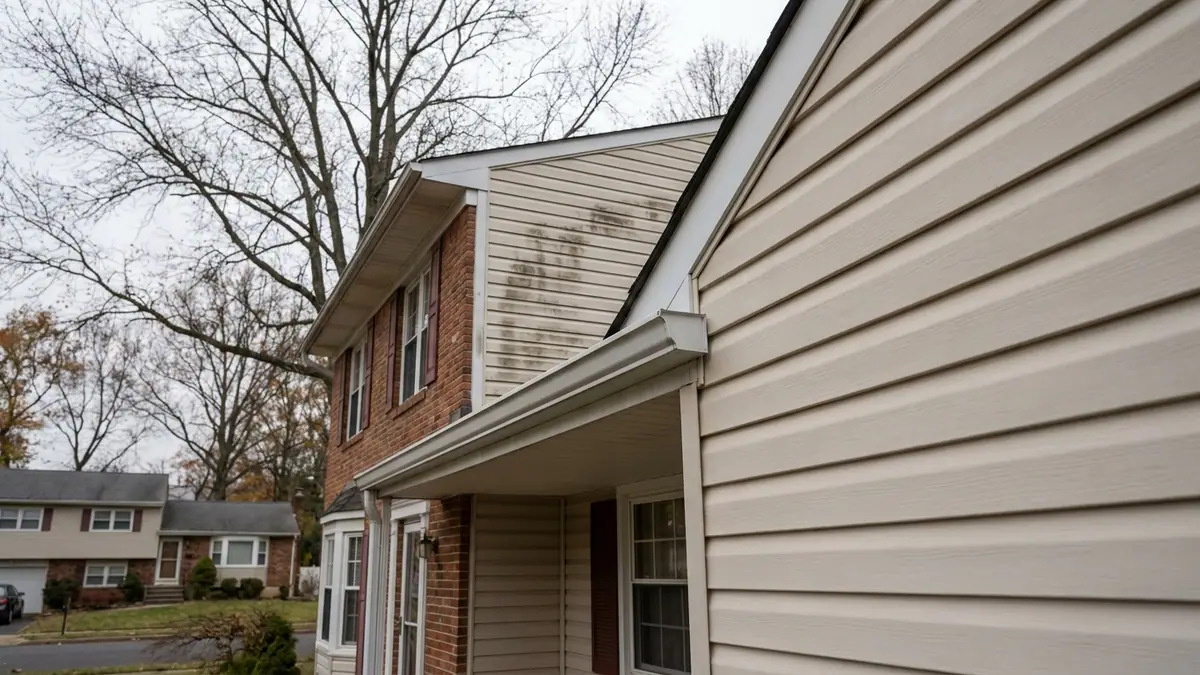
- There are stains or streaks on the fascia and siding directly below the gutter line.
- The ground below one spot has been dug out by falling water, or there is a trench along the drip line.
- Water runs behind the gutter rather than over the front, which is the worst version and the one that rots the fascia board.
That last one deserves attention. Water getting behind a gutter usually points to a missing or misplaced drip edge as much as to size, and it damages the roof edge and the fascia at the same time. It is worth having looked at rather than watching for another season.
Seasonal cleaning and inspection habits are covered in the gutter maintenance guide, and the trade-offs between guards and open gutters are in the seamless gutters and guards guide.
Why seamless matters at either size
Sectional gutters sold in ten-foot lengths join every ten feet, and every joint is a future leak. Seamless gutters are rolled to length on site from a single coil of aluminum, so a straight run has no joints at all along its length — only at corners and outlets.
That matters more at the larger size, because a 6-inch gutter carries more water and puts more load on every connection. It also matters for pitch. A seamless run can be hung with a consistent, deliberate slope toward the outlet across its whole length, which is what actually moves water out. Re-pitching an existing gutter that was hung level is sometimes the entire fix.
Getting it measured rather than guessed
The reason gutter size is worth getting right is that the failure is not confined to the gutters. Water that overflows lands at the foundation, runs behind the fascia, or backs up under the roof edge, and those repairs cost multiples of what the gutter did.
Lightning Construction installs seamless aluminum gutters, guards, downspouts and re-pitching across all 21 New Jersey counties, and the inspection and written estimate are free with no obligation. Someone comes to the house, measures the roof planes actually draining to each run, and puts a number in writing — with no deposit and no change orders, so the price you are quoted is the price you pay.
If your gutters overflow when they are clean, that is the sign worth acting on. You can see the full scope of the work on the gutters page or request a free estimate.