Short answer
Repair a gutter when the problem is in one spot and the rest of the run is straight, solid and draining. Replace when the same failure keeps showing up in different places, when the aluminum is dented, corroded or sagging between hangers, or when the run was never pitched correctly to begin with. Patching stops paying off once you are fixing the same 40 feet more than once a year.
On this page
Repair the problem that is in one place. Replace the run that is failing everywhere. That is the whole decision, and almost every gutter question a New Jersey homeowner has comes down to which of those two you are looking at.
The reason patching stops paying off is that gutter failures are rarely isolated. A seam opens because the aluminum expanded and contracted through a few dozen Jersey freeze-thaw cycles, and every other seam on that run has been doing the same thing. Sealant buys you a season. The next opening is three feet down.
Gutter problems that are genuinely worth repairing
These are local failures on a run that is otherwise straight, tight to the fascia and draining where it should.
- A single end cap leaking. End caps are a sealed joint, and one of them letting go is normal wear, not a system failure.
- One loose or missing hanger. If the rest of the run is holding its line and the fascia behind it is solid wood, adding or resetting a hanger is a real fix.
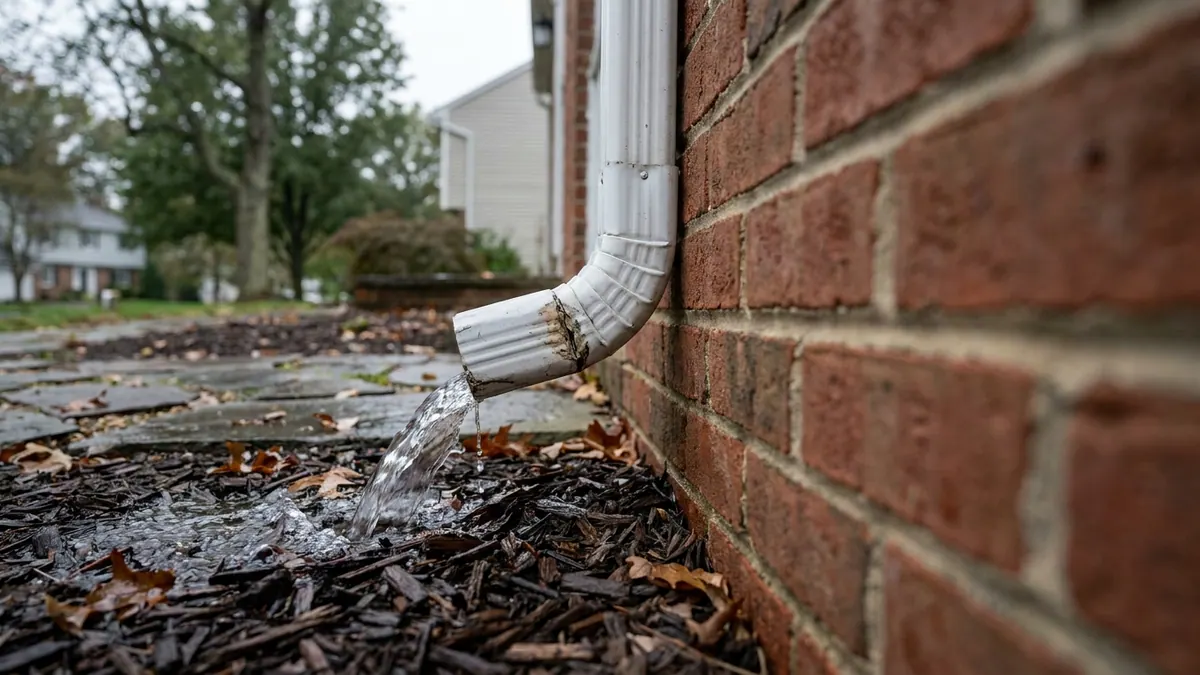
- A downspout that has separated at an elbow. Refastening it costs almost nothing and solves the puddle at the foundation.
- Physical damage in one spot. A ladder dent, a branch strike, a section crushed by ice sliding off a steep slope. The rest of the gutter did not do anything wrong.
- A run that is pitched wrong but otherwise sound. Re-pitching an existing seamless gutter is a repair, not a replacement, and it is the correct answer when water stands in the trough but the metal is clean and tight.
With any of these, get the rest of the system looked at while the ladder is up. Most repair calls that come back within a year were correct repairs to the wrong problem.
Gutter problems that mean the run is done
Once you see these, money spent on patching is money you spend again.
- Repeat seam separations. Two or three failed joints on the same run means the sectional gutter is moving with every temperature swing and will keep moving.
- Sagging between hangers with no failed hanger. The aluminum has stretched or the gauge was too light. New hangers do not restore a bowed trough.
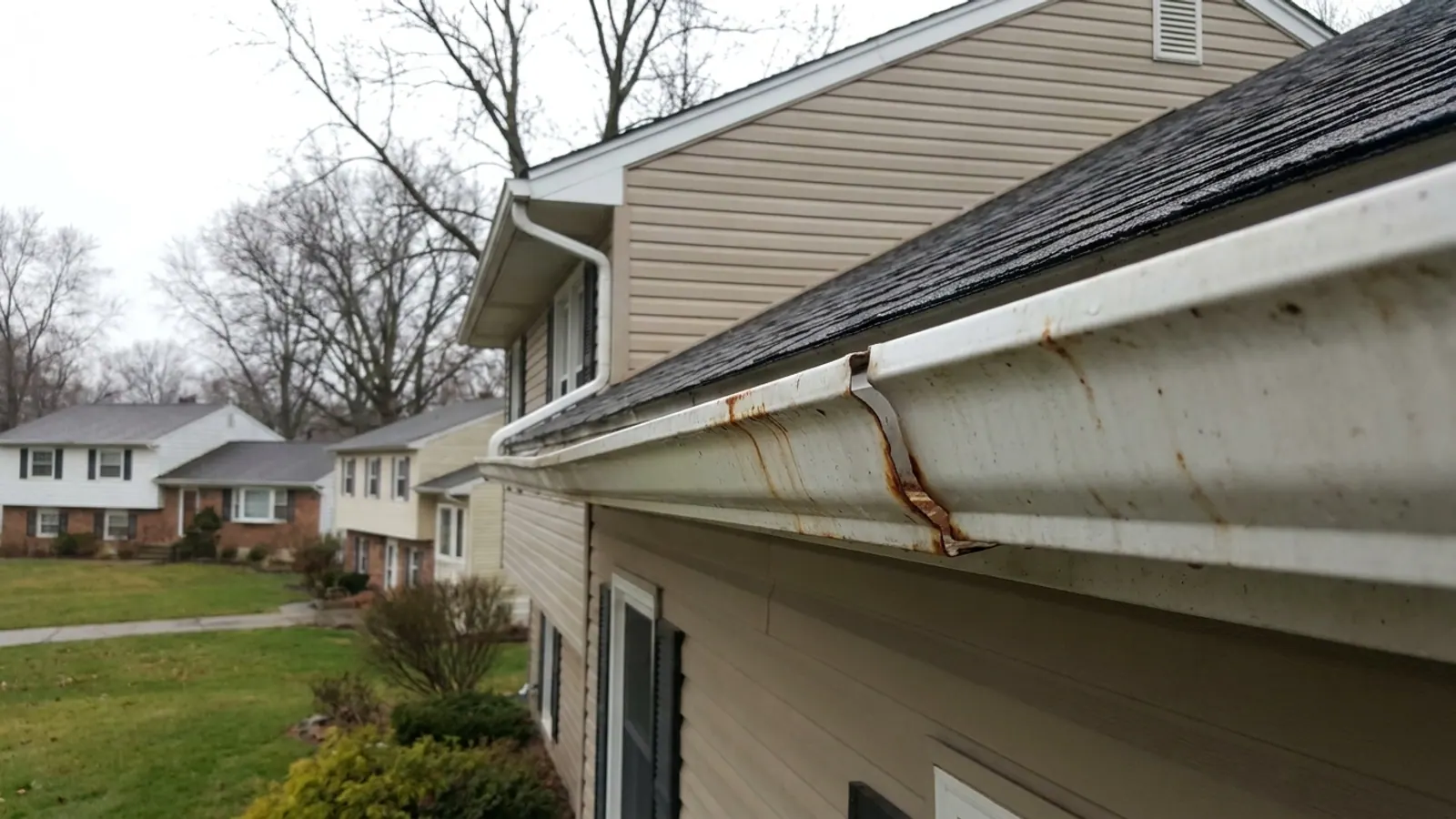
- Rust staining and pinholes. On steel gutters this is terminal. On aluminum, staining usually means the fasteners are corroding and the metal around them is chewed up.
- Fascia rot behind the gutter. The board is the anchor. If it is soft, the gutter comes off regardless, and rehanging fifteen-year-old aluminum onto new wood is false economy.
- Gutters that overflow when clean. That is a sizing or a downspout capacity problem, and no repair fixes undersized metal.
- Ice damage from repeated winters. Gutters that have been torn or pulled by ice loads have stressed seams and elongated fastener holes you cannot see from the ground. The heat cable and sealant route does not address why the ice formed. The ice dams guide covers the attic and ventilation side of that problem, which is where it actually starts.
Repair or replace, side by side
| What you are seeing | Usual answer | Why |
|---|---|---|
| What you are seeingOne leaking end cap or miter | Usual answerRepair | WhySingle sealed joint, normal wear |
| What you are seeingThree or more leaking seams on a run | Usual answerReplace | WhyThe sectional joints are all moving |
| What you are seeingOne loose hanger, fascia solid | Usual answerRepair | WhyAnchor is sound |
| What you are seeingGutter bowed between good hangers | Usual answerReplace | WhyMetal has deformed |
| What you are seeingStanding water, metal clean and tight | Usual answerRepair by re-pitching | WhySlope problem, not a material problem |
| What you are seeingOverflow during heavy rain when clean | Usual answerReplace, size up | WhyTrough or downspout capacity is short |
| What you are seeingRust stains, pinholes, chalky streaks | Usual answerReplace | WhyMaterial is at the end of its life |
| What you are seeingRotted fascia or soffit behind the gutter | Usual answerReplace, after the wood is fixed | WhyGutter has to come down anyway |
| What you are seeingDamage in one 10-foot section only | Usual answerRepair or partial replace | WhyFailure is local |
How to decide without guessing
Run it in this order and the answer usually falls out on its own.
- Clean the gutters first, or have them cleaned. Half of what gets diagnosed as a failed gutter is a full one. The seasonal gutter maintenance guide covers what to clear and when.
- Run a hose into the high end of each run. Watch where water stands, where it drips, and whether it reaches the downspout.
- Count the leak points per run. One is a repair. Three is a replacement.
- Check the fascia with a screwdriver, not your eyes. Soft wood behind the gutter changes the answer regardless of how the metal looks.
- Add up what you have already spent on that run. If you have paid for the same 40 feet twice, the third time is not going to be different.
- Get a written estimate for both. A contractor who will only quote replacement is not giving you information.
Why sectional gutters fail more than seamless
Most of the gutters that come off New Jersey houses are sectional aluminum, sold in 10-foot lengths and joined with a slip connector and sealant. Every one of those joints is a future leak, because aluminum expands and contracts across a New Jersey year and the sealant does not.
Seamless aluminum is roll-formed on site to the exact length of your eave. The only joints are at the corners, end caps and downspout outlets. That is the single biggest difference in how long a gutter goes before you are back on a ladder, and it is why a replacement quote and a repeat repair bill start to look very similar over a few years. The seamless gutters guide covers the material, guard options and hanger spacing in depth.
What gutter replacement costs in New Jersey
Lightning Construction's gutter work runs $1,200 to $3,500 in standard-value towns, $2,500 to $6,500 in higher-value towns, and $4,000 to $12,000 for large or luxury homes. The band is set by the municipality's median home value from ACS 2024 five-year estimates, not by your gutters. Within the band, the drivers are linear footage, the number of corners, how many downspouts the roof needs, two-story versus one-story access, and whether guards are included.
Repairs are quoted at the free inspection alongside the replacement number, so you can see both figures before you decide anything. What is not on the estimate is a deposit: nothing is due until the work is finished and you have inspected it. There are no change orders either. The conditions that normally create one, like rotted fascia found behind the old gutter, are identified at the inspection and priced into the quote. Where the work requires a municipal permit, Lightning pulls it and attends the inspection.
What to do next
If you are patching the same run twice a year, stop. Have the whole system looked at, get the repair price and the replacement price on the same sheet of paper, and choose with real numbers. Lightning Construction is veteran-owned, family-operated, GAF Certified, licensed and insured under New Jersey Home Improvement Contractor registration 13VH12437000, and works in all 21 New Jersey counties.
See what is involved in a full seamless gutter installation, or book the free inspection and written estimate. It is free, there is no obligation, and a salesperson comes to the house.