Short answer
Gutter guards are worth it on houses with heavy tree cover overhead, gutters that are hard or unsafe to reach, and roofs that dump a lot of water into one short run. On an open lot with no trees within reach of the roof, guards mostly buy you a cleaning you were barely doing anyway. No guard makes a gutter maintenance-free, and putting one on a gutter that is undersized, wrongly pitched or pulling off the fascia just hides the real problem.
On this page
Gutter guards are worth it on a specific kind of house: heavy tree cover directly over the roof, gutters that are two stories up or over a deck, a steep roof, or a run that drains an unusually large area. On a house with no trees near the roof and gutters you can reach off a step ladder, a guard is a convenience purchase, not a repair.
That is the whole decision. What follows is how to place your own house on that line, what each guard type actually fails at, and what has to be true about the gutter before a guard goes on it.
What gutter guards actually do
A guard is a screen, mesh, cover or insert that keeps large debris out of the trough while letting water in. That is the entire job. It does not move water faster, it does not fix pitch, and it does not add capacity. If your gutters overflow in a hard rain when they are clean, a guard will not change that, and depending on the design it can make it worse.
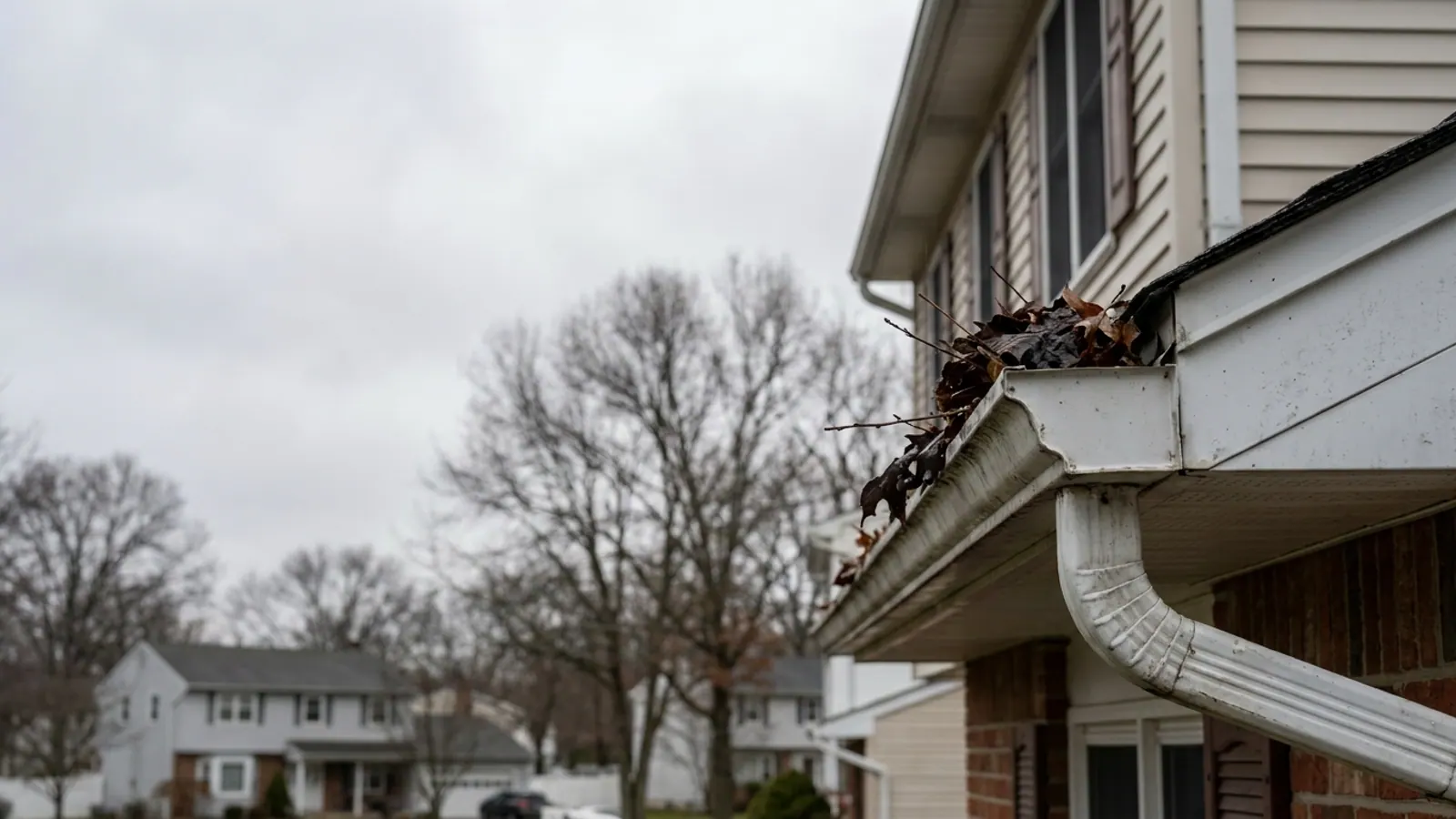
What a good guard does buy you is time. Instead of pulling wet compacted leaves out of a trough twice a year, you are clearing debris off a surface, usually from the ground with a pole or from a ladder in a few minutes. On a two-story colonial with oaks overhead, that difference is the whole value.
Which New Jersey homes actually need them
Work down this list. If two or more apply, guards are a reasonable spend.
- Mature trees overhang the roof. Oaks, maples and pines within reach of the roof plane put debris in the gutter continuously, not just in November. Pine needles are the worst case because they weave into a mat that water sits on top of.
- The gutters are high or awkward to reach. Second and third story runs, gutters over a deck, a bulkhead, a slope or a hedge. The cost of the guard is measured against paying someone to clean those runs every year for the next fifteen.
- Nobody in the house should be on a ladder. This is the honest reason for a lot of guard installs and it is a good one.
- A steep roof concentrates water and debris. Steep pitches throw everything to the eave fast and pack it in tight.
- One short gutter run drains a big roof area, or a valley empties into it. Valleys funnel leaves into one spot, and that spot clogs first every single year.
- The roof is new and you are protecting the fascia and soffit. If you have just paid for a roof, keeping standing water and ice out of the gutter is protecting the edge detail under it.
Which homes do not need them
An open lot with no tree canopy over the roof. Single-story ranches with gutters you can reach and inspect in twenty minutes. Houses where the trees are tall but well away from the roofline, so what lands in the gutter is windblown grit rather than leaf load.
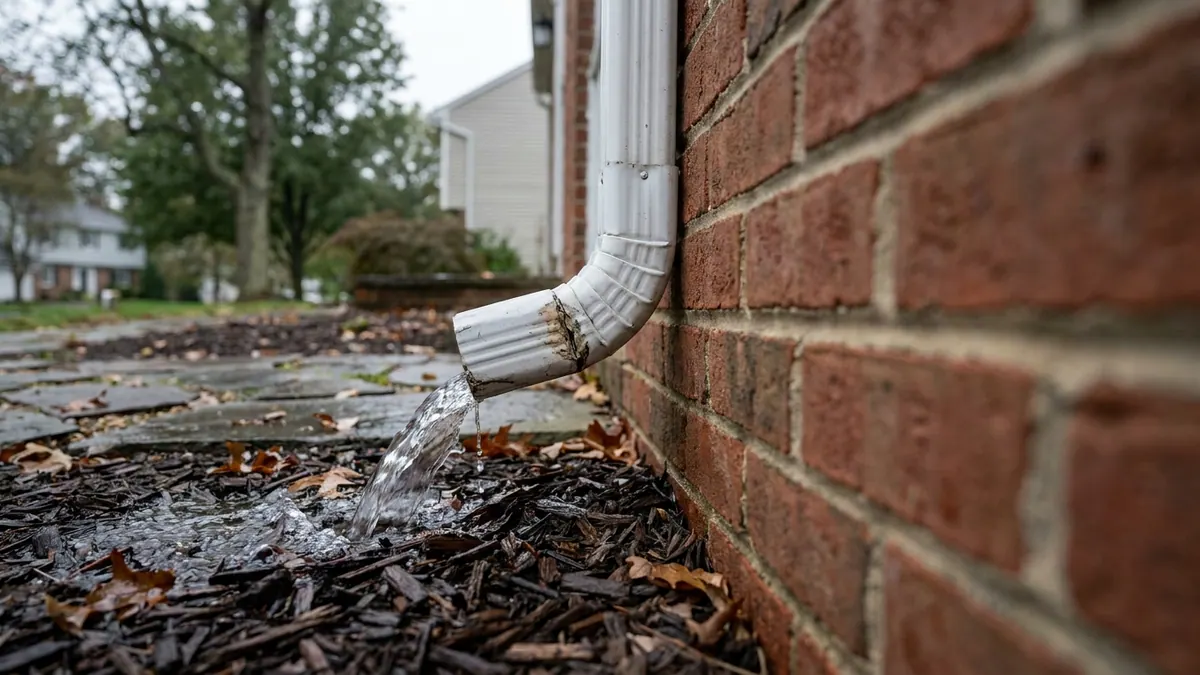
There is also a case where guards are the wrong purchase because the money belongs somewhere else. If your gutters are sagging, leaking at the seams, spilling at the corners or pulling away from the fascia, that is a gutter problem, and a guard on top of it is money spent covering a failure you are still going to pay for. Same with downspouts that discharge against the foundation. Get the water off the house correctly first.
Guard types and what each one fails at
| Guard type | How it works | Where it fails |
|---|---|---|
| Guard typeMicro-mesh (stainless on an aluminum frame) | How it worksFine mesh over the trough opening blocks nearly everything but water | Where it failsMesh surface can blind over with pollen, shingle granules and maple seeds; needs periodic brushing |
| Guard typePerforated aluminum screen | How it worksPunched holes in a solid panel that clips or screws in | Where it failsSmall debris passes through; pine needles can stand in the holes |
| Guard typeReverse curve / surface tension | How it worksWater wraps a curved nose into a narrow slot; leaves ride over the edge | Where it failsHeavy downpours on a steep roof can overshoot the slot entirely; the slot itself collects grit |
| Guard typeFoam insert | How it worksPorous block sits inside the gutter | Where it failsHolds moisture and debris, breaks down under ultraviolet light, becomes a seedbed |
| Guard typeBrush insert | How it worksBristle cylinder inside the trough traps debris above the water line | Where it failsDebris packs into the bristles and has to be pulled out, which is the job you were avoiding |
The pattern is that anything installed inside the gutter traps debris where you have to reach in to get it. Anything installed over the gutter moves the cleaning to a surface you can reach more easily. That is the practical difference between the categories.
What a guard will not fix
Guards do not fix capacity, pitch or fastening. If the trough is too small for the roof area draining into it, the water goes over the front edge whether there is a screen there or not. If the pitch is flat or backwards, water stands in the trough, breeds mosquitoes and works the seams loose. If the hangers are spaced too far apart or screwed into rotted fascia, weight will still pull the gutter down.
Guards also do not stop ice damming. Ice dams start with heat leaking into the attic, melting snow on the roof and refreezing at the cold eave. The ice dam guide covers the causes in detail. A guard can hold ice out at the roof edge once a dam has already formed, so on a house with a history of dams the attic gets addressed before anyone talks about gutter accessories.
What still needs doing after guards go on
A guard changes the maintenance, it does not delete it. Once or twice a year somebody should:
- Clear whatever is sitting on top of the guard, especially at valleys and inside corners.
- Check every downspout by running a hose into the gutter and watching the outlet at the bottom.
- Look at the corners and seams for staining, which is where slow leaks show first.
- Check that the discharge is still carrying water away from the foundation and has not been buried, crushed or knocked loose.
That sequence and the seasonal timing are laid out in the gutter maintenance guide. The seamless gutters and guards guide goes deeper on the systems themselves.
What to ask for in writing
Before you sign anything for gutters or guards, the estimate should name the guard product and its material, the gutter size and downspout size, the hanger spacing, and whether any fascia repair is included. If a contractor is quoting guards without having looked at the pitch, the hangers and the fascia behind them, they are quoting a product, not a job.
Lightning Construction inspects the gutters, the fascia and the roof edge for free and puts what it finds in the written estimate, so the conditions that usually turn into a surprise line item are priced up front. There is no deposit, nothing is due until the work is done and you have looked at it, and the written estimate is the final price. A salesperson does come to the house for the estimate; it is free and there is no obligation.
Gutter work, including seamless aluminum, guards, downspouts and re-pitching, runs $1,200-$3,500 in standard-value New Jersey towns, $2,500-$6,500 in higher-value towns and $4,000-$12,000 for large or luxury homes. The band is set by the municipality's median home value.
If your gutters are overflowing, sagging or filling every fall, start with what the gutters are doing rather than with the guard catalog. See the gutter services page for what the work covers, or book a free estimate and have someone put a ladder on the house and tell you which of the two problems you actually have.