Short answer
A drip edge is an L-shaped or kicked metal flashing that carries water off the last inch of roof deck and away from the fascia. A gutter apron is a longer, deeper version of the same piece, bent so its lower leg reaches out over the back of the gutter and drops water directly into the trough. On most New Jersey eaves the apron is the better detail, because it removes the gap where water can run backward down the fascia board.
On this page
- What each piece actually looks like
- Signs water is already running behind your gutter
- Gutter apron vs. drip edge, side by side
- When a plain drip edge is fine, and when it is not
- How it should be installed
- Retrofitting an apron on an existing roof
- What ice and snow do at this detail
- What to put in writing before the job
- What to do next
A drip edge and a gutter apron are the same idea built two different ways. Both are bent metal that finishes the last inch of roof deck. The drip edge has a short lower leg that hangs down past the fascia and kicks water clear of it. The gutter apron has a much longer lower leg, bent at a shallower angle, so it reaches out past the fascia and drops the water inside the gutter, over the back lip. That extra two inches of metal is the whole difference, and it is the reason one house has a fascia board that is 40 years old and sound and the next one has fascia rot under a gutter that never clogged.
What each piece actually looks like
Edge metal comes in a few standard profiles. The one most homeowners have seen is a simple L: a flange that lies on the deck under the shingles and underlayment, and a vertical face that covers the edge of the deck. Better versions add a small outward kick at the bottom so water breaks away from the fascia instead of clinging to it.
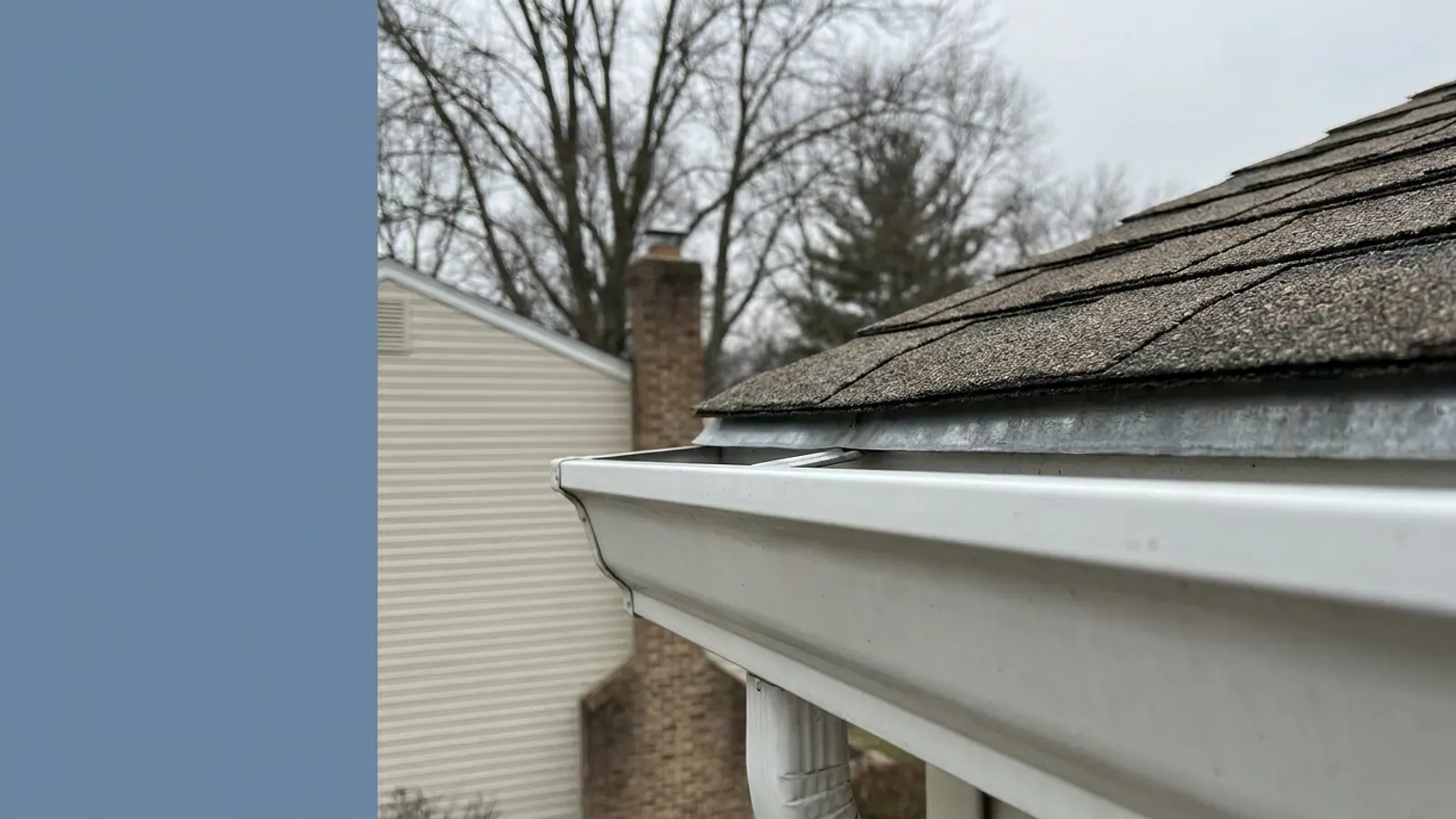
A gutter apron takes the same deck flange and replaces the short vertical face with a long leg bent to roughly 120 degrees. Instead of stopping at the top of the fascia, it travels outward and down until it is sitting over the back of the gutter. Water leaving the shingles has nowhere to go but into the trough.
The failure that the apron prevents is not dramatic. Water does not pour off a roof in a clean arc. It clings to the underside of the shingle edge and to the metal, and on a low-slope eave in a slow steady rain a surprising amount of it creeps backward, finds the top of the fascia, and runs down the board behind the gutter. Nobody sees it. It happens in the half inch between the shingle edge and the gutter lip.
Signs water is already running behind your gutter
Go look at the fascia rather than the gutter. The gutter is aluminum and does not care. The fascia is wood.
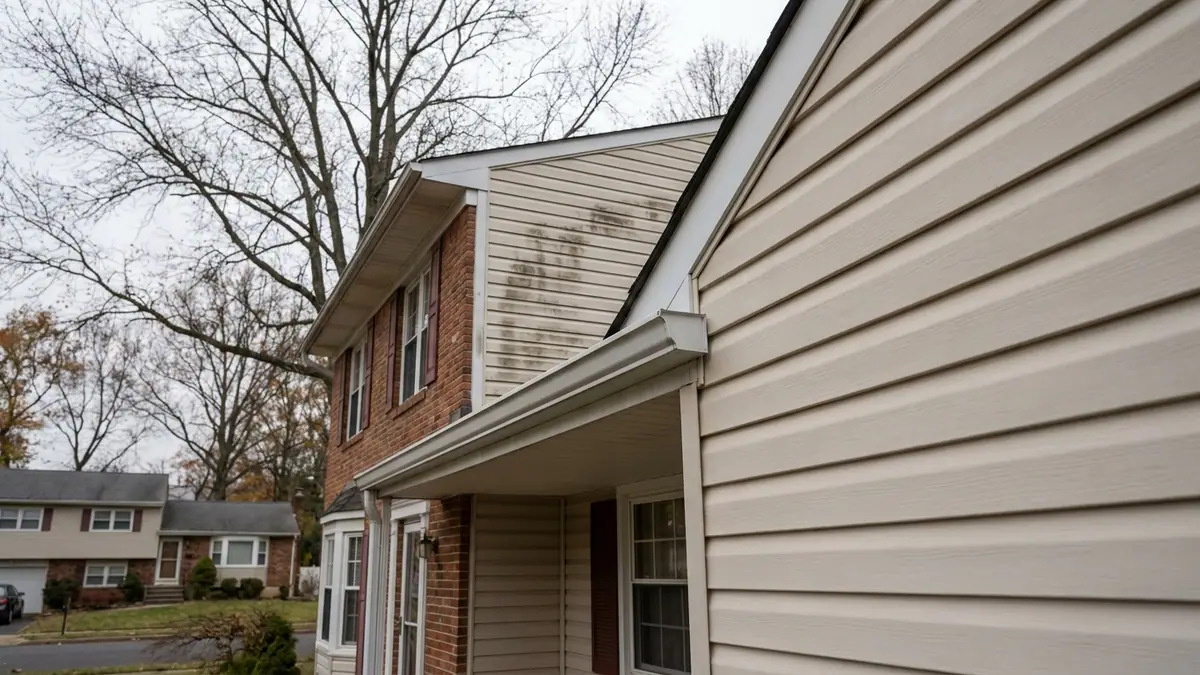
- Dark vertical streaking on the fascia board below the gutter, especially between hangers.
- Paint peeling upward from the bottom edge of the fascia, or bubbling along the top where it meets the shingle line.
- A hanger screw that spins without biting, or a gutter section that has started to sag at one point while the rest is level.
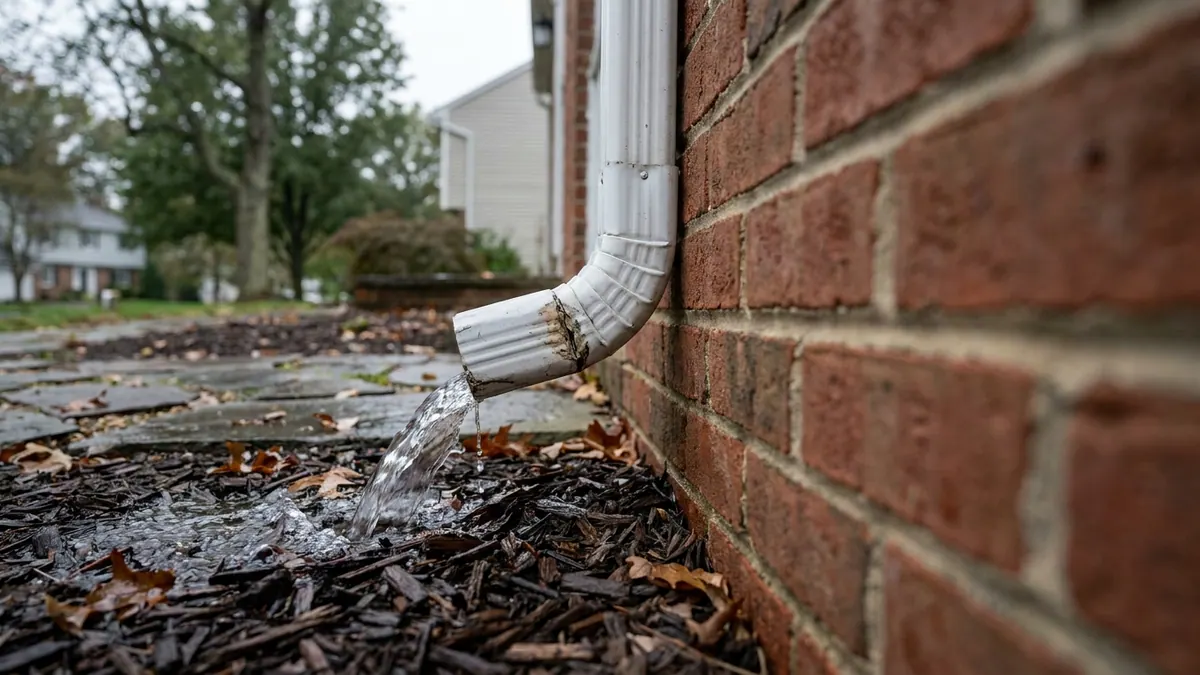
- A narrow washed-out trench in the mulch or soil tight against the foundation, directly under a gutter run that is not overflowing.
- Soffit panels stained or sagging at the corners.
Any one of those means water is getting past the edge. A clean gutter with rot behind it is an edge-metal problem, not a maintenance problem, and it does not get better by cleaning more often. The same is true in reverse: if the gutters are packed and overflowing every fall, fix that first, and the seasonal gutter maintenance guide covers what that schedule looks like in New Jersey.
Gutter apron vs. drip edge, side by side
| Drip edge | Gutter apron | |
|---|---|---|
| Profile | Drip edgeL-shape, sometimes with a small kick at the bottom | Gutter apronLong lower leg bent to about 120 degrees |
| Lower leg length | Drip edgeRoughly 1 to 1.5 inches | Gutter apronRoughly 2 to 4 inches |
| Where water lands | Drip edgeOff the face of the fascia, relying on the kick | Gutter apronInside the gutter, past the back lip |
| Protects the fascia top edge | Drip edgePartly | Gutter apronYes, it covers it |
| Handles a shingle edge cut short | Drip edgePoorly | Gutter apronYes |
| Works where the gutter hangs low or the fascia is out of plumb | Drip edgePoorly | Gutter apronYes |
| Required at eaves | Drip edgeDrip edge is the code requirement | Gutter apronSatisfies it and goes further |
| Used at rakes | Drip edgeYes, this is its place | Gutter apronNo, aprons are an eave detail |
When a plain drip edge is fine, and when it is not
A drip edge with a real kick, on a steeper roof, with the shingles overhanging it by half to three quarters of an inch, and a gutter hung tight and high behind it, sheds water perfectly well. Plenty of New Jersey roofs are set up exactly that way and the fascia is untouched.
The cases where a plain drip edge is not enough:
- Low-slope eaves, where water moves slowly and surface tension wins.
- Shingles cut flush or short at the edge, which happens on older re-roofs done in a hurry.
- Gutters hung low, so there is a visible gap between the shingle edge and the gutter back.
- Fascia that is not plumb, common on houses where the rafter tails have moved.
- Any eave that has already rotted once. The rot tells you where the water goes.
Rakes are a separate conversation. The rake edge is not draining into anything, so a drip edge is the right piece there and an apron would look wrong and shed water onto the siding.
How it should be installed
Sequence matters more than the metal.
- Strip the old edge metal off completely at the eave. Reusing it is how old nail holes end up hidden behind new gutter.
- Replace any fascia board that will not hold a hanger screw. Soft wood is not a paint problem.
- Set the apron on the bare deck, deck flange up on the sheathing, lower leg positioned so it will clear the gutter back lip.
- Nail through the deck flange on roughly 8 to 10 inch centers, into the deck, never into the fascia alone.
- Lap each length over the next by at least two inches, running downslope, so water crosses the joint rather than hitting into it.
- Run the ice barrier membrane over the eave flange, so the membrane drains onto the metal and not under it.
- Hang the gutter with hidden hangers screwed into the fascia at framing, pitched toward the downspouts, with the back lip sitting under the apron leg.
That is why gutters and roofs belong to the same conversation. The apron goes down before the shingles and the gutter goes up under the apron. Doing them in one visit is the only time the whole detail is accessible without lifting anything. Lightning Construction installs seamless aluminum gutters and sets the edge metal as part of the roof work, so the two pieces are cut to fit each other instead of one being worked around the other.
Retrofitting an apron on an existing roof
You do not need a new roof to fix this. On a roof with sound, flexible shingles a crew can lift the first course, slide the apron flange underneath, nail it, and rehang the gutter. Cold shingles crack when they are bent, so in January the right answer is often to wait for a warmer week rather than break the bottom course to save a month.
If the fascia is already soft, the apron is the second step. The board comes off first, gets replaced, and then the new metal goes over it. Paying to cover rotted wood with new aluminum buys nothing.
What ice and snow do at this detail
A gutter apron keeps backed-up meltwater out of the fascia and soffit at the edge, which is worth having in the northern counties. It does not stop ice from forming. Ice dams come from heat leaking into a cold attic and melting snow that refreezes at the eave, and no piece of edge metal changes that equation. The ice dam guide covers what actually does. Treat the apron as damage control at the edge, not a cure.
What to put in writing before the job
Ask for the edge detail by name on the estimate. "Gutter apron at all eaves, drip edge at all rakes" is one line and it removes any ambiguity later. Also get the fascia repair scope written down in feet, the gutter size and hanger spacing, and the color.
Gutter work in New Jersey runs $1,200 to $3,500 in standard-value towns, $2,500 to $6,500 in higher-value towns and $4,000 to $12,000 for large or luxury homes. The band comes from the municipality's median home value in the ACS 2024 five-year estimates, not from the profile of your edge metal. Sizing, guards and materials are covered in depth in the seamless gutters guide.
Lightning takes no deposit, and nothing is due until the work is finished and you have inspected it. There are no change orders, because rotted fascia and bad edge metal are found at the free inspection and priced into the written estimate. Lightning pulls any required permit and attends the municipal inspection under the New Jersey Uniform Construction Code.
What to do next
Stand at each corner of the house and look at the fascia below the gutter. If you see streaking, peeling paint or a sagging point, the problem is at the edge and it is fixable before the board goes. Book a free inspection and written estimate and ask specifically what is behind the gutter. A salesperson comes to the house, there is no obligation, and the answer to that question should come with a photograph.