Short answer
The difference between .027 and .032 aluminum is five thousandths of an inch, and it shows up in dent resistance, how well a long run holds its shape, and how the front lip survives a ladder. On short runs over a one-story roof with properly spaced hangers, .027 is an honest gutter. On long runs, two-story elevations, steep roofs and anywhere ice loads the trough, .032 is the stock worth paying for.
On this page
Aluminum gutter stock is sold by thickness in thousandths of an inch. .027 is twenty seven thousandths. .032 is thirty two thousandths. That five thousandths is the entire difference, and it buys you dent resistance, a trough that holds its shape across a long run, and a front lip that survives a ladder leaned against it.
It does not buy you a gutter that drains better, a gutter that clogs less, or a gutter that stays on the house if the hangers are spaced wrong. Those are separate problems with separate fixes. Here is where the thickness actually matters on a New Jersey house and where it does not.
What .027 and .032 are measuring
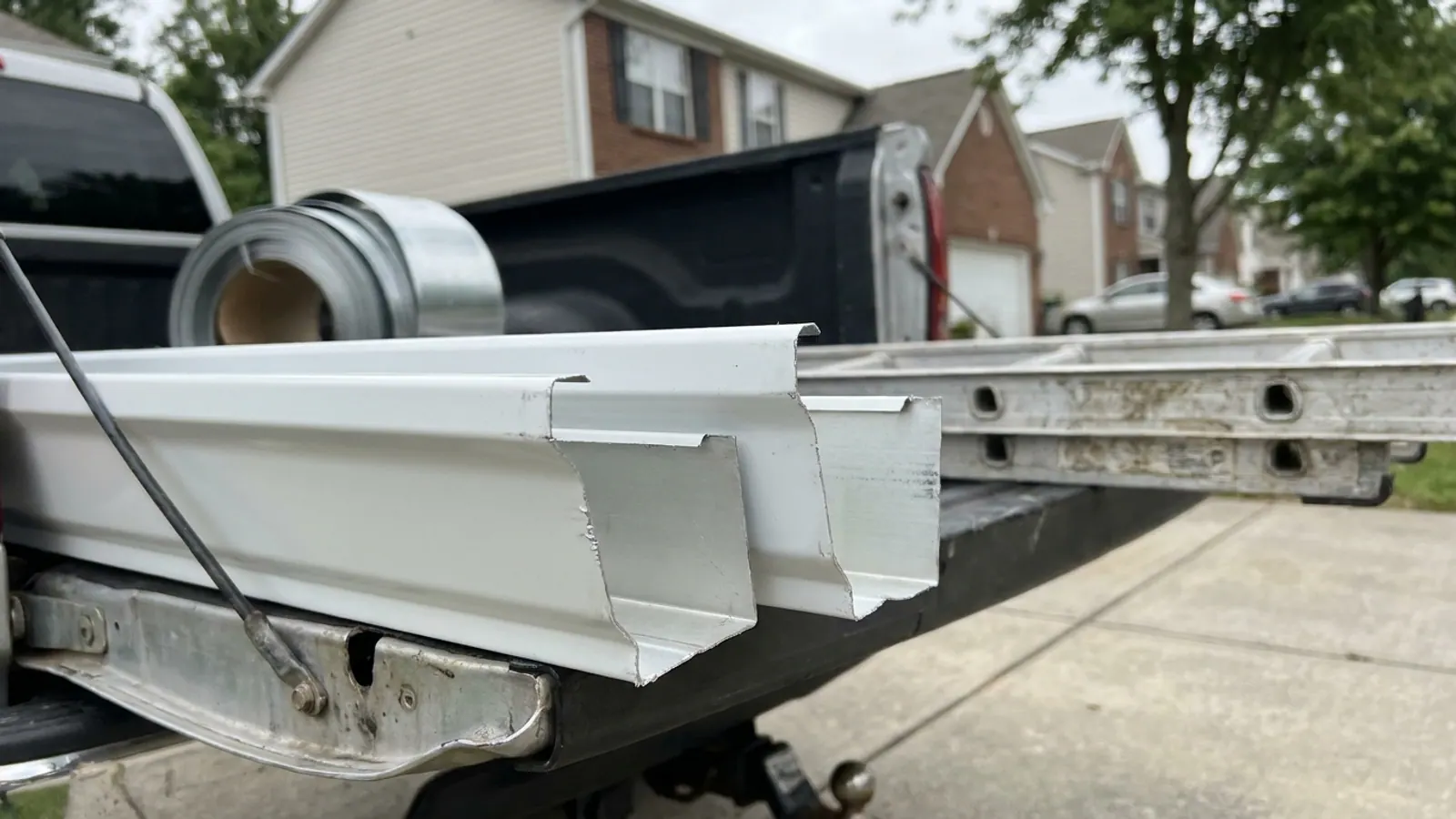
Seamless gutter is formed on site. A coil of flat painted aluminum goes into a roll-forming machine on the truck, and the machine presses it into a K-style profile and cuts it to the length of your run. The coil is the product. Its thickness is stamped on the box it ships in.
.027 is the standard residential coil across most of the country and most of this state. .032 is the heavier residential stock. Both are the same alloy family, both take the same baked-on factory paint, and both form into the same 5-inch or 6-inch K-style profile. Nothing about the shape changes. Only the amount of metal does.
You will also see .019 and .025 on the cheapest end. Those are thin enough that the trough deforms when a cleaning crew drags a ladder along it, and they are not worth the small savings on a house you plan to keep.
Where the extra thickness shows up on a real house
Four places, specifically.
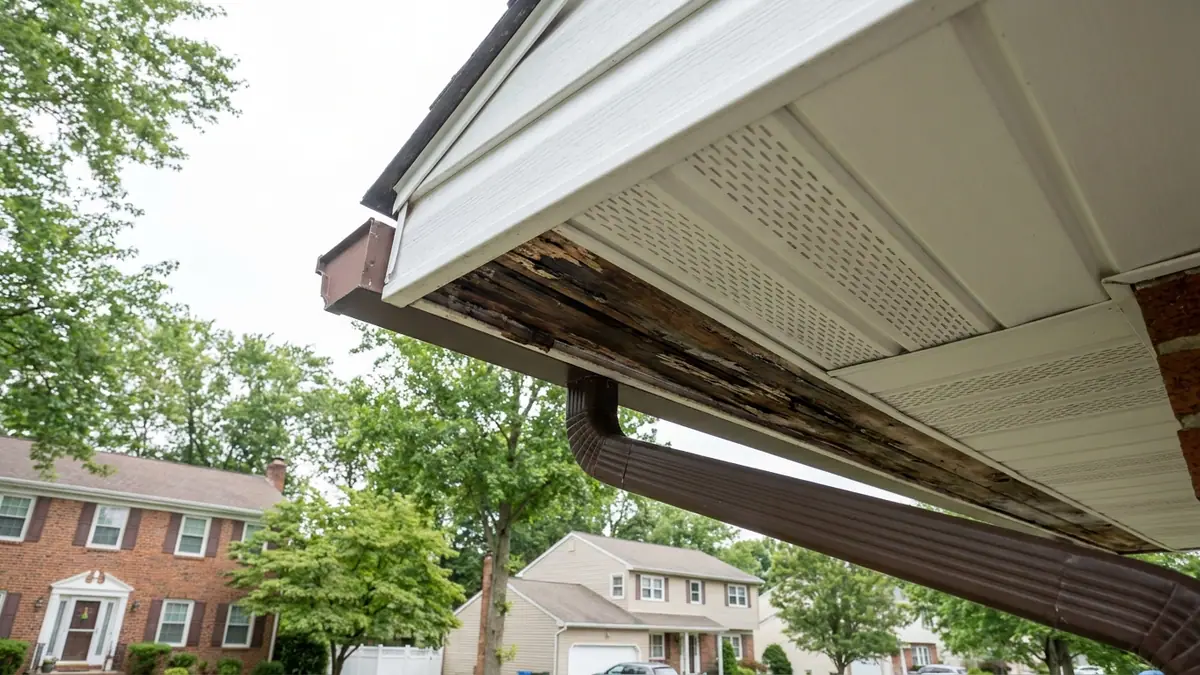
The front lip. This is where almost every dent in a gutter comes from, because it is where ladders land. Thicker stock takes a ladder hit and springs back more often instead of creasing. A creased lip holds water behind it and looks bad from the driveway forever.
Long runs between hangers. A gutter is a piece of folded sheet metal full of water. Over a thirty or forty foot run with hangers every two feet, the thinner stock will show a slight wave between fasteners once it has been loaded a few hundred times. Thicker stock resists that bending.
Ice. New Jersey winters put a frozen plug in the trough more than once a season in most counties. Ice is heavy and it expands against the walls of the gutter. Thin aluminum deforms outward at the lip and the gutter never sits quite right again. This is a drainage and insulation problem first, and the ice dams guide explains what is really causing the freeze, but thicker stock takes the abuse better while you fix the cause.
Ladders, branches and falling debris. A limb that dents .027 may only mark .032. In older neighborhoods with mature oaks over the roofline, that matters.
.027 vs .032 side by side
| .027 aluminum | .032 aluminum | |
|---|---|---|
| Typical use | .027 aluminumStandard residential seamless gutter | .032 aluminumHeavier residential and light commercial |
| Dent resistance at the front lip | .027 aluminumModerate, creases under a ladder | .032 aluminumNoticeably better |
| Behavior on long runs | .027 aluminumCan wave slightly between hangers over time | .032 aluminumHolds a straighter line |
| Ice load tolerance | .027 aluminumDeforms sooner at the lip | .032 aluminumTakes more before it spreads |
| Color availability | .027 aluminumWidest selection, most supply houses stock it | .032 aluminumSmaller color range, sometimes ordered in |
| Available in 6-inch profile | .027 aluminumYes | .032 aluminumYes, and this is where it is most often specified |
| Cost | .027 aluminumLower per foot | .032 aluminumHigher per foot |
When .027 is enough
Be honest about the house before you upgrade.
.027 is a reasonable choice when the eaves are one story and reachable, when the longest run is short, when the roof above is a moderate pitch, and when the gutters get cleaned or guarded so they are not sitting full of wet leaves and ice all winter. A lot of New Jersey ranches and small capes fall squarely in that description. On those houses, the money that would go toward heavier coil is better spent on hidden hangers at tight spacing and on getting the pitch right.
When to pay for .032
Ask for .032 when any of these are true.
- The gutter is on a second-story eave where nobody is going up there casually and you want it to last between service visits.
- One continuous run is long, with no corner or end cap breaking it up.
- The roof above is steep, so water arrives fast and hits the back wall and the lip hard.
- You are already going to 6-inch gutters because of roof area, in which case a wider trough carrying more water benefits from the heavier metal.
- You have replaced dented gutters before on the same elevation.
- Trees overhang the roofline and the gutters take debris hits every fall.
If none of those apply, the upgrade is optional and you should say so to anyone who tells you it is mandatory.
Thickness does not fix a hanger or pitch problem
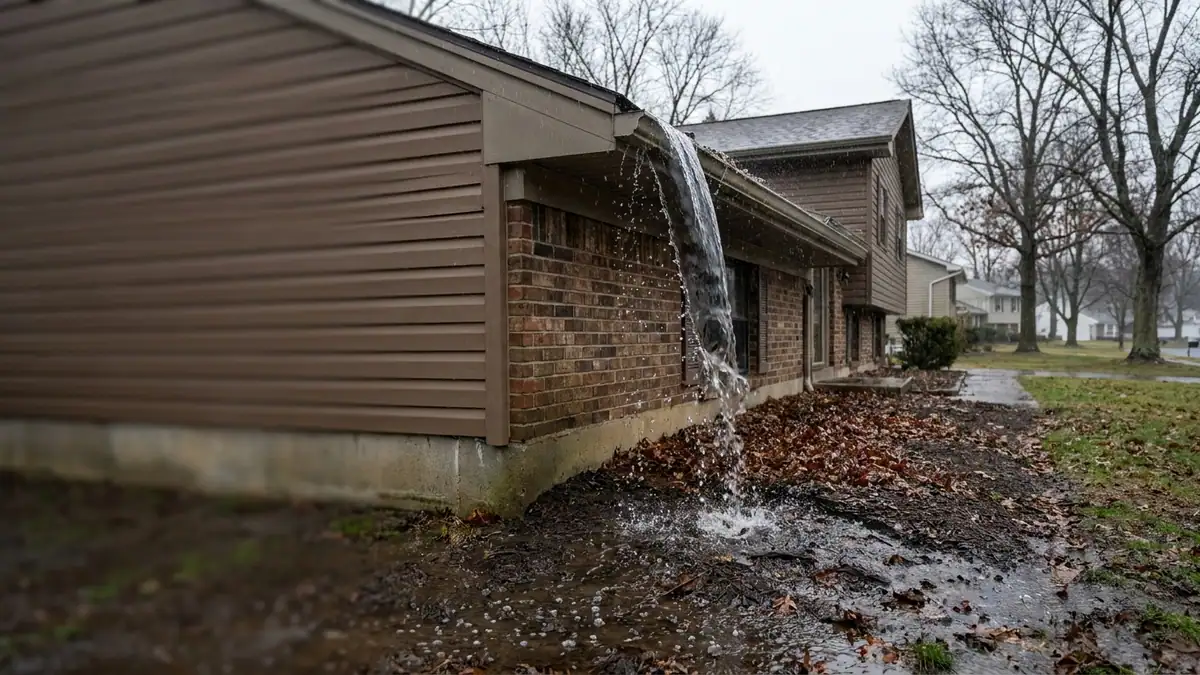
This is the part that gets sold wrong. A gutter pulls away from the fascia because the fasteners failed, not because the aluminum was thin. A gutter holds standing water because the pitch toward the downspout is wrong. A gutter overflows because the downspouts are undersized or there are not enough of them for the roof area feeding that run.
Heavier coil improves none of those. Hidden hangers screwed into solid fascia at tight, even spacing do more for the life of the system than moving from .027 to .032 ever will. So does a sound fascia board to screw into in the first place. The seamless gutters guide covers how the whole assembly fits together, and the seasonal maintenance guide covers what keeps it working once it is up.
What to ask for in writing
Thickness is invisible from the ground once the gutter is installed, which is exactly why it belongs on paper. Before you sign anything, make sure the estimate states:
- The coil thickness, written as .027 or .032, not as "heavy duty" or "commercial grade."
- The profile and width, 5-inch or 6-inch K-style.
- The downspout size and how many, with where each one discharges.
- The hanger type and the spacing in inches.
- The color and that the finish is factory applied.
- Whether old gutters are being removed and hauled away.
If a contractor will not put the thickness in the written scope, you have no way to verify what went on the house. On installation day you can look at a cut end or an end cap before it is sealed and see the edge of the metal for yourself.
Getting a real number for your house
Gutter work in New Jersey runs $1,200 to $3,500 in standard-value towns, $2,500 to $6,500 in higher-value towns, and $4,000 to $12,000 on large or luxury homes. The band is set by the municipality's median home value from ACS 2024 five-year estimates, not by your coil thickness. Total linear footage, the number of corners, downspout count, two-story access and whether fascia needs repair move the price far more than the step from .027 to .032.
Lightning Construction installs seamless aluminum, guards, downspouts and re-pitching across all 21 New Jersey counties. The inspection and the written estimate are free, a salesperson does come to the house, and there is no obligation. There is no deposit, so nothing is due until the work is done and you have looked at it, and there are no change orders, because the written estimate is the final price. See what the work covers on the gutters page, or request a free estimate and ask for both thicknesses priced on the same sheet so you can see the gap on your own house.