Short answer
Often, yes. A roof sheds thousands of gallons in a single New Jersey storm, and if the gutters overflow or the downspouts dump at the foundation, that water goes straight into the soil beside your basement wall. Gutters are the cheapest thing to rule out first, because fixing them costs a fraction of what foundation drainage work costs.
On this page
Often, yes. Your roof is a collection surface, and in a heavy New Jersey rain it moves an enormous volume of water to the roof edge in a short time. If the gutters overflow, if a downspout is clogged, or if the water lands two feet from your foundation wall, that water soaks the backfilled soil along the house and finds its way through the joint where the wall meets the footing. The basement is the last stop, not the source.
Gutters are also the cheapest possible cause to rule out. Before anyone quotes you interior drain tile or an exterior excavation, spend a rainstorm outside with a flashlight and look at the roof edge.
How gutters put water into a basement
The soil right against your foundation is not the same as the soil in the yard. It was dug out when the house was built, then pushed back in. It stays looser and more porous than undisturbed ground for the life of the house, which means it accepts water faster than the surrounding soil can drain it away. Builders call it the backfill zone. Water that lands in it goes down, not sideways.
So the chain is short. Gutter overflows or downspout dumps at the wall, water saturates the backfill, hydrostatic pressure builds against the foundation, and the water pushes through the cove joint, a tie rod hole, a crack, or the porous face of a block wall. In most New Jersey towns the housing stock is old enough that there is a crack or a joint somewhere waiting for the opportunity.
The tell is timing. Gutter-driven basement water shows up during the storm or within an hour of it, usually in the same spot every time, and that spot is almost always on the same side of the house as a downspout or an overflowing gutter run.
How to tell if your gutters are the cause
Go outside during the rain
This is the only test that settles it. Put on a jacket in the middle of a steady rain and walk the perimeter.
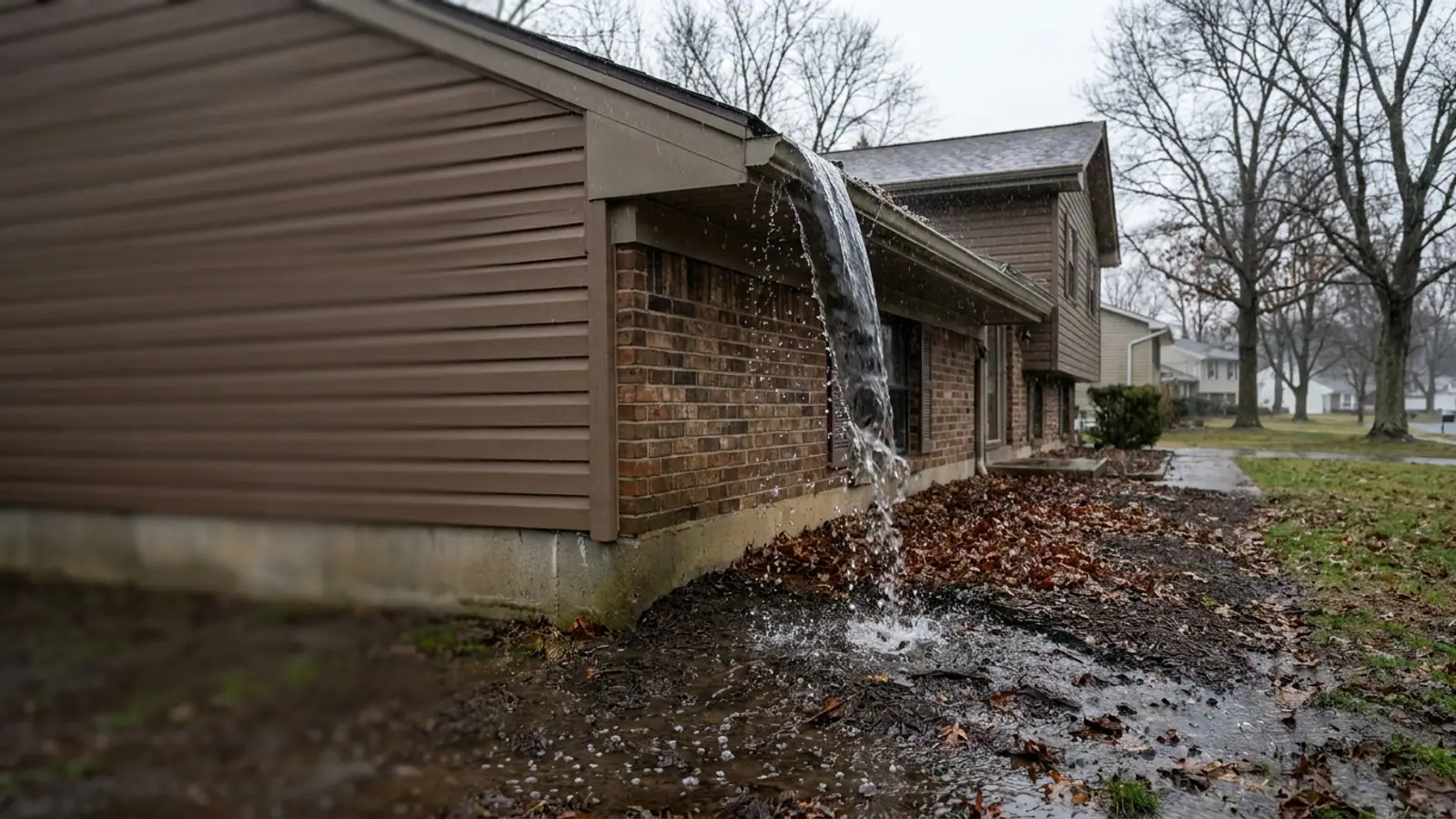
Look for water pouring over the front lip of the gutter. Look for water running behind the gutter and down the fascia. Look for a downspout that is barely trickling while the gutter above it is full, which means the elbow or the outlet is blocked. Look at where each downspout discharges and whether that water is running away from the house or pooling and soaking in.
Then go to the basement and note which wall is wet and roughly when it started. Match it to what you saw outside.
Check the splash pattern on a dry day
After the rain, the evidence stays. Mulch washed out of the bed and onto the walkway means a concentrated stream landed there. A trench or a dish-shaped depression in the soil under a gutter joint means water has been falling in the same spot for a long time. Splash marks and dirt on the siding a foot or two up the wall mean water hit the ground hard and bounced back.
Also check the grade. Soil should slope away from the house. If the ground next to the wall has settled into a shallow bowl, every gallon that lands there is being held against the foundation.
The gutter failures that end up in the basement
| What you see | What is actually wrong | The fix |
|---|---|---|
| What you seeWater sheeting over the front edge in heavy rain | What is actually wrongGutter is undersized, badly pitched, or full of debris | The fixClean, re-pitch, or move up to a larger gutter and downspout |
| What you seeWater running behind the gutter onto the fascia | What is actually wrongMissing or wrong drip edge, or the gutter has pulled away at the top | The fixInstall gutter apron, reset or replace hangers |
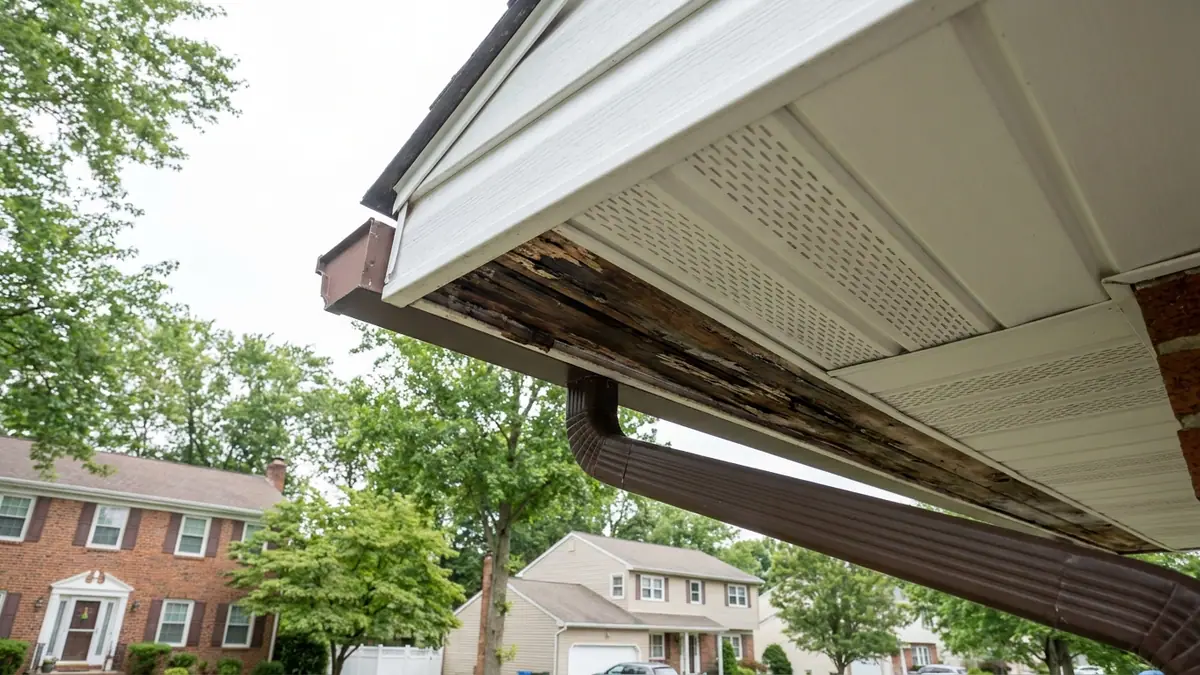
| What you seeOne section sagging and holding water | What is actually wrongFailed spike or hanger, or rotted fascia behind it | The fixReplace fasteners and repair the fascia board first |
| What you seeDownspout backed up, gutter full | What is actually wrongClog at the top outlet or in the first elbow | The fixClear it, then add a strainer or guards if trees are the cause |
| What you seeWater dumping at the base of the wall | What is actually wrongDischarge too short, missing extension, buried line collapsed | The fixExtend the discharge or run a buried line to daylight |
| What you seeCorners dripping constantly | What is actually wrongOpen or failed miter seam | The fixReseal or replace the miter |
One more pattern worth naming: a long gutter run with a single downspout at one end. The gutter handles ordinary rain fine, then overflows the moment a storm picks up, because the downspout cannot drain faster than the roof fills the trough. Adding a second outlet is a small job with a large effect.
Fix it in this order
- Clean the gutters and clear every downspout and elbow. Do this first. Half the basements blamed on foundations are gutters packed with oak leaves and shingle grit.
- Check the pitch. Water should move to the outlet and leave. Standing water in a clean gutter means the run has to be re-hung.
- Fix anything loose or separated, including the hangers, the miters and the fascia behind them.
- Extend every discharge point well away from the house, and make sure the ground it lands on slopes away.
- Correct the grade in the backfill zone so soil slopes down and away from the wall rather than holding water against it.
- Only after all of that, if the basement still takes water, call a foundation or waterproofing contractor. That is not gutter work, and Lightning does not do it.
If you are on step 1 and 2 every season, the seasonal gutter maintenance guide lays out what to do in each part of the New Jersey year, including the leaf drop that clogs everything in October and November.
When the gutters are not the problem
Be honest with yourself about the evidence. Gutters are not the cause when:
- Water appears days after a storm, or in dry weather, which points to a high water table.
- The wet spot is in the middle of a floor slab rather than along a wall.
- The water enters on a side of the house with no gutter run and no downspout above it.
- A sump pump runs constantly year round.
- The entire perimeter is damp evenly, rather than one corner being wet.
In those cases new gutters will not help, and any contractor who tells you otherwise is selling. What gutters can do is remove the roof water from the equation so the remaining problem is smaller and easier to diagnose.
What the gutter work costs in New Jersey
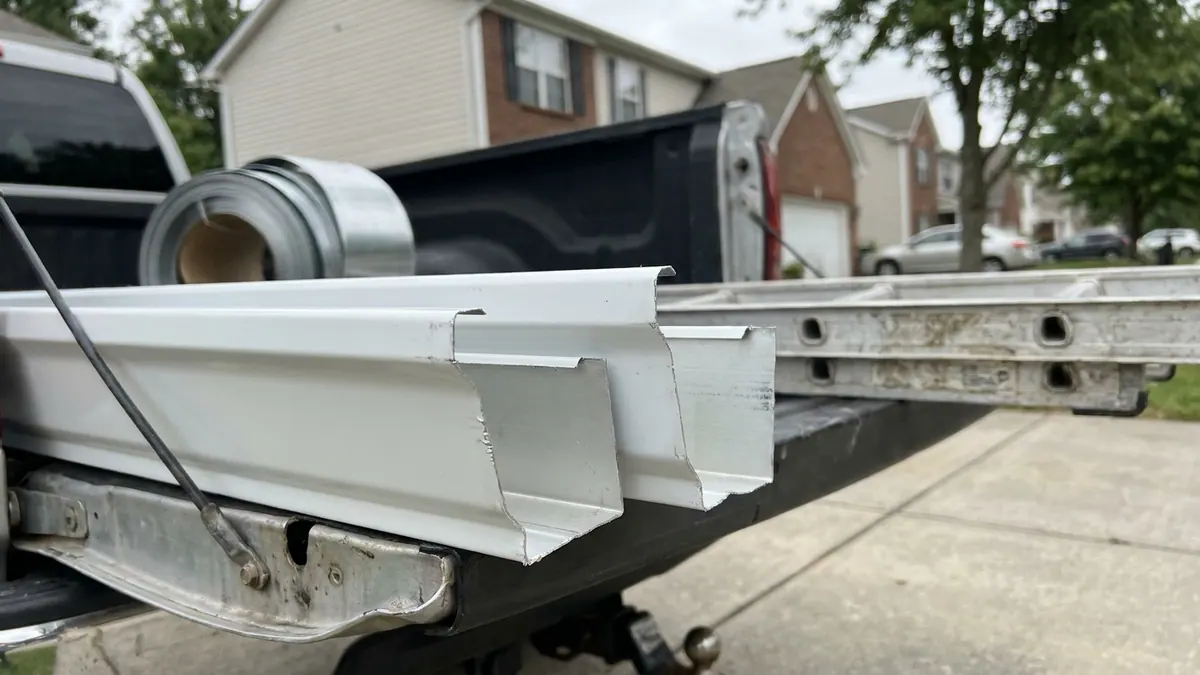
Seamless aluminum gutters run $1,200 to $3,500 in standard-value towns, $2,500 to $6,500 in higher-value towns, and $4,000 to $12,000 on large or luxury homes. The band comes from the median home value of your municipality, using ACS 2024 five-year estimates, not from a square-foot formula. Re-pitching an existing run, adding a downspout or replacing a single bad section is a much smaller job than a full replacement, and that is often all a basement problem actually needs.
For how seamless sections, guards and sizing work before you buy, read the seamless gutters guide. It covers the product decisions this post deliberately skips.
What to do next
Start with a free inspection that looks at the whole roof edge, not just the trough. A proper look includes the gutter pitch, the hangers, the fascia behind them, the drip edge or gutter apron at the roof edge, every outlet and elbow, and where the water actually lands on your lot.
Lightning Construction takes no deposit on any job, writes no change orders, and gives you a written estimate that is the final price. The conditions that normally turn into extra charges, such as rotted fascia behind a sagging gutter, are found at the inspection and priced into the quote. The inspection and estimate are free with no obligation, and a salesperson does come to the house.
See what is involved in a seamless gutter installation, or book the free estimate and have someone walk the perimeter with you. Lightning works in all 21 New Jersey counties, and pulls the permit where the municipality requires one.