Short answer
Fix a split seam or a gutter that has pulled away from the fascia as soon as the ice clears enough to work safely, because every thaw sends water behind the board and into the wall. Dents, a section that only sags, and a full replacement can usually wait for spring without adding damage. The dividing line is whether water is currently getting somewhere it should not.
On this page
Fix it now if water is getting behind the gutter. Wait for spring if the damage is cosmetic or if the only problem is that the gutter is full of ice. That is the whole decision, and it turns on one question: is water currently running somewhere it should not?
A split seam, a torn end cap, or a gutter that has pulled off the fascia is an active leak every time the temperature climbs above freezing. New Jersey gets those thaw cycles all winter. Each one sends water down the back of the fascia board, into the soffit, and sometimes into the wall cavity behind the siding. Three months of that does far more damage than the ice did.
What actually splits a gutter in winter
Ice does not tear aluminum by being cold. It tears it two ways.
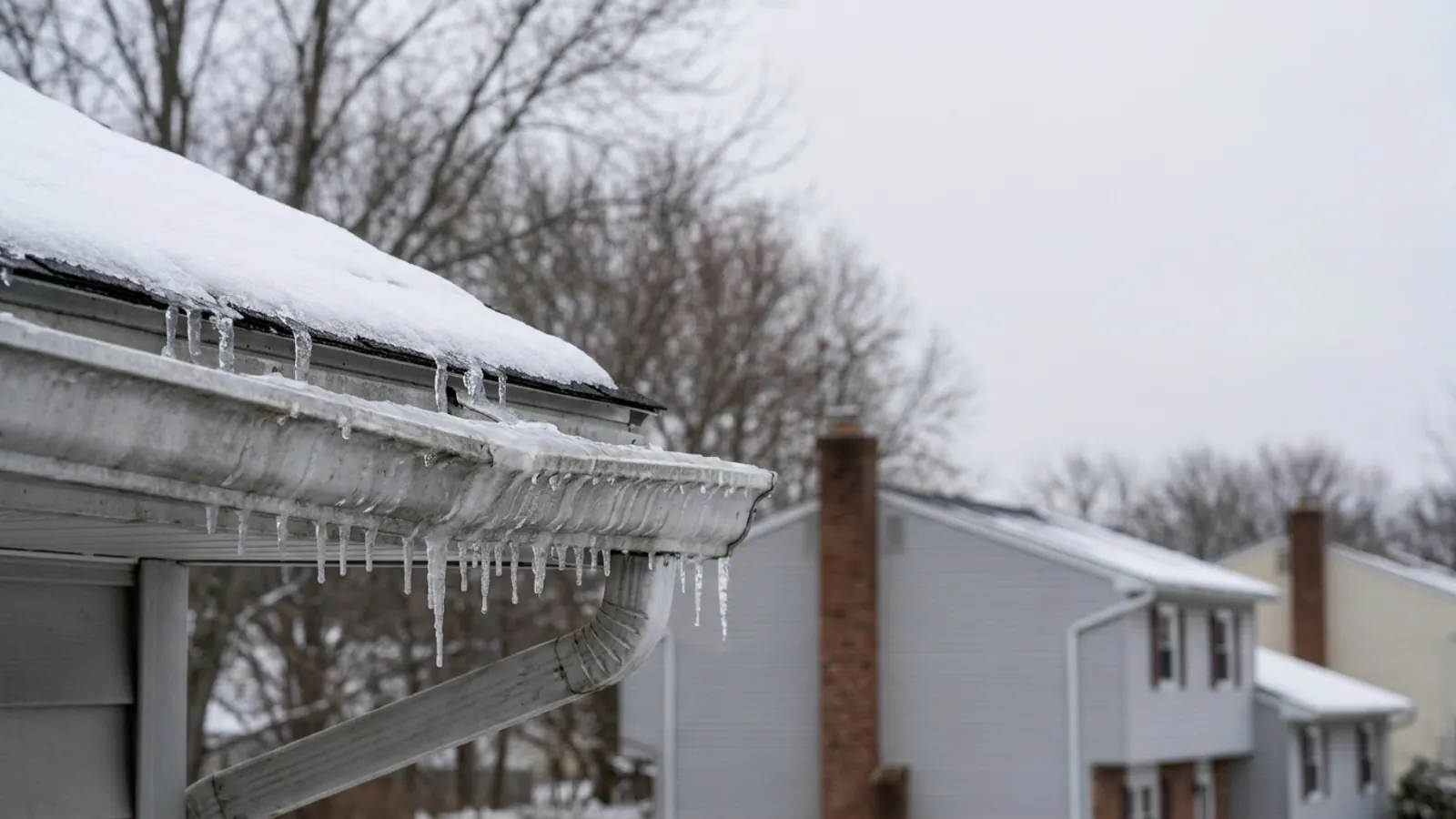
The first is weight. Water weighs about eight pounds a gallon and ice is not much lighter. A 5-inch K-style gutter packed solid with ice over a 30-foot run is carrying a load the hangers were never sized for. Spike-and-ferrule fasteners back out of the fascia first. Hidden hangers screwed into rotted fascia pull straight through. Once the gutter drops at one point, the whole run twists, and the joints are where the twist goes.
The second is expansion. Water expands when it freezes, and the gutter has nowhere to give except at its weakest point. That is almost always a seam: an end cap, an inside or outside miter at a corner, or a sectional joint on older non-seamless gutters. The sealant lets go, then the metal at the crimp opens up.
Seamless aluminum has fewer of those weak points because the run is formed on site in one continuous length, which is exactly why it holds up better through a freeze than sectional gutter. The corners and end caps are still joints, though, and they are still the first thing to open.
How to tell a split seam from a simple overflow
Stand back on the ground during a thaw and watch where the water comes from.
- Water sheeting over the front lip along a whole section means the gutter is blocked or the pitch is wrong, not split.
- A steady drip or a thin stream at a corner, an end, or one fixed point means a seam has opened.
- Water running down the fascia board itself, or staining on the soffit underneath, means water is getting behind the gutter. That is the urgent one.
- Ice built up on the siding below one spot, refreezing night after night, marks a leak precisely.
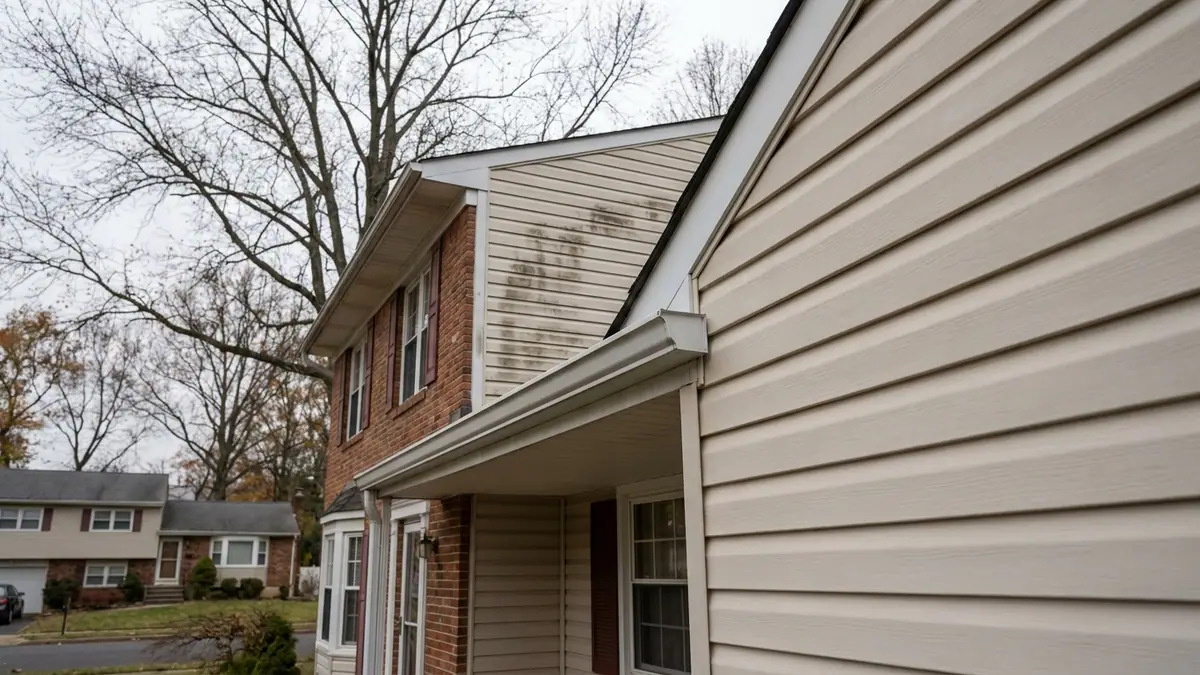
After the thaw, look at the fascia where the gutter attaches. Dark streaking, paint lifting, or wood that gives under a thumb means the water has been back there a while. At that point you are not only fixing a gutter.
Repair now or wait for spring
| What you are looking at | Now or spring |
|---|---|
| What you are looking atSplit seam, corner or end cap actively dripping | Now or springNow |
| What you are looking atGutter pulled off the fascia at one or more hangers | Now or springNow |
| What you are looking atWater staining the fascia or soffit below the gutter | Now or springNow, and inspect the wood behind it |
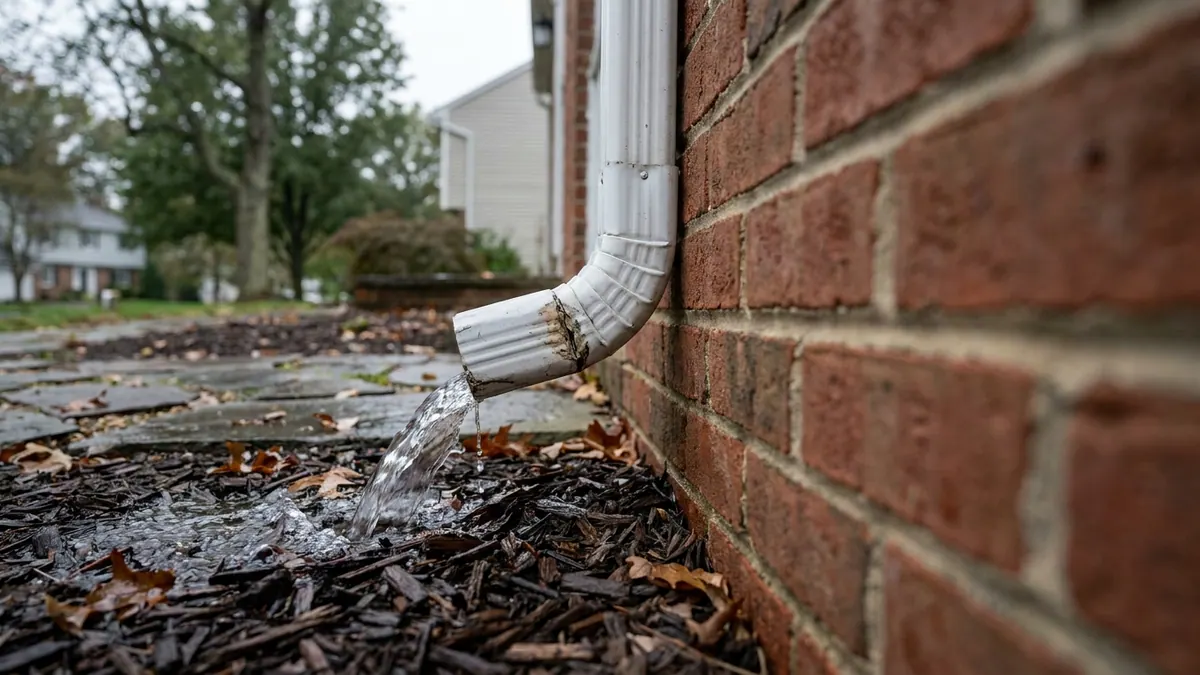
| What you are looking atDownspout separated or crushed, dumping at the foundation | Now or springNow |
| What you are looking atDents in the trough, no leak | Now or springSpring |
| What you are looking atOne section sagging but still draining | Now or springSpring, unless it is holding ice |
| What you are looking atWhole system old, leaking in several places | Now or springSpring, and price a full replacement |
| What you are looking atGutter simply full of ice, no damage visible | Now or springLeave it alone and find out why |
The bottom row matters. A gutter that freezes solid every winter is telling you something about the roof above it, and replacing the gutter changes nothing.
Why the ice formed in the first place
There are three usual causes, and they need different fixes.
- The gutter was clogged going into winter. Leaves and shingle grit hold water that never drains, and the first hard freeze locks it in place. This is a maintenance problem and the seasonal schedule in the gutter maintenance guide covers the timing.
- The pitch is wrong or the downspouts are undersized, so water stands in the trough between storms. Standing water freezes first.
- Heat is escaping into the attic, melting snow on the upper roof, and that meltwater refreezes at the cold eave. That is an ice dam, and the gutter is where it shows up rather than where it starts. The fix is insulation and ventilation, and the ice dam guide explains what actually stops it.
If the cause is number three, replacing the gutters in April and doing nothing else buys you one winter.
What not to do while it is frozen
Do not chip. Cold aluminum is brittle and a hammer, chisel or roof rake against a loaded gutter cracks seams that were otherwise fine. Plenty of the splits found in March were made in January by the homeowner.
Do not lean a ladder against an ice-filled gutter. It is carrying hundreds of pounds already and the hangers are the part that fails.
Do not get on the roof to clear it. Snow over shingles is the single most common way homeowners get hurt in winter.
Do not run an extension cord to a heat cable you bought that morning and clip it to wet metal without reading the instructions.
What is reasonable: clear the discharge end of the downspout at the ground so melt has somewhere to go, move anything stored under a sagging run, and put a bucket or a length of plastic under an active drip so it is not icing the walkway.
What a winter gutter repair looks like on the day
It is short work when the ice is off. A crew resets or replaces hangers into solid wood, reseals or rebuilds the failed corner, replaces any length of trough that has torn, and re-pitches the run so it drains toward the outlet. If the fascia behind it is soft, that board comes off and gets replaced first, because a hanger screwed into rot is a hanger that fails next winter.
When several runs have gone at once, or when the gutters are sectional and old, replacing the elevation in seamless aluminum usually costs less than chasing three separate repairs. Seamless gutters in New Jersey run $1,200 to $3,500 in standard-value towns, $2,500 to $6,500 in higher-value towns, and $4,000 to $12,000 for large or luxury homes. The band comes from the municipality's median home value in the ACS 2024 five-year estimates, not from your house specifically. What moves the number within a band is linear feet, the number of stories, corners, downspout count and whether guards go on.
Lightning Construction takes no deposit and writes no change orders. The rotted fascia, the extra downspout, the re-pitch, the pieces that normally turn into an extra invoice halfway through, get found at the free inspection and priced into the written estimate. That estimate is the final price. The company is licensed and insured, New Jersey Home Improvement Contractor registration 13VH12437000, and emergency response is available 24/7 when a run comes down in the middle of a storm.
What to do next
Walk the perimeter during the next thaw and mark every point where water leaves the gutter somewhere it should not. Photograph the fascia and soffit under each one. If any of them are active, get eyes on it now rather than in April.
If the system is old enough that you are patching it every winter, price the replacement instead. Options for trough profile, guards and downspout sizing are covered in the seamless gutters guide, and the gutters service page covers what Lightning installs across all 21 counties.
When you are ready, book the free estimate. It is genuinely no-obligation, and a salesperson comes to the house, looks at the gutters and the fascia behind them, and leaves you a written price.