Short answer
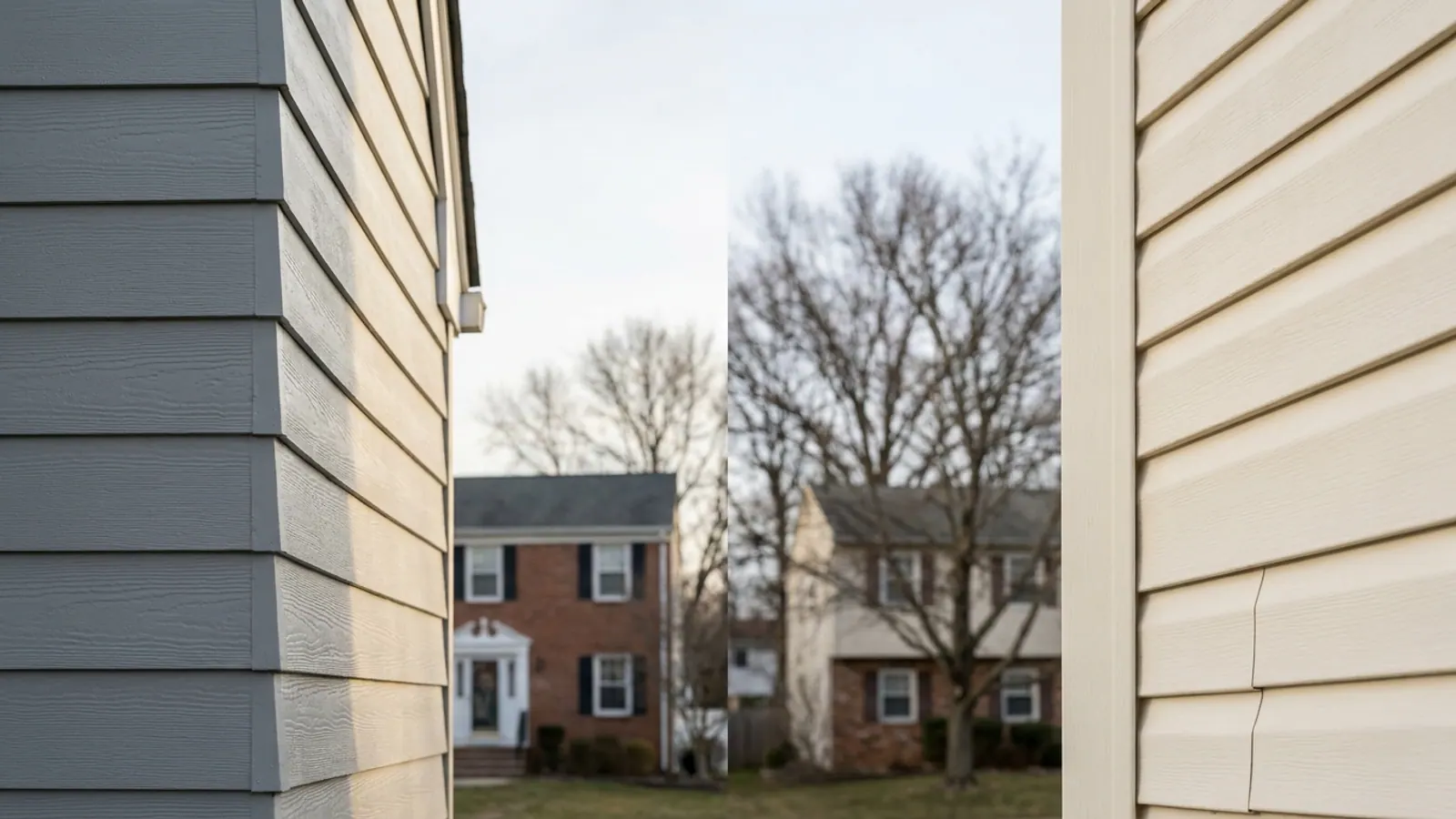
Fiber cement costs more than vinyl on the same house — more for the material, more for the labor to cut and hang it, and more for the finish. Lightning's New Jersey siding jobs run $9,000 and up depending on the town's price band, and fiber cement lands toward the top of whichever band your house falls in while vinyl lands lower. Vinyl wins on installed price; fiber cement wins on how flat the wall looks and how it handles impact and heat.
On this page
Fiber cement costs more than vinyl on the same house. That is true of the material, the labor and the finish, and it stays true across every price band in New Jersey. What most quotes do not explain is where the extra money goes, which is the part that decides whether the upgrade makes sense for your house or not.
This post is about cost specifically. If you want the full material comparison — durability, appearance, how each one handles a Jersey winter — read the siding options guide first and come back here for the money.
Why fiber cement costs more to buy
Fiber cement board is cement, sand and cellulose fiber pressed into planks. It is dense, heavy and rigid. Vinyl is extruded PVC panel, light, thin and produced fast. The raw material gap is real before anyone touches a house.
The second cost is the trim package. Fiber cement lap siding is normally installed with matching fiber cement or composite corner boards, window casings, frieze and band board. Those pieces are priced individually and they add up on a house with a lot of openings. Vinyl uses J-channel and corner posts that cost a fraction of that.
The third is the finish. Factory-finished fiber cement — color applied and cured at the plant — costs more per board than primed board you paint on site. It also usually carries a manufacturer finish warranty, which primed-and-field-painted board does not. Vinyl's color goes all the way through the panel and there is no paint step at all.
Why fiber cement costs more to install
Labor is the larger half of the gap on most houses.
Fiber cement planks are heavy enough that they are handled by two people on long runs. They are cut with a shear or a dust-collecting saw because dry-cutting cement board produces silica dust that has to be controlled. Every cut end gets primed or sealed. Butt joints get flashed. Nailing is fussier — blind-nailed into studs at a specified spacing, not shot anywhere into sheathing.
Vinyl hangs fast. Panels lock together, get nailed loosely so they can move with temperature, and one installer can run a wall alone. On a straightforward house a vinyl job is fewer crew-days, and crew-days are what you are paying for.
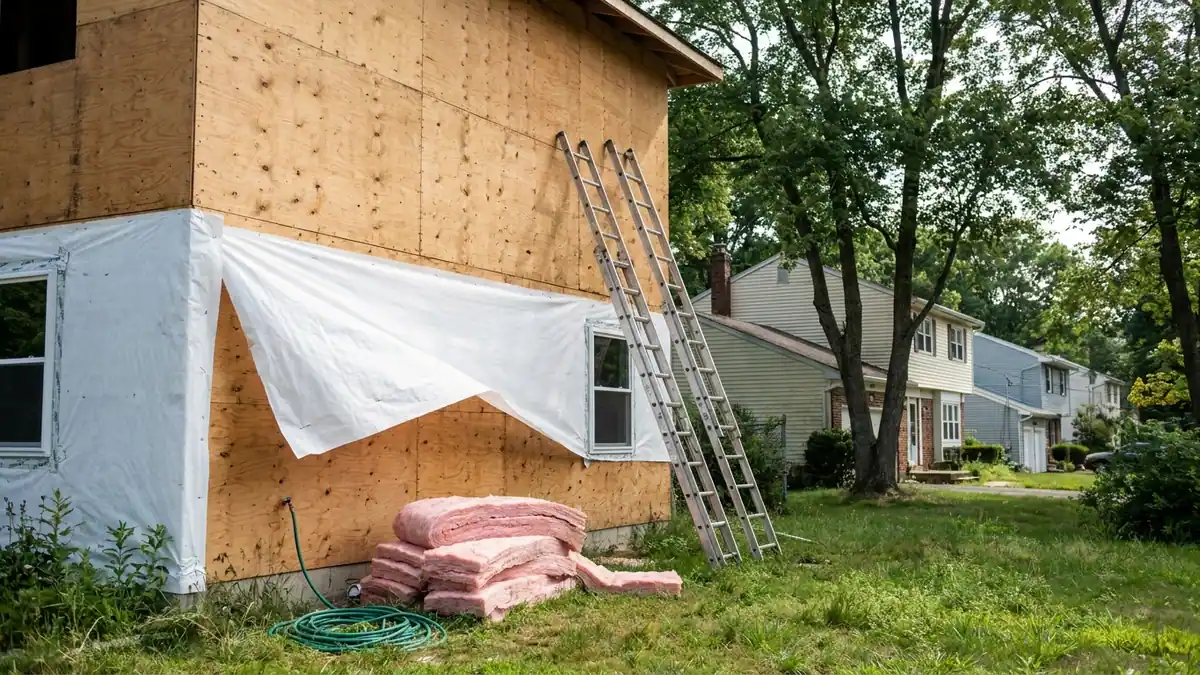
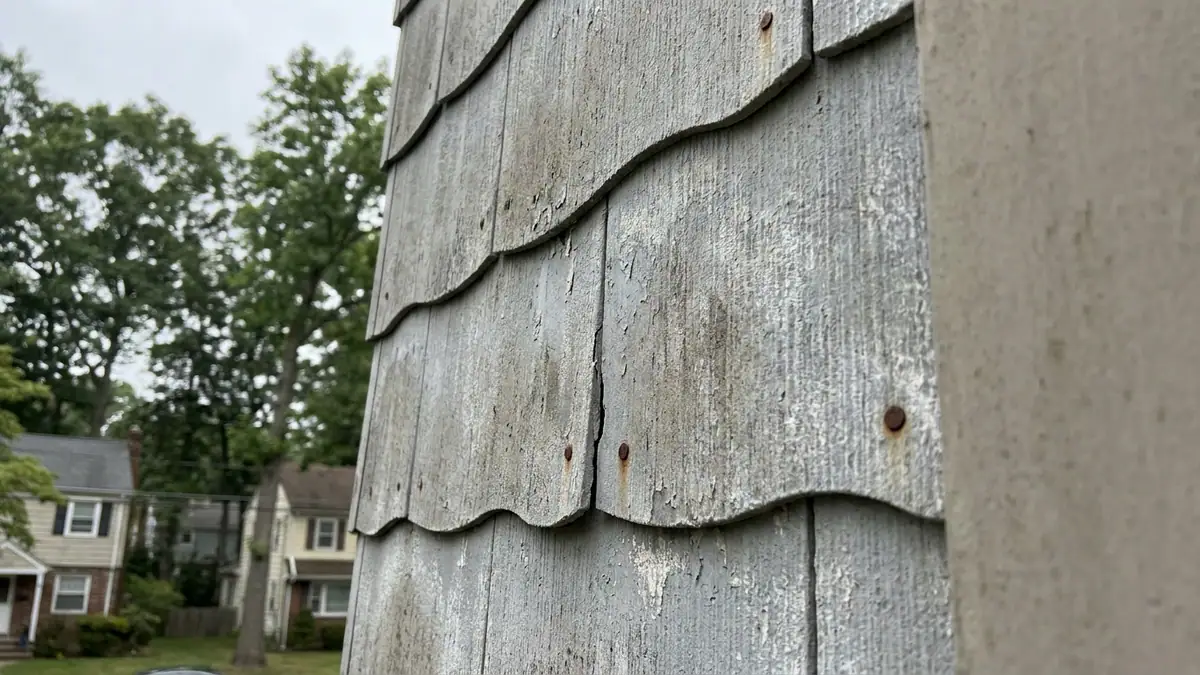
Both materials expose the same conditions underneath once the old siding comes off — wet sheathing, failed house wrap, rotted trim. Neither one hides that better than the other, and neither one should surprise you on the day if the estimate was written after a real inspection.
| Cost item | Vinyl | Fiber cement |
|---|---|---|
| Cost itemMaterial per square | VinylLower | Fiber cementHigher |
| Cost itemTrim and accessories | VinylJ-channel, corner posts | Fiber cementBoard trim, casings, corners |
| Cost itemCrew days on a typical house | VinylFewer | Fiber cementMore |
| Cost itemCutting and handling | VinylOne installer, snips and saw | Fiber cementTwo installers, dust control |
| Cost itemFinish | VinylColor through the panel | Fiber cementFactory finish or field paint |
| Cost itemRepainting later | VinylNever | Fiber cementYes, unless factory-finished |
| Cost itemRepairing one damaged panel | VinylPanel swap, color match is the issue | Fiber cementCut in a new board, prime, paint |
What siding actually costs in New Jersey
Lightning's siding work runs $10,000-$22,000 in standard-value towns, $16,000-$38,000 in higher-value towns, and $30,000-$70,000 on large or luxury homes. The band is set by the municipality's median home value from the American Community Survey 2024 five-year estimates, not by anything a salesperson decides at the kitchen table.
Those ranges cover both materials. On the same house, a standard vinyl job sits near the bottom of the band, insulated vinyl sits in the middle, and fiber cement with a full board trim package sits at or near the top. That is the honest way to read the numbers: the material choice moves you within the band, and your town's band sets where the band starts. You can see the county and municipality pages under service areas for the housing data behind that.
What pushes any siding job higher regardless of material is wall area, number of stories, dormers and gables, the number of window and door openings to be trimmed, and how much rotted sheathing or trim is behind the old siding. A two-story colonial with a cut-up rear elevation costs more than a ranch with the same square footage of living space.
The costs that show up after the job
Painting
Field-painted fiber cement gets repainted. How often depends on exposure, color and the paint, and a south or west wall that takes full afternoon sun goes first. Budget for it. Factory-finished board pushes that expense much further out and comes with a written finish warranty from the manufacturer — get a copy of it and read what it actually covers before you decide the upgrade is not worth it.
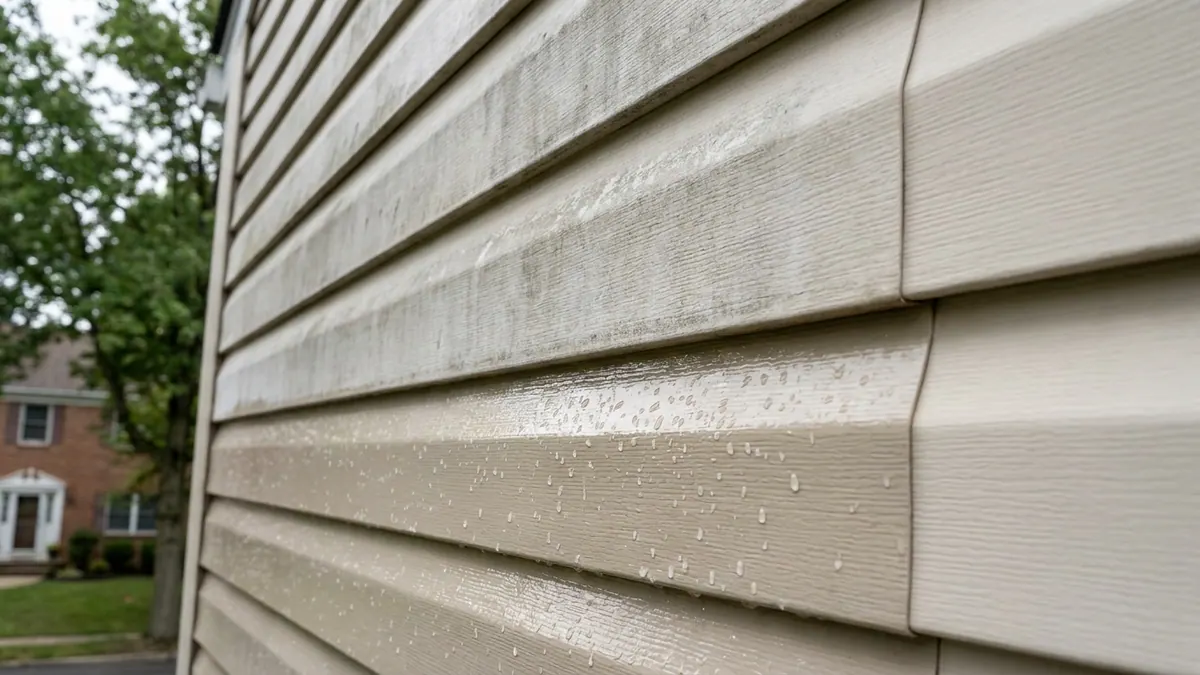
Vinyl is never painted. That is a genuine long-term saving and it is the strongest cost argument vinyl has.
Repairs and matching
A cracked fiber cement board is cut out, a new piece is fitted, and it is primed and painted to match. Labor-heavy, but the result blends.
A damaged vinyl panel is cheap to replace and hard to match, because vinyl colors fade and product lines get discontinued. Order extra panels at installation and store them in the garage. It costs almost nothing now and saves a mismatched patch on the front of the house later.
When the extra money is worth it
Spend it when the answer to at least two of these is yes:
- You are staying in the house long enough to live with the wall, not just sell it.
- You want a deep, saturated painted color. Dark vinyl absorbs heat and can distort; fiber cement holds dark colors without that problem.
- The walls take heavy sun, wind-driven rain or salt air.
- The house has architectural trim worth reproducing in board rather than approximating in channel.
- Impact matters — trees close to the house, a driveway that gets used hard, kids and a basketball hoop.
Skip it when the house is simple, the budget is tight, or the elevation people actually see is small. Insulated vinyl on a well-detailed installation looks good and costs less, and there is nothing wrong with putting the money into the roof instead.
Comparing two siding quotes without getting fooled
- Confirm both quotes are for the same material grade. "Fiber cement" and "primed fiber cement you paint yourself" are different jobs.
- Check the trim. A fiber cement quote with vinyl corner posts is not a fiber cement job.
- Ask what happens to rotted sheathing and trim, and what it costs, in writing, before work starts.
- Ask whether house wrap is being replaced or reused.
- Ask who pulls the permit and who meets the inspector.
- Ask when money is due.
On the last two: Lightning pulls the permit from your municipality's construction office under the New Jersey Uniform Construction Code and attends the inspection, and there is no deposit — nothing is due until the work is done and you have looked at it. The written estimate is the final price. Conditions that normally trigger a change order are found at the free inspection and priced into the quote.
What to do next
Get one company to price both materials on your actual house instead of guessing from a range. The inspection and the written estimate are free with no obligation, and a salesperson does come to the house — that is a straight sales appointment, not a survey.
Start at the siding page for what Lightning installs, then book the free estimate. Ask for the vinyl number and the fiber cement number on the same sheet. Seeing both against your own wall area is the only comparison that means anything.