Short answer
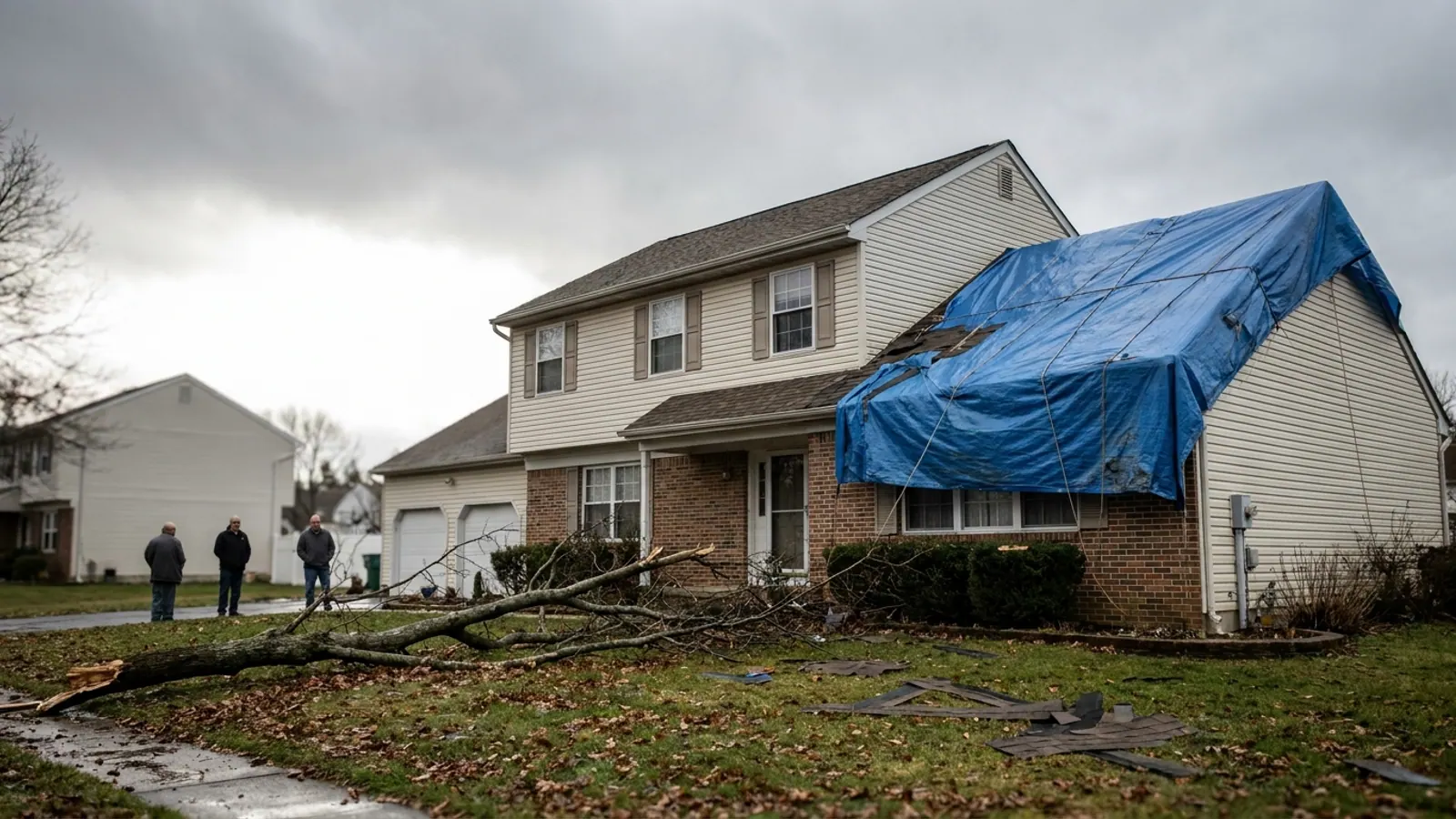
An emergency tarp buys you time when water is already getting into the house and the roof cannot be permanently repaired that day, usually because of weather, darkness, or an insurance claim that has not been inspected yet. It is a temporary cover, not a repair, and a properly installed one lasts weeks rather than months. If the damage is small and the weather is clear, a real repair the same week is almost always the better spend.
On this page
A tarp is a temporary roof. It buys you time when water is already entering the house and the real repair cannot happen right now, and that is the only job it does. It does not fix anything, it does not stop the damage clock, and it is not a substitute for getting the roof looked at.
The reason to be clear about that is money. Homeowners get a tarp on a Tuesday, feel the leak stop, and let the tarp sit there through the fall. Meanwhile the wet decking under it keeps drying and rewetting, the fasteners holding the tarp open new holes, and the insurance claim goes stale. Below is when tarping is the right move, how it should be done so it survives the next storm, and what has to happen after.
What an emergency tarp actually does
A tarp spans the damaged area and sheds water past it, so rain runs off the cover and onto sound shingles below instead of into the decking, insulation and ceilings. That is the whole function. It keeps the inside of the house from getting worse while you wait for weather, daylight, an adjuster, or a material order.
What it does not do is dry anything out, protect the attic from wind-driven rain coming in sideways at the edges, or hold up against a second storm if it was only weighted with sandbags and lumber scraps.
When a tarp is worth it and when it is not
Use the situation, not the fear. Here is the honest split.
| Situation | Tarp or repair |
|---|---|
| SituationActive leak into the living space, rain forecast tonight | Tarp or repairTarp now, repair as soon as possible |
| SituationTree limb has punched through the decking | Tarp or repairTarp now, the opening needs structural repair |
| SituationWind stripped a section of shingles, decking still sound | Tarp or repairTarp if rain is coming, otherwise repair directly |
| SituationA handful of shingles lifted or creased, no leak | Tarp or repairSkip the tarp, book the repair |
| SituationInsurance adjuster has not inspected yet | Tarp or repairTarp and photograph everything first |
| SituationRoof is 20-plus years old and damage is widespread | Tarp or repairTarp only as a bridge to full replacement |
| SituationDamage is on a low-slope or flat section | Tarp or repairTarp is a poor fit, call for emergency service |
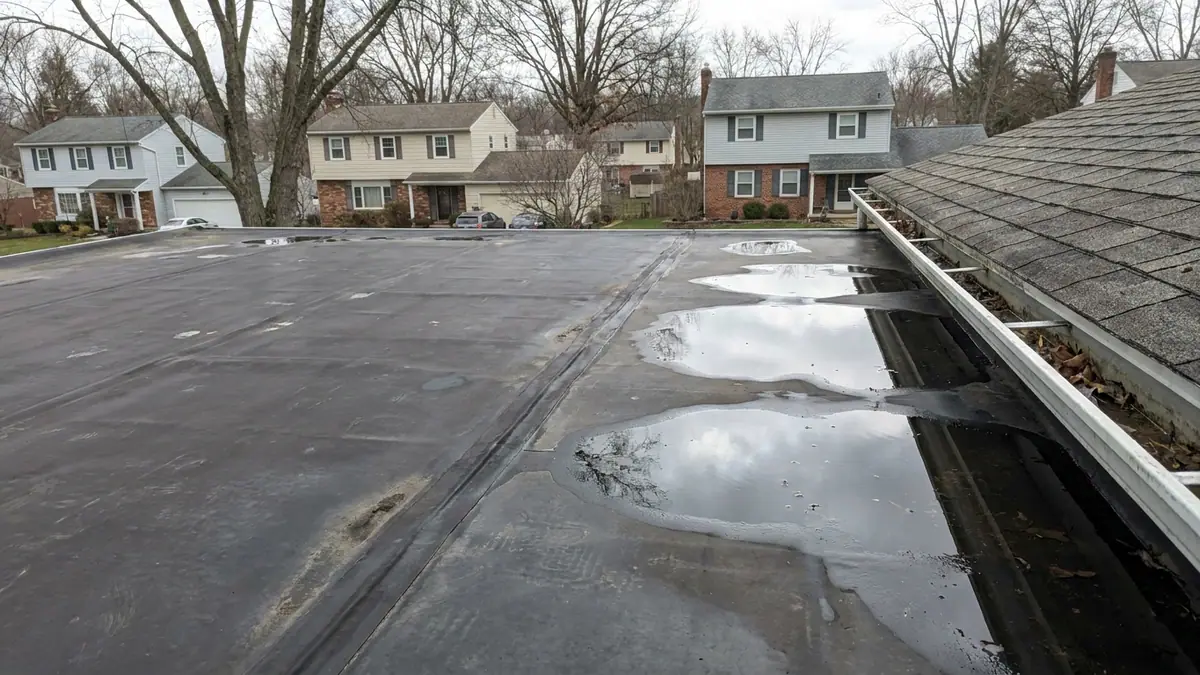
The last row matters. Tarps rely on slope to shed water. On a low-slope or flat roof the water sits on the cover, finds every fastener hole and pools at the seams. Those sections need a different temporary approach, which the flat and low-slope roofing guide explains in the context of how those systems are built.
How a tarp should be installed
A tarp held down with cinder blocks is not an installation. It is a sail waiting for wind, and when it goes, it usually takes shingles with it. A tarp that lasts is fastened.
- The tarp is run up over the ridge, not just laid across the damaged slope, so wind driving up the roof plane cannot get under the top edge. When going over the ridge is not possible, the top edge gets tucked under a course of sound shingles above the damage.
- It is sized to overlap sound roofing by at least three or four feet on every side of the opening. A tarp cut to the size of the hole is useless the moment the wind shifts.
- The edges are rolled around wood battens, usually one-by-three or two-by-four strapping, so the fasteners pull against wood instead of tearing through the tarp material.
- The battens are screwed through into the decking or rafters, and the exposed batten is capped with a second strip of wood or a fold of the tarp so water cannot run straight to the screw heads.
- Every fastener location is noted, because each one is a penetration that has to be sealed or removed when the permanent work happens.
- Debris is cleared off the tarp before it leaves. A branch left under the cover wears a hole in it in a week.
The part people skip is step three. Weighted tarps are quick and they fail. If someone tarps your roof and leaves without putting a screw into anything, expect to be calling again after the next front comes through.
How long a tarp holds up in New Jersey
Weeks, not seasons. Ultraviolet light breaks down polyethylene tarp material, the grommets tear, and the wind works at every unsecured edge. Winter is worse: snow load presses the tarp into the damaged area, and the freeze-thaw cycle that drives ice dams pushes meltwater sideways under the cover and into the same decking the tarp was supposed to protect.
Plan on the tarp being a bridge to a scheduled repair or replacement, not a way to get through to spring. If the roof is going to be replaced, most asphalt replacements are done in a single day, so the wait is usually about scheduling and materials rather than a long project.
What to do while the tarp is up
Document before you cover. Once the tarp is on, nobody can see what was underneath it, and that includes an adjuster.
- Photograph the damage from the ground on every side of the house, and photograph the interior ceiling and wall staining with the date visible.
- Photograph the tarp after it goes on. That is your evidence you took steps to prevent further damage, which most policies require.
- Keep receipts for the tarp, the labor, and anything you bought to protect the inside of the house.
- Do not throw away damaged shingles, torn flashing or the limb that caused it until the claim is inspected.
- Check the attic with a flashlight after the next rain. Wet insulation and dark decking tell you whether the cover is actually working.
The storm damage guide walks through the first 48 hours in order, and the insurance claim guide covers how the adjuster process runs in New Jersey.
What happens when the tarp comes off
Every fastener hole gets addressed, the wet decking gets checked, and the flashing near the damage gets inspected rather than assumed. Storm damage rarely stays where you can see it. Wind that lifts shingles also lifts the step flashing at a sidewall, and a limb strike that cracks one sheet of plywood often loosens the sheathing nails around it.
That inspection is also where the price gets settled. At Lightning Construction the inspection and the written estimate are free with no obligation, and a salesperson comes to the house. Extra shingle layers, soft decking and unusable flashing are found then and priced into the quote, so there is no change order once the tear-off starts and no deposit due before the work is finished and you have inspected it. Lightning pulls the permit from your municipality's construction office and attends the inspection under the New Jersey Uniform Construction Code.
What to do next
If water is coming in right now, call. Lightning Construction runs 24/7 emergency response at (862) 860-6254 and works in all 21 New Jersey counties. If the leak has stopped and you are looking at a tarp somebody put up last week, do not wait for it to fail. Book the free inspection and written estimate and get the permanent repair on the calendar, or read what a full roof replacement involves before you decide between patching the damaged section and replacing the roof.