Short answer
A downspout that backs up at the elbow is blocked, because a gutter system has no water pressure at all — it runs on slope and gravity. Debris that moves fine through a straight run stops at the bend, packs against the inside of the curve, and the water then backs up and pours out of the unsealed seam. The fix is clearing or replacing the elbow, and then correcting whatever keeps sending debris into it.
On this page
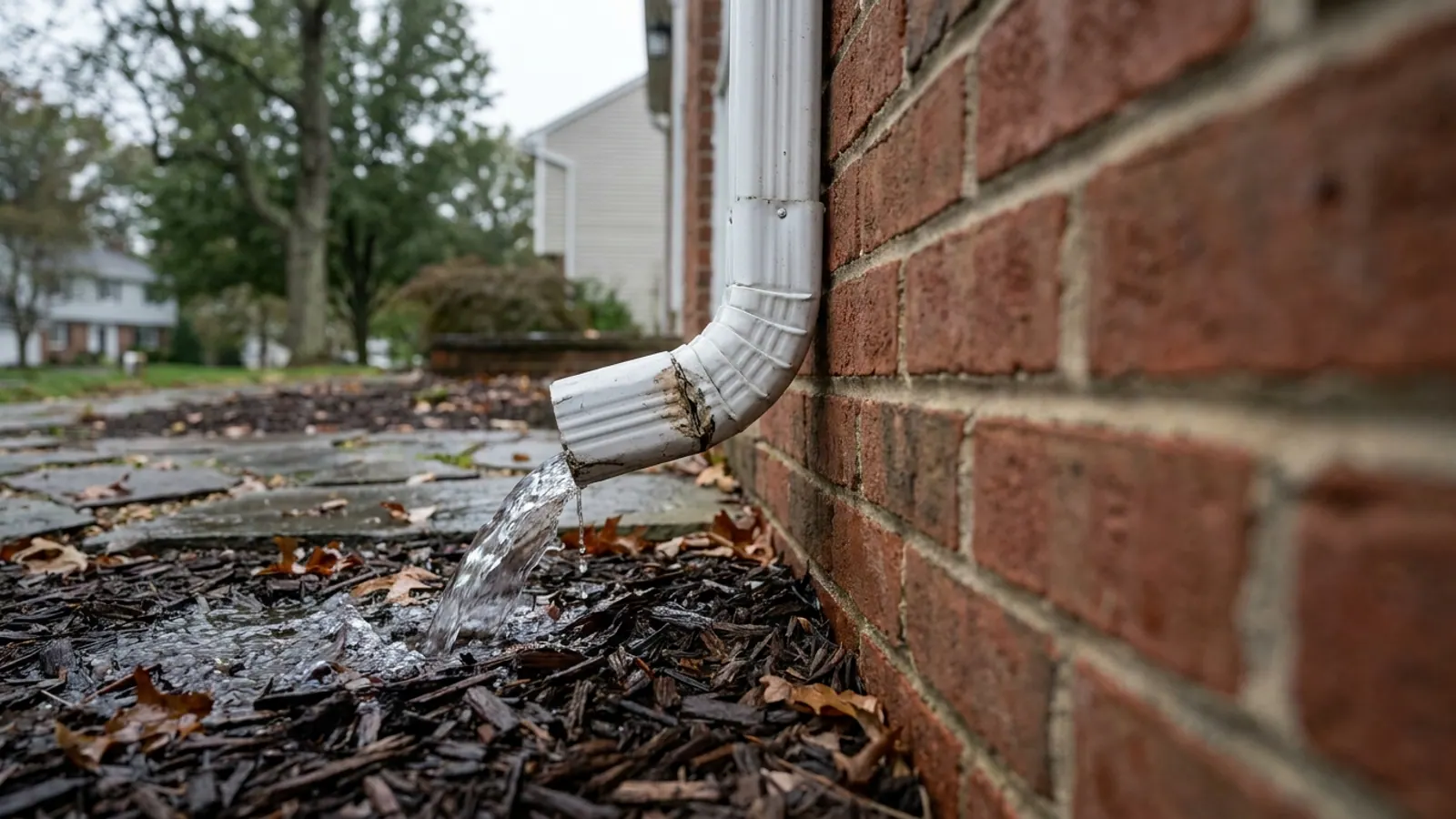
Your gutters have no water pressure. They are an open trough draining by gravity, and the only force moving water down the downspout is the weight of the water itself. So when a downspout backs up and spills at the elbow, nothing is weak — something is in the way, and it is almost always sitting in the bend.
The elbow is the first place a downspout changes direction. Debris that slides through four feet of straight pipe without catching on anything hits that curve, loses momentum, and stops. The next rain adds to it. Within a season or two you have a plug, and the water behind it leaves through the lapped seam because the seam is the weakest joint in the stack.
Why the elbow is where the clog forms
A downspout is a smooth rectangular tube. Nothing in a straight run holds material in place. At an elbow, three things happen at once: the cross-section effectively narrows at the crease, the water slows on the inside of the turn, and the seam between two pieces creates a small internal lip. Wet grit settles there, then shingle granules bind it, and the plug sets up like packed sand.
The upper offset
Most New Jersey houses have a roof overhang, so the downspout has to jog back to the wall. That jog uses two elbows and a short connector piece. It sits directly under the gutter outlet, which means every leaf fragment, every maple seed and every bit of granule wash off the shingles arrives there first, in a concentrated stream, before it has any distance to break up. This is the most common clog location on a house, and it is also the hardest to see, because it is ten to twenty feet in the air behind the gutter line.
The bottom elbow
The bottom elbow turns the water away from the foundation. It clogs for a different reason: whatever made it past the top collects at the only remaining bend, and it has help. Mulch, grass clippings from a mower, wind-blown debris and mud splash can enter from the open outlet. If the downspout ties into underground pipe, the adapter at that point is a diameter change and a joint, and roots find it.
How to tell the clog is in the elbow and not the gutter
Run through this before you put a ladder up.
- Watch it rain. If the gutter trough is overflowing along its length, the problem is in the trough, the pitch, or the outlet opening. If the trough drains fine and water appears at the downspout seam, the blockage is below the gutter.
- Tap the downspout with your knuckles from the bottom up. A clear pipe sounds hollow. Where the sound goes dull and solid, that is the top of the plug.
- Look at the ground. A wet, eroded trench right under an elbow, with mulch floated out and splash marks on the siding or brick, means that bend has been dumping water there for a while.
- Check for staining or streaking down the face of the downspout below a seam. That is overflow, not condensation.
How to clear a clogged downspout elbow
Taking the elbow apart beats fighting it from a ladder. The pieces are joined with pop rivets or short screws, and there is no sealant to cut.
- Drill out the rivets or back out the screws at the elbow joint. Catch the piece — a full elbow is heavier than it looks.
- Empty it over the lawn, not the driveway. What comes out tells you the cause: whole leaves mean an open gutter under trees, black sandy sludge means shingle granules, and fine needles mean conifers near the roof.
- Flush the straight sections from the top with a hose so the water pushes debris in the direction it was already traveling. Hosing upward from the bottom packs wet grit tighter.
- Reinstall with the crimped end pointing down, inside the piece below. Re-rivet or screw the joint.
- Run water from the gutter end and watch the whole stack discharge before you call it done.
If the elbow is crushed, split at the crease or badly dented from a ladder or a car door, replace it. A deformed bend will clog again no matter how clean you get it.
Install details that make an elbow clog over and over
Some downspouts clog every single fall and some never do, on the same street, under the same trees. The difference is usually how the stack was put together.
- Reversed crimps. A crimped end facing up catches debris on the inside lip and leaks at the joint. It is the single most common installation error on a downspout, and it is visible from the ground.
- Too many bends. Every added elbow to route around a bay, a hose bib or an air conditioner is another place debris can stop. Two offset elbows at the top and one at the bottom is normal. Five is a drainage problem waiting to happen.
- Screws driven through the inside of the pipe. Long fasteners that protrude into the channel snag everything that passes.
- An undersized outlet at the gutter. A small drop opening meters debris into the downspout in a slug instead of letting it pass.
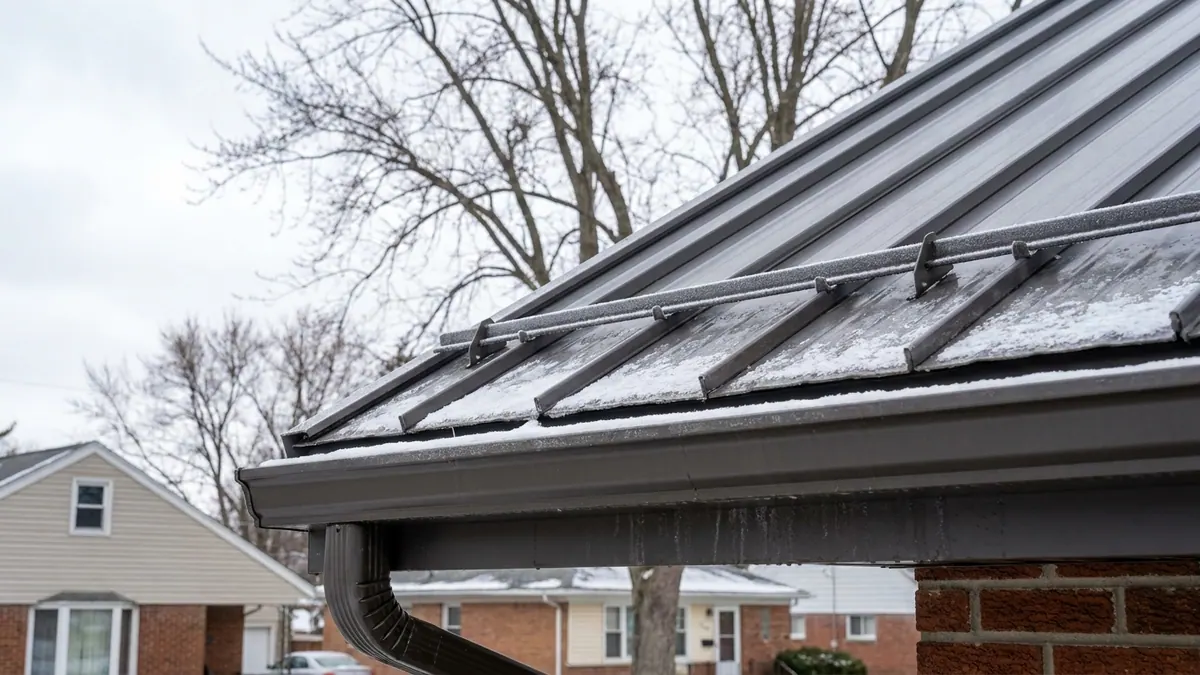
- No fall at the bottom. If the discharge elbow sits in a low spot or a puddle, water stands in the bend. In January that water freezes, and an ice plug backs up the entire stack until the thaw.
When clearing the elbow does not solve it
If you are opening the same bend twice a year, the elbow is a symptom. A roof that sheds heavy debris into open gutters, a run that drains far more roof area than it should, or a downspout that discharges into a buried line nobody has inspected will keep producing plugs.
The seasonal rhythm of what lands on a New Jersey roof — spring seed pods, summer grit wash, the oak and maple drop in November — is covered in the gutter maintenance guide. If you are weighing covers, the seamless gutters and gutter guards guide explains what guards actually keep out and what still washes through them, which matters here because fine granules are what cement a plug together.
Also check what the plug is made of. If the sludge coming out of the elbow is mostly black sand, those are shingle granules, and heavy granule loss points at the roof surface rather than the gutters.
What a fix costs, and what to ask for
A single elbow swap is a small repair. A full seamless aluminum gutter and downspout replacement in New Jersey runs $1,200 to $3,500 in standard-value towns, $2,500 to $6,500 in higher-value towns, and $4,000 to $12,000 for large or luxury homes. The band is set by the municipality's median home value from ACS 2024 five-year estimates, not by how bad the clog is. Get the range in writing for your own house rather than working from a phone estimate.
When a crew looks at it, ask them to confirm three things in writing: the crimp direction on every joint, how many elbows the new run uses, and where the water ends up once it leaves the bottom. A downspout that drains cleanly into a flower bed six inches from the foundation has only moved the problem.
Lightning Construction handles seamless gutters, downspouts, guards and re-pitching across all 21 New Jersey counties. There is no deposit — nothing is due until the work is finished and you have inspected it — and the written estimate is the final price, with no change orders. Details on the work are on the gutters page, and the inspection and written estimate are free with no obligation. A salesperson does come to the house for it.