Short answer
Yes, it can become your problem. If a worker is hurt on your property or your house is damaged and the contractor has no coverage, the claim tends to land on you and your homeowner's policy. The fix is simple and takes ten minutes: get a certificate of insurance naming you, and verify it with the agent listed on it before anyone climbs a ladder.
On this page
- What "licensed and insured" actually means in New Jersey
- The two policies that matter for a roof, siding or gutter job
- What a certificate of insurance is, and how to read one
- Subcontractors are the gap most homeowners miss
- Insurance is not the only paperwork test
- What to ask for before you sign anything
- What to do next
Yes, it can become your problem. A roofer's insurance is the thing standing between you and a claim when a worker falls, when a bundle of shingles goes through a skylight, or when a tear-off leaves your dining room ceiling soaked in a thunderstorm. If that coverage does not exist, the injured party and the damaged property still exist, and the search for someone to pay starts with the person who owns the house.
This is not a paperwork formality. It is the single cheapest piece of due diligence in the whole project, and it takes about ten minutes.
What "licensed and insured" actually means in New Jersey
In New Jersey, a home improvement contractor has to register with the Division of Consumer Affairs and carry a registration number. That number belongs on the contract, on the estimate, on the truck and on the company's advertising. Lightning Construction's is 13VH12437000. Lightning is licensed and insured, and GAF Certified.
Registration is not the same as insurance, and insurance is not the same as competence. What registration does is put the company on a state list with a mailing address and an obligation to carry commercial general liability coverage for the work it sells. A contractor who cannot give you a registration number is not a contractor you should be comparing on price.
One wording note. "Licensed and insured" is the accurate phrase. "Licensed and bonded" gets used loosely in ads and it means something different from liability coverage. If a company leads with bonded and goes quiet when you ask about liability and workers compensation, that is the answer.
The two policies that matter for a roof, siding or gutter job
| Policy | What it covers | What it looks like when it is missing |
|---|---|---|
| PolicyCommercial general liability | What it coversDamage the contractor does to your property or a neighbor's during the work | What it looks like when it is missingYou pay for the cracked driveway, the crushed AC condenser or the water damage yourself, or you sue a company with no assets |
| PolicyWorkers compensation | What it coversMedical costs and lost wages for the contractor's employees injured on the job | What it looks like when it is missingAn injured worker has one place to look for payment, and it is the property owner |
| PolicyAuto | What it coversThe company vehicles on your street | What it looks like when it is missingA dump trailer rolling into a parked car becomes a dispute you are pulled into |
General liability is the one homeowners ask about. Workers compensation is the one that hurts, because roofing injuries are serious and expensive, and because your homeowner's policy was not written to absorb a construction crew. Ask your own agent how your policy treats an injury to someone working on your house. Do it before the job, not after.
What a certificate of insurance is, and how to read one
A certificate of insurance is a one-page form the contractor's insurance agent issues. It lists the insured company name, the types of coverage in force, the policy numbers, the effective and expiration dates, and the agency that produced it. It is a summary of what was true on the day it printed. It is not the policy and it is not a guarantee.
Read four things on it:
- The insured name. It must match the company name on your contract exactly. A certificate for a differently named entity covers a different business.
- The dates. A policy that expires two weeks into a project scheduled for next month is not coverage.
- The coverage lines. General liability and workers compensation should both appear. If workers compensation is blank or marked as excluded, ask why in writing.
- The certificate holder box. Your name and property address belong there.
How to verify it in ten minutes
- Ask the contractor for a certificate issued directly to you, with your name and address as certificate holder.
- Have the agency email it to you rather than accepting a photocopy from the salesperson's folder.
- Call the agency at the number printed on the certificate, not a number the contractor gives you, and confirm the policies are active.
- Ask the agent whether you will be notified if a policy is canceled before your job is finished.
- Save the file. Put it with the signed contract and the permit paperwork.
A legitimate company deals with this all day and will not blink. If asking makes the conversation awkward, you have learned something useful for the price of an awkward conversation.
Subcontractors are the gap most homeowners miss
A general contractor's certificate covers that contractor's employees. It does not automatically cover a separate crew hired for the day. Plenty of roofing companies in New Jersey are a salesperson, a truck and a phone, with the actual work farmed out to whichever crew is available that week. The certificate you were shown is real, and it is also irrelevant to the people on your roof.
Ask one question and listen for hesitation: are the people doing the work employees of this company? If the answer is subcontractors, ask for their certificates too, and ask who supervises them on site.
Lightning Construction is family-operated with a team of around 50, and the crews are the company's own. Owners Liam Johnson and Nate Zavorek run it that way on purpose. More on how the company is set up is on the About page.
Insurance is not the only paperwork test
Coverage tells you what happens if something goes wrong. Two other pieces of paper tell you whether the company is set up to do the job right in the first place.
The permit. Lightning pulls the permit from your municipality's own construction office under the New Jersey Uniform Construction Code and attends the municipal inspection. You file nothing. A contractor who asks the homeowner to pull the permit is asking you to become the responsible party on the job. The roof permit guide explains how that works town by town.
The contract. It should carry the registration number, a total price stated as final, and a plain statement on change orders. Lightning writes none. The conditions that normally trigger one, including extra shingle layers, rotted decking and unusable flashing, are found at the free inspection and priced into the written estimate. There is also no deposit on any job, so nothing is due until the work is finished and you have inspected it.
If you are gathering questions to ask three companies, the contractor selection guide lists the ones that separate them fast.
What to ask for before you sign anything
- The New Jersey Home Improvement Contractor registration number, on the contract itself.
- A certificate of insurance sent from the agency, naming you as certificate holder.
- Confirmation that general liability and workers compensation are both active through the scheduled work dates.
- A clear answer on whether the crew are employees.
- Written confirmation of who pulls the permit and who attends the inspection.
- The workmanship warranty terms, in writing, alongside the manufacturer coverage. The warranty guide covers what each one actually protects.
None of this slows a real project down. Every item on that list is something an established company already has in a folder.
What to do next
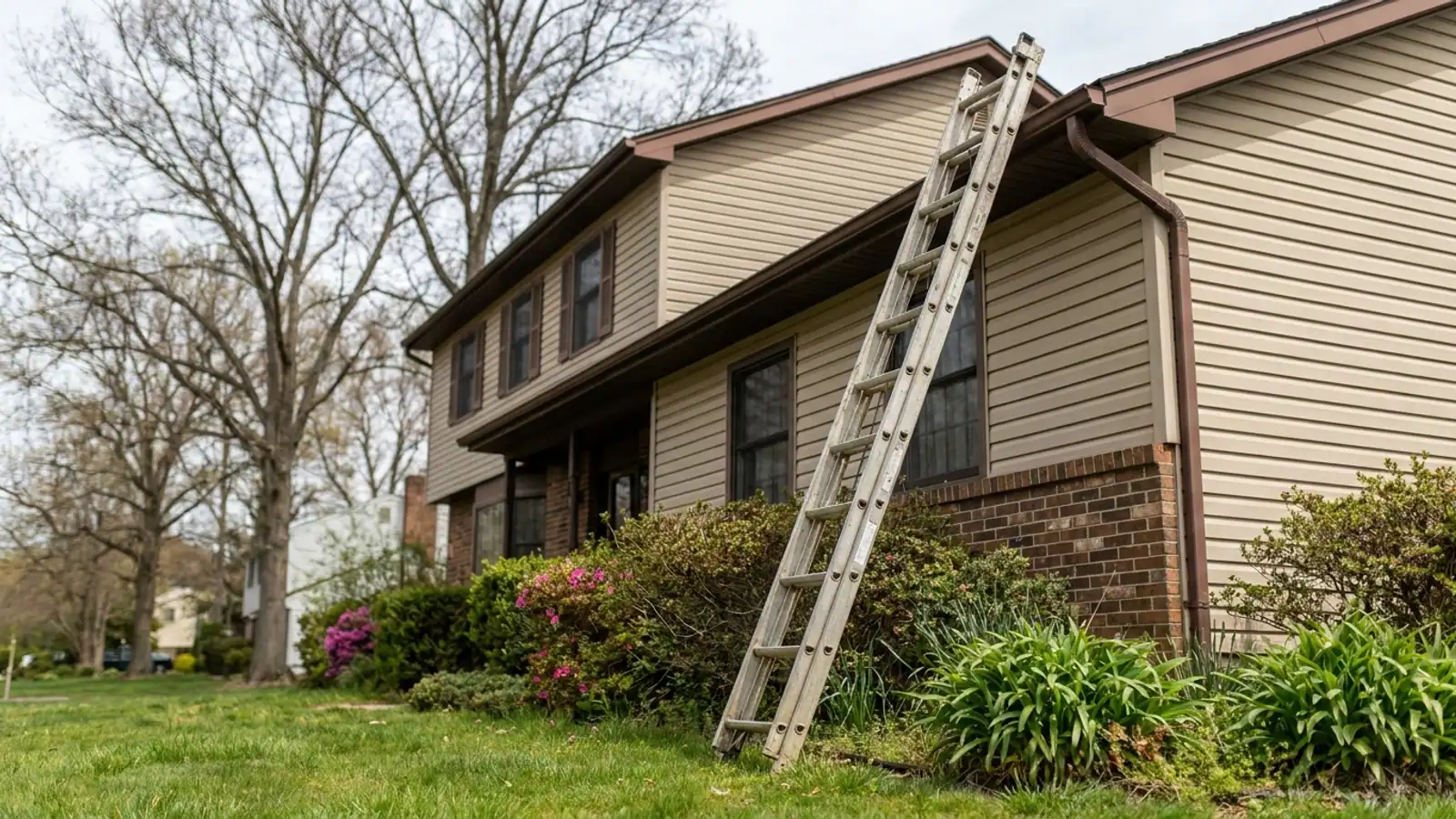
Get the certificate before the ladder goes up, not after. Then judge the estimate on the terms: final price, no deposit, no change orders, permit handled by the contractor.
Lightning Construction is veteran-owned and family-operated out of Manalapan, works in all 21 New Jersey counties, and is rated 4.9 out of 5 from 264 Google reviews. Inspections and written estimates are free with no obligation, and a salesperson does come to the house. You can book a free estimate or read more about the company on the About page.