Short answer
If nothing vents into the chimney anymore, the roof replacement is the cheapest time to take it down, because the flashing, the deck patch and the shingles all get handled in one pass instead of three. The work is masonry demolition plus roof framing, sheathing and shingles, and it normally belongs on a permit. The one step you cannot skip is confirming that no furnace, water heater or fireplace still uses that flue.
On this page
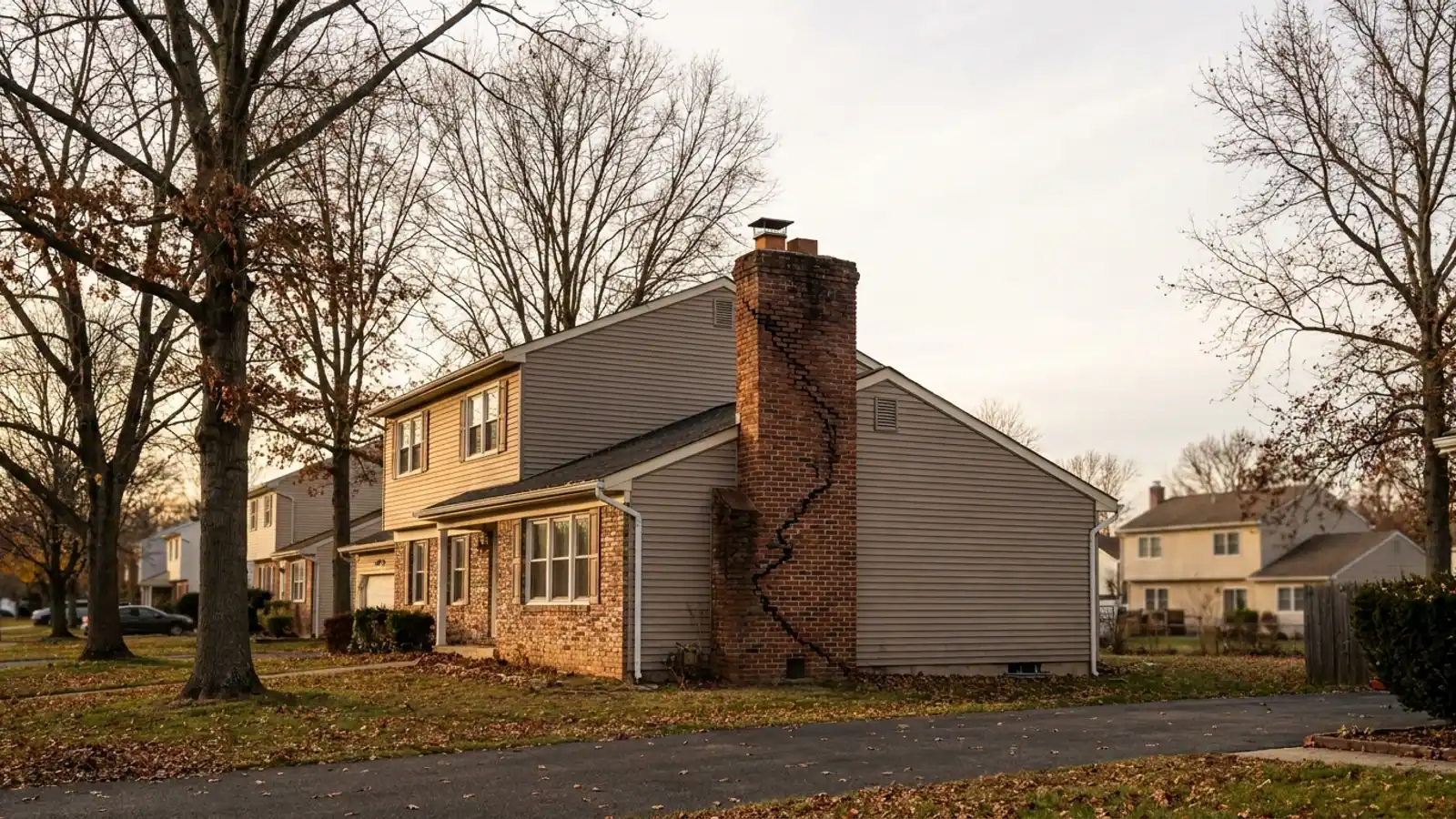
If nothing vents into it, take it down while the roof is off. An abandoned masonry chimney is a hole through your roof deck wrapped in step flashing, counterflashing and a crown that is usually cracked. Every one of those parts is a maintenance item, and every one of them is work your roofer has to do anyway on replacement day. Removing the chimney deletes all of it permanently, and the deck patch disappears under a brand new roof instead of being an obvious repair in the middle of an old one.
The decision is not really about the chimney. It is about whether you want to keep paying to flash, reline and repoint something your house stopped using when the furnace was swapped out.
Make sure the chimney is actually unused
This is the step people skip, and it is the only one that can hurt you.
Walk the basement and the attic before you decide anything. Look at what is physically connected to the flue. A high-efficiency furnace or boiler vents through white PVC out a sidewall, which is the single most common reason a New Jersey chimney goes out of service. But a lot of houses got the furnace replaced ten years ago and still have an atmospheric-draft water heater dumping into the same clay liner. That chimney is in use. Taking it down means re-venting the water heater, which is mechanical work with its own permit and its own cost.
Check the fireplace too. A sealed-off firebox with a damper rusted shut is not the same as a flue nobody can ever use again, and once the stack is gone that decision is permanent. If you ever want a working fireplace, say so before the crew arrives.
The three ways an unused chimney comes down
Most homeowners picture a wrecking crew and a dumpster full of brick. The usual job is smaller than that.
| Scope | What happens | What you live with after |
|---|---|---|
| ScopeAbove the roofline only | What happensMasonry is removed down to just below the deck, the opening is framed and sheathed, the slope is shingled over | What you live with afterNothing visible outside; the stack and any chase remain inside the house |
| ScopeDown to the attic floor | What happensMasonry removed through the attic, deck framed and closed, attic floor patched | What you live with afterClean attic, no interior finish work on the floors below |
| ScopeFull removal to the footing | What happensEntire stack removed through every floor, including firebox and hearth | What you live with afterSignificant interior carpentry, drywall and flooring work by other trades |
The first two are roof-side jobs. The third is a renovation that happens to start at the roof, and it is not something to decide on the morning of a tear-off.
One detail worth knowing: a chimney that stops in the attic or at a chase is often carried on framing rather than its own footing. That is fine, and removing weight from framing is never the problem. The framing work is about closing the hole correctly, not about holding anything up.
What the crew actually does on the roof
On an asphalt replacement where the chimney is coming off above the roofline, the sequence runs like this:
- The old roof is stripped on that slope and the counterflashing is cut free of the masonry.
- The brick is taken down course by course by hand, not pushed over, and the debris goes straight into the dumpster rather than sliding down the shingles.
- The stack is cut off below the plane of the deck and the remaining top is capped or sealed so nothing falls into the chase.
- New rafters or blocking are installed around the opening and plywood sheathing is cut in flush with the existing deck.
- Underlayment and ice and water shield go over the patch as part of the normal roof assembly.
- Shingles run straight through the area. There is no cricket, no step flashing and no counterflashing on that slope anymore.
Steps four and five are the reason this is worth doing during a replacement. A patch installed under a new roof is invisible. The same patch cut into a ten-year-old roof is a square of fresh plywood, a seam in the underlayment and shingles that do not match the field.
What it adds to the job
It adds a line item, and the size of that line depends on the chimney, not on your house. A short, narrow stack poking two feet above the ridge is a different job from a wide chimney running the full height of a two-story gable with a cricket built behind it. Access matters, the brick count matters, and whether the masonry has to come out through the attic matters.
What it should not do is change your price after work starts. Chimney scope, extra shingle layers and bad decking are all things that get found at the free inspection and written into the estimate up front. Lightning Construction does not write change orders, so the number on the estimate is the number you pay, and nothing is due until the work is finished and you have inspected it.
For context on the roof itself, most New Jersey asphalt replacements run $9,000 to $22,000 in standard-value towns, $14,000 to $35,000 in higher-value towns, and $25,000 to $60,000 for large or luxury homes, with the band set by the municipality's median home value from ACS 2024 five-year estimates. The roof cost guide breaks down what actually moves that total. Chimney removal is priced on its own and shown separately, so you can see exactly what the choice costs before you make it.
Permits and the municipal inspection
Treat this as permitted work. Demolition, new framing and new sheathing are all inside the New Jersey Uniform Construction Code, and if an appliance has to be re-vented that is a separate mechanical item. Every municipality handles the paperwork a little differently, which is exactly why it should not be your problem.
Lightning pulls the permit from the municipality's own construction office and attends the inspection, in every town it works in. You file nothing and you do not take a day off to meet an inspector. The New Jersey roof permit guide explains what the inspector is checking and why an unpermitted roof becomes a problem at closing.
Ask one specific question at the estimate: who performs the masonry demolition and who is responsible for the permit covering it. Get the answer in writing with the rest of the scope.
When keeping the chimney is the better call
Sometimes it is.
- Something still vents into it, and re-venting the appliance costs more than maintaining the flue.
- You want a working fireplace, now or later.
- The chimney is a defining part of the front elevation on a colonial or a center-hall, and losing it would leave the facade looking unbalanced.
- The interior scope is too large. If the stack runs through a finished bedroom, the drywall, floor and trim repairs are a bigger project than the roof.
If you keep it, do the chimney work while the staging is up. New counterflashing cut into a mortar joint, a rebuilt crown and a proper cricket on the uphill side are cheap on replacement day and expensive as a return trip.
What to do next
Figure out what the flue is connected to, then get a written number for both versions of the job: roof with chimney, roof without. A free inspection and a written estimate from Lightning Construction cost nothing and come with no obligation, and a salesperson does come to the house. See the roofing page for what a full replacement includes, or book the free estimate and have the chimney looked at while someone is already on the roof.