Short answer
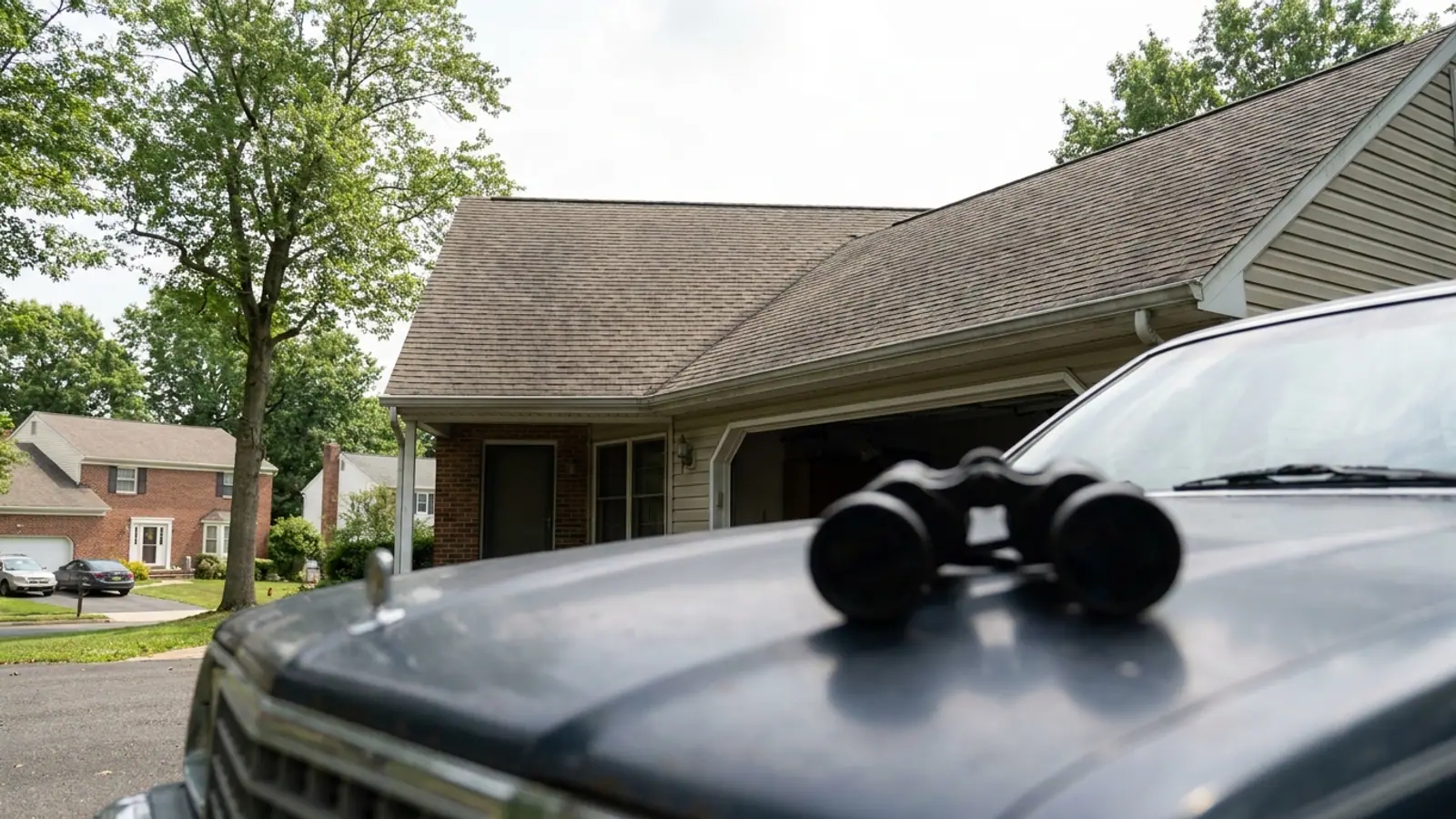
Most installation faults are visible from the ground with binoculars: crooked shingle courses, a wavy ridge cap, missing drip edge, reused flashing, exposed nail heads and debris left in the gutters. Check the paperwork too, because a passed municipal inspection and a written workmanship warranty tell you things no photo can. Anything you cannot see from the driveway belongs in a written report with photos from the contractor.
On this page
- Start with the paperwork before you look at the roof
- What to look at from the driveway, in order
- Ridge line and ridge cap
- Shingle courses, the rake edge and the field
- Drip edge, gutters and the roof edge
- Flashing points, where New Jersey roofs actually leak
- What you see and what it usually means
- What the attic tells you that the driveway cannot
- The limits of a ground check
- What to do if something looks wrong
Stand in the driveway with a pair of binoculars and you can check most of what matters on a new roof. Shingle courses either run straight or they do not. Ridge cap either sits flat or it waves. Metal flashing is either new or it is the dull, dented piece that was up there before. None of that requires a ladder.
Here is the order to check things in, what a good install looks like from forty feet away, and the few things that genuinely cannot be judged from the ground.
Start with the paperwork before you look at the roof
Two documents tell you more than any photo.
The first is the municipal permit and the signed-off inspection. Roof replacements in New Jersey are permitted work under the New Jersey Uniform Construction Code, and a town inspector comes out. If your contractor never pulled a permit, nobody from the municipality ever looked at the job. Lightning Construction pulls the permit from the municipality's own construction office and attends the inspection, in every municipality, so the homeowner files nothing. The New Jersey roof permit guide explains what the inspector actually checks.
The second is your workmanship warranty, in writing, naming what is covered and for how long. The manufacturer covers the shingle. The contractor covers the installation, and installation is what almost every early failure comes down to.
What to look at from the driveway, in order
- Walk to the street and look at the whole roof plane straight on, then from each corner of the property.
- Check the ridge line for straightness and the ridge cap for waviness or gaps.
- Follow three or four shingle courses across the roof with the binoculars and see if the lines stay parallel.
- Look at the rake edge and the eave edge for metal, and for shingles that overhang evenly.
- Check every place the roof meets something else: chimney, sidewall, valley, skylight, pipes, vents.
- Look in the gutters for shingle scrap, nails and granule piles.
- Walk the lawn, beds and driveway for nails the magnet missed.
Ridge line and ridge cap
The ridge is the easiest thing to judge and one of the most revealing. The cap shingles should sit in a straight line with even exposure, all lapping the same direction, with no fastener heads showing except possibly at the very last cap.
A ridge that dips or waves is either a framing issue underneath or sloppy cap work. A ridge vent should run as a continuous low strip with a clean edge, not a lumpy ribbon. If you had a ridge vent before and there is no vent now, ask why, because intake and exhaust have to be balanced for the attic to work.
Shingle courses, the rake edge and the field
Track a course across the roof. Architectural shingles have a random pattern on the surface, but the butt line of each course still runs straight, and the courses stay parallel to each other. Lines that drift, pinch together or fan out mean the crew did not snap chalk lines or did not follow them.
At the rake, cut ends should form a straight vertical line with a consistent small overhang. Ragged cuts, a scalloped edge or shingles cut flush to the trim with nothing underneath all point to rushed work at the edge where wind does its damage.
In the field, look for exposed nail heads, lifted corners and shingles that are not lying flat. Shingles need warm weather to seal; a roof installed in cold conditions may take time to set, but it should not look like the courses are tenting.
Drip edge, gutters and the roof edge
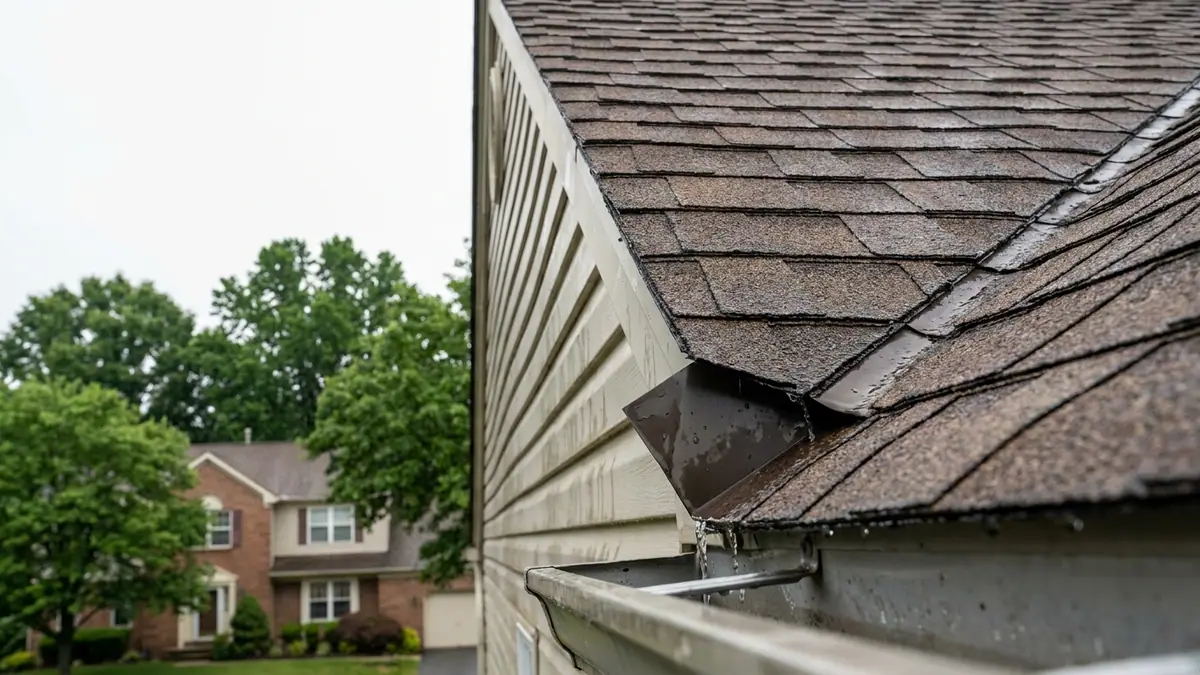
There should be metal at the eave and metal at the rake. From the ground, drip edge reads as a thin, consistent metal line running the whole length of the edge, and it is one of the items an inspector checks. No metal at the edges is a real defect, not a preference.
Shingles should overhang the drip edge slightly and evenly, and water should run off into the gutter rather than behind it. After the first real rain, go out and watch the eave. Water sheeting down the fascia or staining the siding under the edge means the edge detail is wrong.
If gutters were replaced with the roof, check that hangers are evenly spaced, seams line up and the run pitches toward the downspout. New gutters are often part of a roof job, and the seamless gutter guide covers what good gutter work looks like.
Flashing points, where New Jersey roofs actually leak
Shingles rarely fail first. The junctions do. Put the binoculars on each of these:
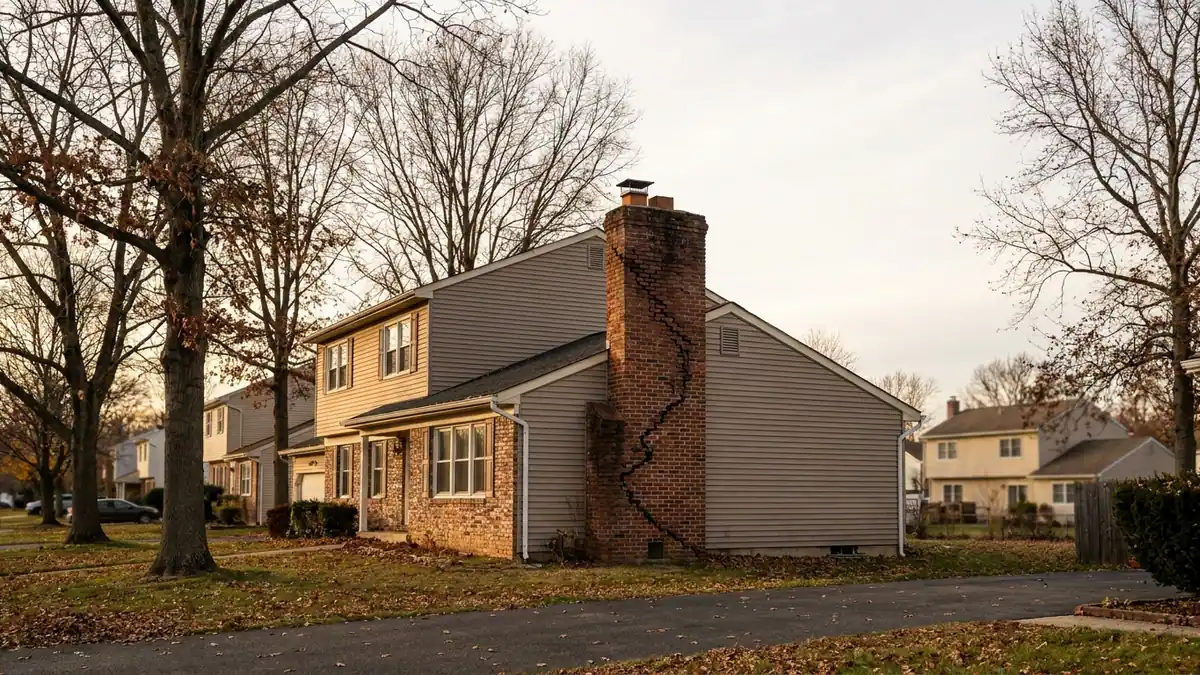
- Chimney. You want new metal on all four sides, with step flashing up the sides and counterflashing cut into the mortar. A thick bead of black sealant smeared around the brick instead of metal is a repair, not an installation.
- Sidewalls. Where a roof plane runs into a wall, step flashing goes in behind the siding, one piece per shingle course. A single long piece of bent metal lying on top of the shingles is wrong.
- Valleys. Whether open or closed, the valley should be a clean straight line with no shingle nails in the center and no gaps at the bottom where it meets the gutter.
- Pipes and vents. Boots should be new, seated flat, with the shingles lapping over the top flange and under the bottom.
If the flashing on your new roof looks older than the shingles, it is older than the shingles. Reused flashing is one of the most common reasons a replacement quote comes in low.
What you see and what it usually means
| What you see from the ground | What it usually means |
|---|---|
| What you see from the groundWavy or drifting shingle courses | What it usually meansNo chalk lines snapped, or lines not followed |
| What you see from the groundRows of exposed nail heads | What it usually meansOverdriven, high or misplaced nailing |
| What you see from the groundOld dented metal at the chimney | What it usually meansFlashing reused instead of replaced |
| What you see from the groundNo metal line at the eave or rake | What it usually meansDrip edge omitted |
| What you see from the groundShingle scrap and nails left in gutters | What it usually meansCleanup not completed |
| What you see from the groundSealant smeared along a sidewall | What it usually meansStep flashing skipped |
| What you see from the groundGranule piles under downspouts after a year | What it usually meansNormal early shedding, or a quality issue if it continues |
What the attic tells you that the driveway cannot
Go up with a flashlight on a bright day. You should not see daylight through the deck except at the ridge vent and the soffit vents. Nail points should come through the sheathing; hundreds of them missing the rafters is not a problem, but shiners clustered in one area can indicate the deck is thin or damaged. Look for wet sheathing, dark staining and crushed or blocked insulation at the eaves, which chokes intake air. Ventilation problems show up in the attic long before they show on the shingles.
The limits of a ground check
You cannot see the decking, the underlayment, the ice and water shield at the eaves and valleys, or the nailing pattern. Those are decided before the shingles go down, which is why they have to be settled in the estimate rather than discovered mid-job. Lightning Construction identifies extra shingle layers, rotted decking and inadequate flashing at the free inspection and prices them into the written quote, so there are no change orders and no deposit — nothing is due until the work is finished and you have inspected it.
If what you are looking at is an older roof rather than a new one, the symptom list is different, and 10 signs you need a new roof sorts the problems that justify a replacement from the ones a repair fixes.
What to do if something looks wrong
Photograph it from the ground, with a wide shot showing where on the house it is. Send the photos to your contractor in writing and ask for a written reply naming the correction and the date. Do not accept a verbal promise to take a look next time someone is in the area.
If the contractor will not respond, a second opinion from another licensed and insured roofer with a written report and photos gives you something to act on. Lightning Construction is GAF Certified, licensed and insured under New Jersey Home Improvement Contractor registration 13VH12437000, and rated 4.9 out of 5 from 264 Google reviews. Inspections and written estimates are free with no obligation, and a salesperson does come to the house.
If you want a straight read on what is up there, see the roofing page or book a free inspection and get the photos and the written estimate before you decide anything.