Short answer
Repair the box gutter when the wood framing and the cornice under it are still sound and only the lining has failed, because the trough is structural trim and tearing it out changes the look of the house. Convert to hung seamless aluminum gutters when the framing is rotted, the trough has been patched repeatedly, or the slope inside it has collapsed. The decision is made by opening the trough and probing the wood, not by looking from the driveway.
On this page
- What a built-in box gutter is, and why older New Jersey homes have them
- Signs your box gutter is failing
- Repair, reline or convert: the three real options
- When relining is the right call
- When converting to hung seamless gutters makes sense
- What to get in writing before anyone starts
- What it costs
- What to do next
A built-in box gutter is not hardware bolted to your house. It is part of the house. The trough is framed in wood as a piece of the cornice at the roof edge, then lined with metal or membrane so water runs inside the structure instead of in a channel hung off the fascia. That is why the repair or convert question is harder here than it is on a standard gutter, and why the honest answer depends entirely on what the wood under the lining looks like.
Repair when the framing is sound and only the lining has failed. Convert to hung seamless gutters when the framing is gone, the trough has been patched three times already, or the pitch inside the trough has collapsed and water stands in it after every rain.
What a built-in box gutter is, and why older New Jersey homes have them
Before hung gutters became standard, the trough was built into the eave. A sloped wood bottom sits between the rafter tails and the outer cornice board, the whole assembly is finished to look like trim, and a lining carries the water to an outlet that drops into a downspout or a leader buried in the wall.
You find them on Victorians, four squares, older Colonials and on a lot of pre-war housing stock across the state. Several of New Jersey's largest municipalities have a median home built in the 1950s or earlier, which means built-in troughs show up regularly on inspection in towns like Paterson, Trenton, Camden and Bloomfield. They were built well. Many have been running for a century. What fails is the lining, and then what the lining was protecting.
Signs your box gutter is failing
The failures all look the same from the ground, so you have to read them in order.
Outside the house
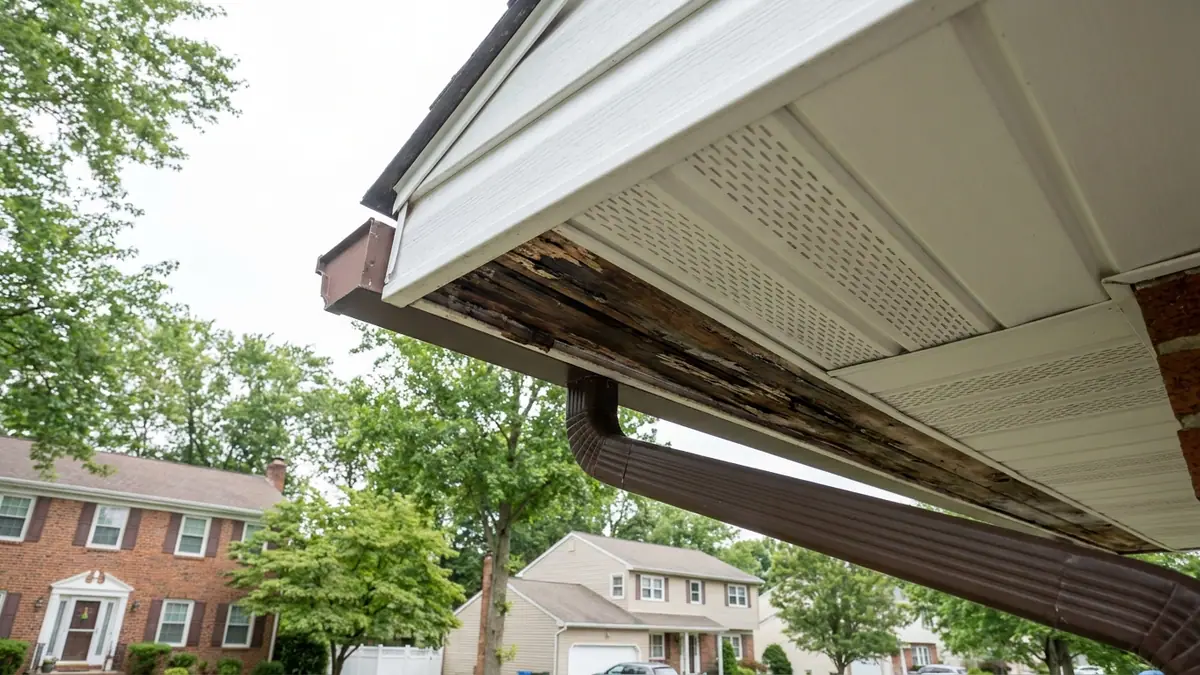
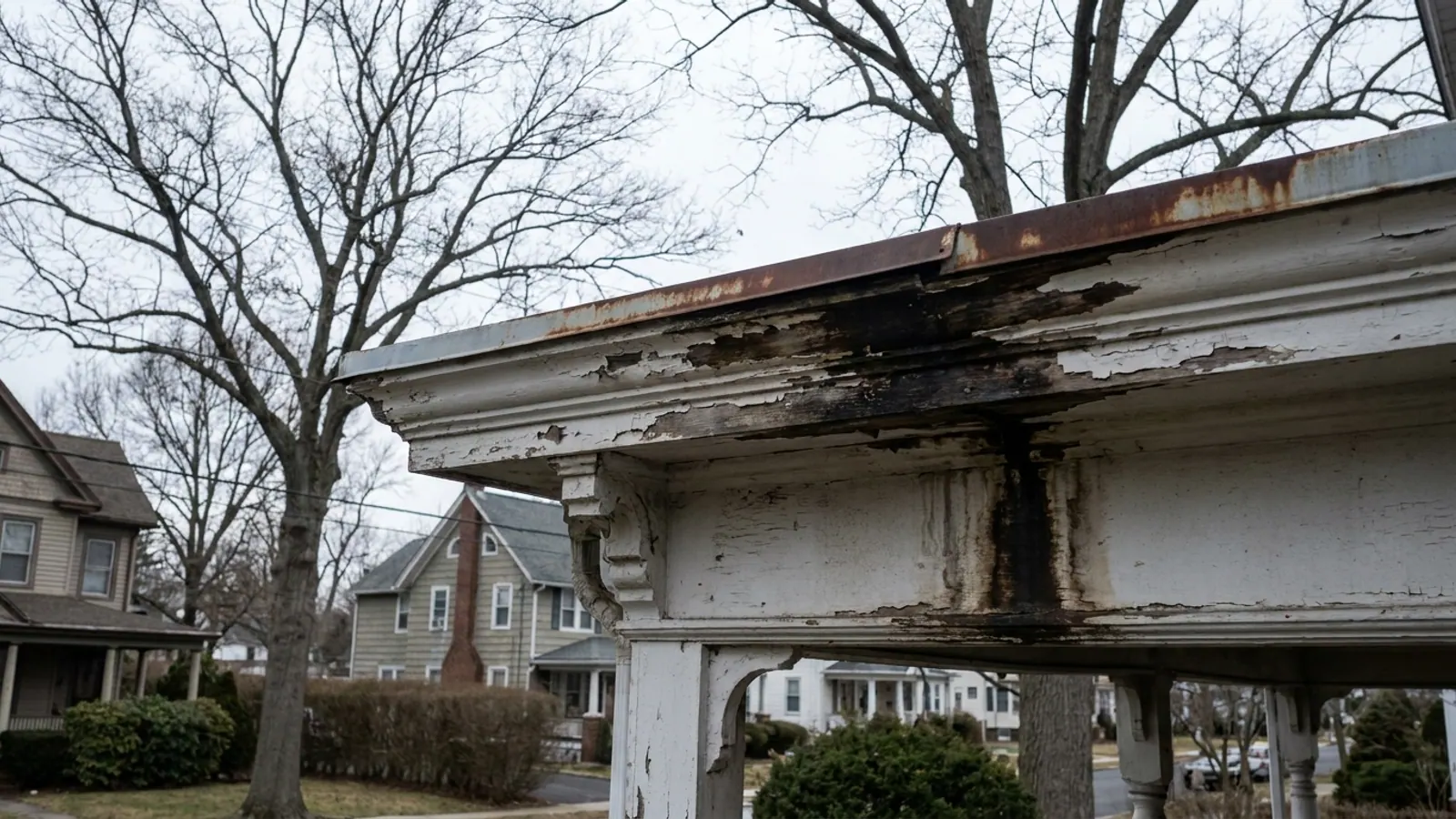
- A dark vertical stain running down the cornice, frieze board or siding directly below one spot on the eave. That is a lining leak draining through the trim.
- Paint peeling in a band along the cornice rather than scattered across the wall.
- A trough edge that no longer runs straight when you sight along it, which means the framing underneath has moved.
- Plant growth or standing silt in the trough, visible from a second story window.
- Ice building along the eave every winter in the same place.
Inside the house
- Staining on the ceiling at an outside wall, especially in a top floor room or an attic knee wall.
- Damp or crumbling plaster at the top of an exterior wall.
- Soft, dark sheathing visible in the attic where the roof deck meets the eave.
If you only have the outside signs, you may be looking at a lining repair. Once there are inside signs, water has been getting into the framing for a while, and the scope gets larger.
Repair, reline or convert: the three real options
| What it is | When it is right | What it does not fix | |
|---|---|---|---|
| Spot repair | What it isPatching a seam, pinhole or outlet in the existing lining | When it is rightA single, locatable leak with solid wood all around it | What it does not fixNothing else in the trough, and patches rarely outlive the next few winters |
| Full reline | What it isStripping the lining, repairing the trough bottom, installing a new continuous lining with proper slope and outlets | When it is rightSound framing and a cornice worth keeping | What it does not fixA trough that was never pitched correctly unless the wood is rebuilt first |
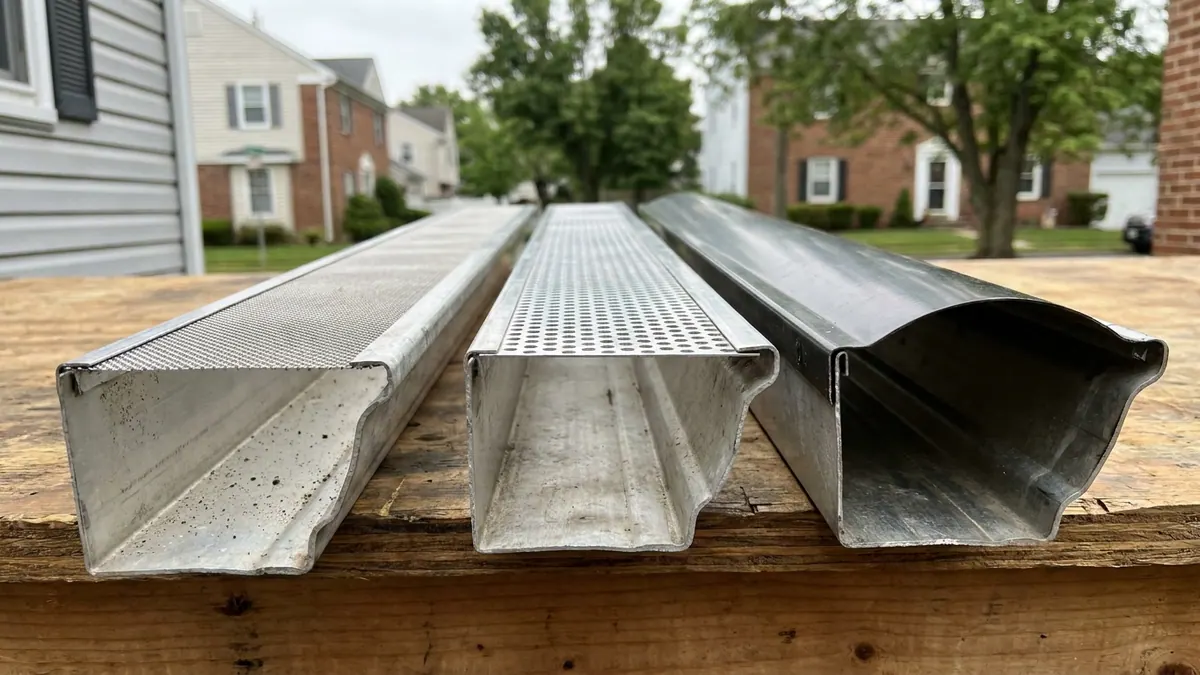
| Convert to hung gutters | What it isClosing or flashing over the old trough, then hanging seamless aluminum gutters at the roof edge | When it is rightRotted framing, repeated past patches, or a homeowner who wants low maintenance | What it does not fixThe appearance of the original cornice line, which changes |
Notice what is not in the table. Gutter guards. Guards keep leaves out of a trough. They do nothing for a split lining or a collapsed bottom, and on a built-in gutter they make it harder to see the one thing you need to watch. If a contractor's answer to a staining cornice is guards, get another opinion.
When relining is the right call
The test is a probe. Someone has to get up there, pull back the debris, and push an awl or a screwdriver into the trough bottom at several points along each run, plus at every corner and every outlet. Solid wood resists. Failed wood takes the tool with almost no pressure.
If the wood holds, the cornice below is tight, and there is no rot showing in the soffit or the interior wall, a reline keeps the house looking the way it was built. A proper reline means removing the old lining completely, rebuilding slope in the trough so water moves toward the outlet instead of sitting, and running a continuous lining with as few seams as the run allows. Seams and outlets are where box gutters leak, so the fewer there are, the longer it lasts.
Be realistic about maintenance after that. A built-in trough collects everything the roof sheds, and it is harder to clear than a hung gutter. Twice a year is the floor, and more if there are mature trees over the roof. The seasonal gutter maintenance guide covers what to clear and when across a New Jersey year.
When converting to hung seamless gutters makes sense
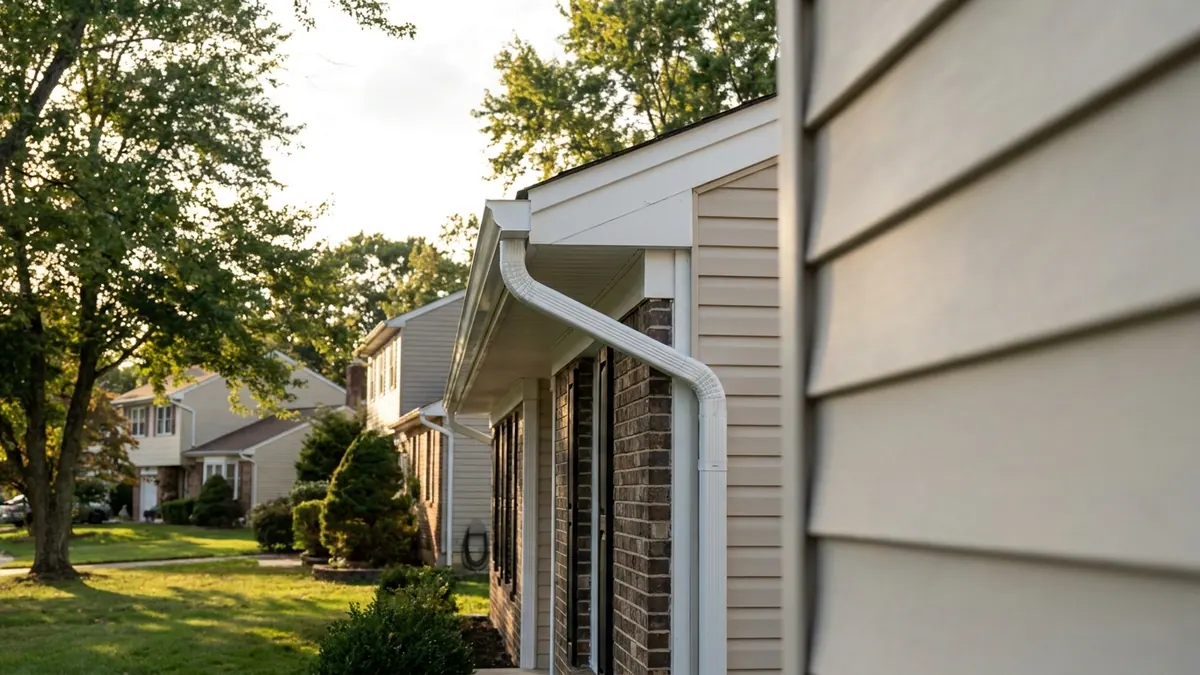
Convert when the probe sinks in. Once the trough bottom is rotted, you are no longer repairing a gutter, you are rebuilding carpentry that sits directly against the roof deck and the top of the wall. On many houses that is the right investment. On many others, the sensible path is to repair or replace the damaged cornice wood, take the trough out of service, flash the roof edge properly, and hang seamless aluminum gutters where a modern roof drains.
Conversion also makes sense when the roof is coming off anyway. The roof edge is the one place where the gutter and the roof are the same detail, and the drip edge, the ice barrier at the eaves and the gutter all have to be installed in the right order. Doing them at the same time is cheaper and produces a better edge than doing them two years apart. The seamless gutters guide explains how seamless aluminum is rolled on site and why continuous runs beat sectional lengths on any house.
On an older home with a decorative cornice, a half-round profile usually sits more comfortably under the trim than a K-style, and aluminum can be ordered in a color that disappears against the existing paint. Keep the cornice. Lose the trough.
What to get in writing before anyone starts
Ask for these items as line items, not as a single number:
- Exactly which runs are being relined and which are being converted, by elevation of the house.
- The condition of the trough framing on each run, with photos from the inspection.
- Any cornice, soffit or fascia wood being replaced, with the quantity priced in.
- The outlet and downspout plan, including where water lands on the ground and how far from the foundation it is carried.
- Who pulls the permit and attends the municipal inspection.
That last one matters on older housing stock, because this work touches the roof edge and sometimes the wall. Lightning pulls the permit and attends the inspection in every municipality under the New Jersey Uniform Construction Code, and the homeowner files nothing.
What it costs
Lightning's seamless gutter work in New Jersey runs $1,200 to $3,500 in standard-value towns, $2,500 to $6,500 in higher-value towns, and $4,000 to $12,000 on large or luxury homes. The band is set by the municipality's median home value from ACS 2024 five-year estimates. Those ranges are for gutter work. Carpentry on a rotted built-in trough is a different scope and gets priced on what the inspection finds, which is the point of finding it before the contract is signed rather than after the ladders are up.
Two terms apply either way. There is no deposit, so nothing is due until the work is done and you have inspected it. And there are no change orders, because the conditions that normally trigger one, rotted wood included, are identified at the free inspection and priced into the written estimate.
What to do next
Get someone on a ladder who will probe the trough and show you photographs of what is under the lining, not just tell you about it. Then decide. If the wood is sound, reline and commit to cleaning it twice a year. If the wood is gone, convert and stop paying for the same patch every few seasons.
See what Lightning covers on gutters, or book the free inspection and written estimate. It is genuinely no obligation, and a salesperson comes to the house.